
 close
close


 LOGIN
LOGINA Pain in the Neck



We’re excited about our recent announcement to transition our subscription model to a web-based publication! This offers our readers the opportunity to access our content from any smart device. The downside of mobile reading is a phenomenon called ‘text neck’.
Rest assured that the cervical spine is made to endure flexed positions for prolonged periods of time – as evidenced by the many craftsmen throughout the centuries who sat hunched over their work. The problem for the modern person, however, is that the muscles of the thoracic spine may not be conditioned for the load. Even fairly fit athletes may ignore upper back muscles in their training routines leading to thoracic dysfunction from time spent on mobile devices. Trevor Langford reviewed the tests to diagnose thoracic limitations and exercises to strengthen the thoracic musculature in a recent article.
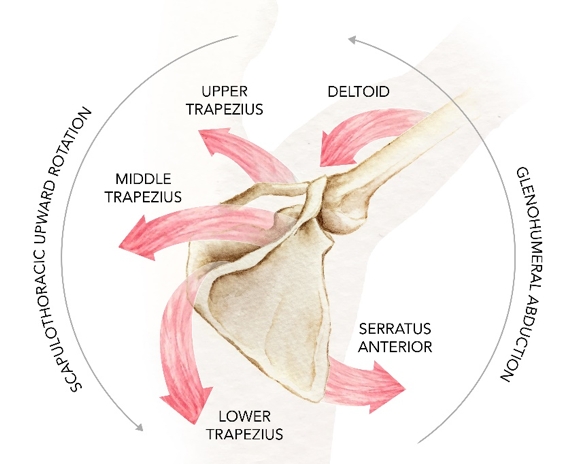
The upper back muscles play a role not only in neck pain, but also in shoulder movements, as Chris Mallac explains in this week’s feature article on the upper trapezius. Pain and weakness in the upper traps affects the scapulohumeral rhythm, possibly limiting shoulder range and smoothness of movement. Limited scapular rotation most significantly impacts shoulder elevation in the arc of movement beyond 90°, as the scapula contributes over 50% of the motion in this range (see Figure 1)(1). Upper trap health, therefore, impacts overhead athletes, including swimmers and golfers.
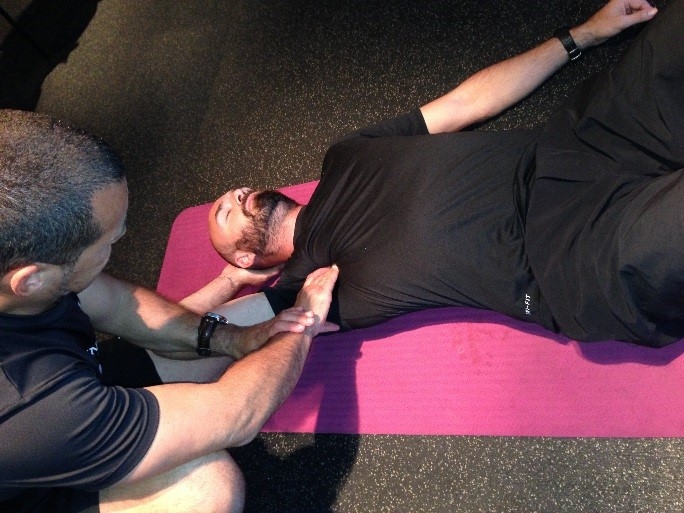
Sometimes, neck pain isn’t coming from the neck at all, as in a case study presented by Chris Mallac. The cause of this dysfunction came from an unusual source: the pec minor. Malloc explains his detective work and offers treatment strategies for managing this unlikely culprit (see Figure 2). This case study, where the subject is a physiotherapist, is a great reminder to practice what we preach while reading on the go!
References
- World J Orthop. 2012 Jun 18; 3(6): 87–94.

Alicia Filley

Latest Issue

Subscribe Today
Newsletter Sign Up
Subscriber Testimonials
Dr. Alexandra Fandetti-Robin, Back & Body Chiropractic
Elspeth Cowell MSCh DpodM SRCh HCPC reg
William Hunter, Nuffield Health
Subscribe Today




Newsletter Sign Up
Coaches Testimonials
Dr. Alexandra Fandetti-Robin, Back & Body Chiropractic
Elspeth Cowell MSCh DpodM SRCh HCPC reg
William Hunter, Nuffield Health
Subscribe Today
Latest Issue

Be at the leading edge of sports injury management
Our international team of qualified experts (see above) spend hours poring over scores of technical journals and medical papers that even the most interested professionals don't have time to read.
For 17 years, we've helped hard-working physiotherapists and sports professionals like you, overwhelmed by the vast amount of new research, bring science to their treatment. Sports Injury Bulletin is the ideal resource for practitioners too busy to cull through all the monthly journals to find meaningful and applicable studies.
*includes 3 coaching manuals
Get Inspired
All the latest techniques and approaches


Sports Injury Bulletin brings together a worldwide panel of experts – including physiotherapists, doctors, researchers and sports scientists. Together we deliver everything you need to help your clients avoid – or recover as quickly as possible from – injuries.
We strip away the scientific jargon and deliver you easy-to-follow training exercises, nutrition tips, psychological strategies and recovery programmes and exercises in plain English.
