
 close
close


 LOGIN
LOGINA Simple Approach to Bulletproofing the Calf and Achilles for Basketball
Myles Murphy and Daniel Webster discuss how practitioners can leverage the latest evidence to help their athletes bulletproof their calf and Achilles from injury.


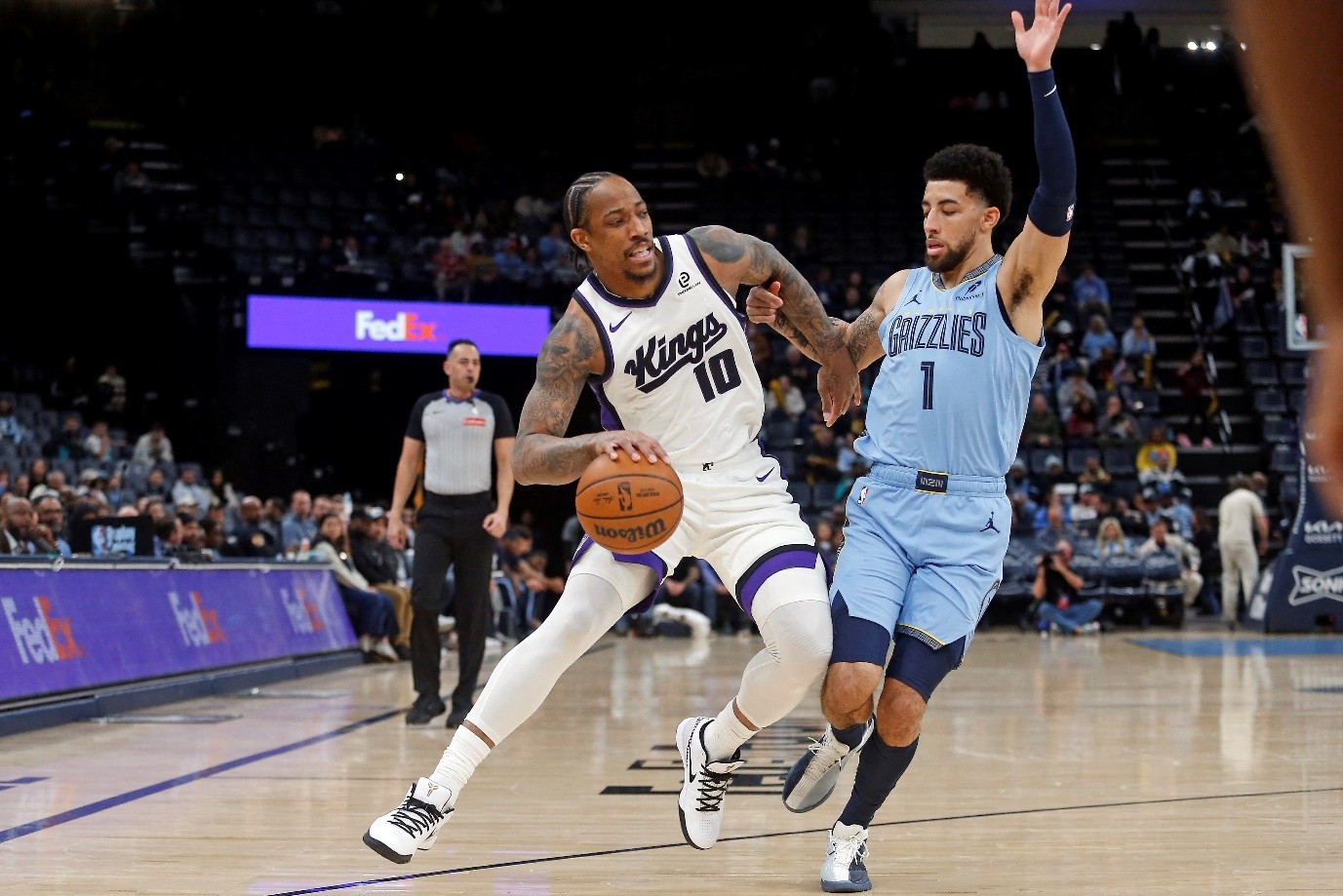
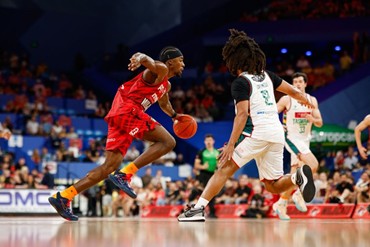
The Achilles tendon and the calf muscle play an undeniably important role in basketball (see Figure 1). Whether it be jumping, rapidly changing direction, or decelerating, the Achilles tendon and the calf muscle are of prime importance(1). It is not surprising, then, that the Achilles tendon and the calf muscle are common injuries among amateur and elite basketball players(2, 3).
Epidemiology
In the United States National Basketball Association, both Achilles tendon and calf muscle injuries are among the top 20 injury regions (accounting for ~8% of all injuries). This is concerning when the median time to return to play for the injuries is substantial (calf strain up to 44 days; Achilles tendinopathy up to 22 days)(4). While not as common, Achilles tendon rupture is an extremely severe injury with a long recovery time. These results are comparable across other leagues, with the Australian National Basketball League attributing ~15% of missed matches to Achilles tendon and calf muscle injuries. These results highlight the need for better prevention strategies.
Risk Factors
Achilles tendinopathy and calf strain injury are associated with many risk factors (see Table 1). Whilst these risk factors are insightful, there is very limited data on Achilles and calf injuries in basketball. However, researchers from the University of Leeds in the United Kingdom studied all types of basketball injury (see Table 2). Unfortunately, this study was completed online, and the researchers didn’t perform any physical testing. Therefore, given that muscle strength and capacity are potential risk factors yet to be investigated, basketball players may be at higher risk due to poor calf muscle strength and endurance, given the physical demands the sport places on them. To reduce the risk of Achilles tendon and calf muscle injuries, the high-performance team should consider improving the physiological capacity of the Achilles tendon and calf muscle.
Table 1: Risk factors for Achilles tendinopathy and calf muscle strain, once excluding those related to serious medical conditions (13, 14).
| Achilles tendinopathy | Calf muscle strain |
| Prior lower-limb tendinopathy or fracture | Chronological age |
| Moderate alcohol use | Previous history of calf strain |
| Training during cold weather | Previous lower-limb injuries (hamstring, quadriceps, adductor, knee) |
| Decreased isokinetic plantar flexor strength | |
|
Abnormal gait pattern with decreased forward progression of propulsion |
|
| More lateral foot roll-over at the forefoot flat phase | |
| Chronological age | |
| Previous history of calf strain | |
| Previous lower-limb injuries (hamstring, quadriceps, adductor, knee) |
Table 2: Basketball-specific injury risk factors(3)
| Basketball injury risk factors |
| Higher chronological age |
| Greater weight |
| Female sex |
| Health comorbidities |
| One to three years of elite experience |
| Guards and forwards are at a higher risk than centers |
Prevention
Neuromuscular training
There are numerous ways to quantify and improve the physical capacity of the calf and Achilles. The typical focus in a program designed to prevent calf and Achilles injuries would be strength, endurance, and stiffness.
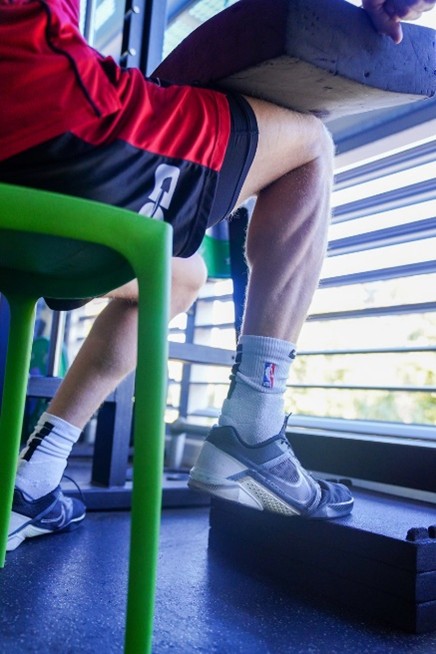
Practitioners should assess and train the calf/Achilles complex in both an extended (straight) knee position and a bent (or sitting) knee position. Whilst the straight knee position will load the gastrocnemius and soleus, as the majority of calf muscle strain injuries affect the soleus, isolating soleus strength can be clinically valuable (see Figure 2)(5). Furthermore, they should assess and train each calf/Achilles complex individually (i.e., single-leg training). Asymmetry is quite common, and if present, simultaneous training of both limbs may underload one of them.
1. Strength Assessment
Practitioners cannot assess calf muscle (ankle plantar flexion) strength with just bodyweight unless the athlete is extremely deconditioned. When using a force plate or dynamometer, they can quantify maximal voluntary contraction in knee extension and flexion. For maximal plantar flexion strength with the knee extended, normative data show a mean of 1.9 times body weight, with an upper limit of 3.1 times body weight(6). For a knee flexion (90 degrees) position, normative data show a mean of 1.8 times body weight, with an upper limit of ~3 times body weight(7). Alternatively, they can also quantify strength using a repetition maximum (RM) method. This might include determining a one to six RM in a seated calf machine, or in a standing calf machine (such as a Smith’s rack).
2. Strength Training
To train calf strength, researchers recommend heavy and slow loads. This would typically be a four to six RM effort, with three to four seconds of time under tension, two to three times weekly in both straight knee and bent knee positions. Calf hypertrophy will also increase strength; therefore, practitioners should include higher-repetition efforts (eight to 12 RM, with two to three seconds of time under tension).
3. Endurance Assessment
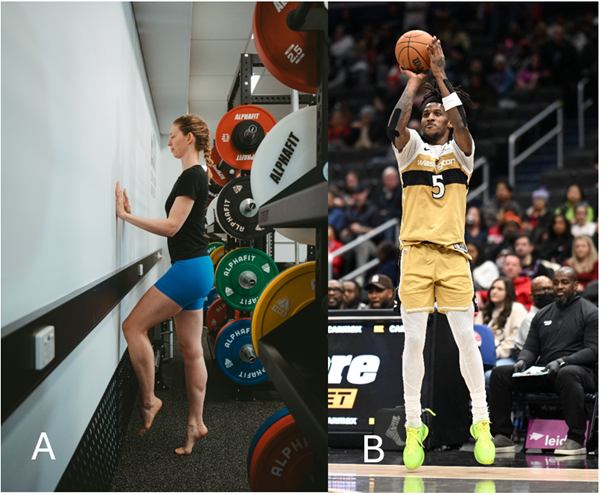
The assessment of calf muscle endurance is most easily performed using a calf-raise-to-failure test (see Figure 3A). There are many variations in this method, which is problematic, as changes in technical cues and athlete position can lead to substantial variability in the number of repetitions(8). Practitioners must follow strict cues for position (facing a wall, fingertips at shoulder height, barefoot), technical cues (keep the knee extended, align the middle of the ankle joint over the second toe, no rocking the body back and forth, reach full ankle plantar flexion height each repetition), ceasing the test (volitional failure or failure due to technique when unable to maintain metronome pace, or unable to maintain technical cues), and rate (30 rises per minutes). The standard for this test varies by population, but a good goal for an athlete is 30-35 repetitions. Alternatively, practitioners can similarly assess endurance to strength; they amend the assessment to evaluate an RM beyond 15 (e.g., 20RM). This can be valuable, but the accuracy of a 20RM can be tricky to get correct without many attempts. Practitioners don’t commonly evaluate bent knee calf endurance and this is largely due to the calf-raise-to-failure test being a predominantly soleus test, as the gastrocnemius provides a lesser contribution with the greater number of repetitions.
4. Endurance Training
To train calf endurance, the simplest way is to prescribe the calf-raise-to-failure test as an exercise. If the athlete could perform two to three sets of the calf-raise-to-failure test twice weekly, practitioners would expect to see clear improvements in calf endurance. Similarly to assessment, they can use machines to train calf endurance, which allows them to make the program more variable.
5. Stiffness Assessment
One of the primary requirements of the Achilles tendon and the calf muscle is to provide the elasticity for movement, to allow energy storage, and to release energy. This function is then more effective if the Achilles tendon and the calf muscle complex are ‘stiffer’. However, one of the complexities in the scientific literature is the confusion between ‘functional’ and ‘structural’ stiffness. For all intents and purposes, we describe the assessment and training of ‘functional’ stiffness(9).
The most accurate method for assessing stiffness is to use force plate technology to quantify hop-based metrics. However, if these resources are lacking, practitioners can assume that ‘good’ stiffness relates to better hop-like performance. Thus, quantifying forward or lateral hop tests for time or distance may provide clinical value. However, regardless of the type of test, they must cue the athlete to avoid heel strike at any stage during hopping and focus on a mid/forefoot strike and to maintain ankle plantar flexion.
6. Stiffness Training
Training of the Achilles tendon and calf muscle stiffness is best done in different ways. To train the tendon, heavy eccentrics or heavy, short isometric holds likely have the greatest capacity to improve tendon stiffness(10). This would involve performing up to 50 maximal eccentric or isometric contractions for ~two to three seconds, with at least 30 seconds of rest between each effort(11). Alternatively, plyometric exercises can be the greatest driver of muscle-tendon stiffness during training. Prescribing sport-specific and high-intensity plyometric exercises will drive the greatest adaptation to provide improved athletic performance (see Figure 3B).
"...plyometric exercises can be the greatest driver of muscle-tendon stiffness during training."
Triple extension (synchronous extension at the ankle, knee, and hip) is foundational in athletic movement patterns and should be trained and progressed from isometric to plyometric in rehabilitation.
Load Management
Load management refers to planning and monitoring the total volume, intensity, and type of physical activity performed by athletes during training and games. Appropriate training loads can provide a protective effect against injury, whereas training less than desired or increasing activity levels too quickly may increase the risk to players.
Practitioners divide training load into external and internal components. External load reflects the physical movements an athlete performs (i.e., what they do). They quantify this using technology such as inertial measurement units (IMUs), providing detailed metrics including accelerations and decelerations, jump counts, cutting actions, and movement symmetry. From an Achilles tendon and calf muscle perspective, these metrics are particularly valuable as they capture activities associated with high elastic energy storage and release. In more resource-constrained settings, they can use simpler measures such as playing time, session duration, or attendance as proxies for calculating external load in basketball.
Internal load represents the athlete’s physiological and perceptual response to the external demands (i.e., how they respond). Practitioners can use session rating of perceived exertion (RPE) to measure internal load, and athletes typically report it on a 0–10 scale. Monitoring both internal and external load is important, as each provides distinct and complementary information to guide training prescription, recovery, and long-term adaptation.
Load Demands in Basketball
During competitive basketball games, male and female players can cover up to six kilometers, with average intensities exceeding the lactate threshold and approximately 85% of maximal heart rate(12). Despite these high average physiological demands, the majority of playing time is spent at lower intensities, reflecting the sport’s highly varied and dynamic nature. However, each basketball league is also unique in the size of the court, the length of each game, the number of games per season, and the density of both training and games, which impact the physical requirements of players.
Movement patterns change frequently in basketball, often every one to three seconds, placing repeated stretch–shortening cycle demands on the Achilles tendon and calf muscle. These rapid transitions between acceleration, deceleration, jumping, and landing expose the Achilles tendon to high peak forces and cumulative loading within short time frames. Positional differences also exist: guards typically spend a greater proportion of time sprinting and performing lateral movements than forwards and centers.
While positional averages are useful to consider, best practice is to objectively quantify the peak and individual-specific demands experienced during both training and competition. Preparing athletes for their highest-predictable in-season loads (maximum-demand scenarios) and, ideally, during the preseason, enables more robust physical preparation. Systematic load monitoring and management play a key role in reducing injury risk while ensuring a sufficient stimulus for performance adaptation.
Load Modification in the Case of Overload
When an athlete develops Achilles tendon pain or stiffness, manipulating training load parameters can help reduce symptoms while maintaining function and performance. We suggest the primary focus be placed on: frequency, intensity, and duration.
- Frequency: Alternating high- and low-load days or implementing day-on/day-off loading strategies may improve tendon recovery between higher-stress sessions.
- Intensity: Lower-intensity and double-leg activities (e.g., stationary shooting, controlled skill drills) can often be introduced early to minimize detraining and maintain technical skill. High-load activities such as sprinting, jumping, and aggressive change of direction should be reduced initially and progressively reintroduced as symptoms allow.
- Duration: Tendon symptoms improve with warming-up but can worsen under fatigue later in a session. Thus, reducing total training duration can help manage symptoms early on, with gradual increases in court time as tolerance improves.
"...manipulating training load parameters can help reduce symptoms..."
References
1. Ann Anat. 2020;229:151461.
2. Life (Basel). 2024;14(7):898.
3. BMJ Open Sport Exerc Med. 2025;11(4):e002346.
4. Sports Health. 2025;17(3):585-593.
5. J Sci Med Sport. 2025:S1440-2440(25)00413-X.
6. Phys Ther Sport. 2025;71:36-42.
7. Phys Ther Sport. 2023;61:114-121.
8. BioMed 2024;4:89-99.
9. J Biomech. 2023;152:111583.
10. Phys Ther Sport. 2020;46:234-242.
11. J Physiol. 2001;536(Pt 2):649-55.
12. Sports Med. 2018;48(1):111-135.
13. Br J Sports Med. 2019;53(21):1352-1361.
14. Br J Sports Med. 2017;51(16):1189-1194.
Latest Issue
Subscribe Today
Newsletter Sign Up
Subscriber Testimonials
Dr. Alexandra Fandetti-Robin, Back & Body Chiropractic
Elspeth Cowell MSCh DpodM SRCh HCPC reg
William Hunter, Nuffield Health
Subscribe Today
Newsletter Sign Up
Coaches Testimonials
Dr. Alexandra Fandetti-Robin, Back & Body Chiropractic
Elspeth Cowell MSCh DpodM SRCh HCPC reg
William Hunter, Nuffield Health
Subscribe Today
Latest Issue
Be at the leading edge of sports injury management
Our international team of qualified experts (see above) spend hours poring over scores of technical journals and medical papers that even the most interested professionals don't have time to read.
For 17 years, we've helped hard-working physiotherapists and sports professionals like you, overwhelmed by the vast amount of new research, bring science to their treatment. Sports Injury Bulletin is the ideal resource for practitioners too busy to cull through all the monthly journals to find meaningful and applicable studies.
*includes 3 coaching manuals
Get Inspired
All the latest techniques and approaches


Sports Injury Bulletin brings together a worldwide panel of experts – including physiotherapists, doctors, researchers and sports scientists. Together we deliver everything you need to help your clients avoid – or recover as quickly as possible from – injuries.
We strip away the scientific jargon and deliver you easy-to-follow training exercises, nutrition tips, psychological strategies and recovery programmes and exercises in plain English.
