
 close
close


 LOGIN
LOGINYou are viewing 1 of your 1 free articles
Thinking the Worst: Catastrophizing Pain


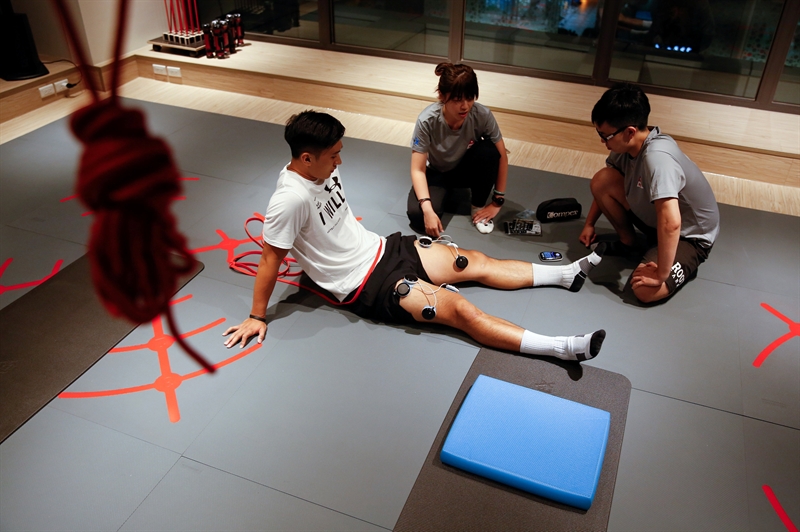
Taiwanese Winter Olympic luge athlete Lien Te-an talks to physiotherapists at a gym room in Taipei, Taiwan 2017.
Let’s face it, no one ever walks into the physiotherapist’s clinic because they feel awesome. The thing that usually brings them in is pain of one sort or another. Whether it’s acute pain from a recent incident or a niggling pain that’s been bothersome for a while, people seek out physios because something hurts. Embracing the updated biopsychosocial model of pain, Karen Litzy gave us tips on how to talk with athletes about their pain, and more importantly, to really listen. However, the updated terminology and language used in the literature about pain may be unfamiliar to many practitioners. Therefore, today’s newsletter installment in our series on pain will clarify some terms and explain pain behaviors frequently seen in injured athletes.
No endeavor besides athleticism sees pain as a requirement for performance. Those who frequently complain or comment on their soreness or pain, even when uninjured, may have a tendency toward catastrophizing. The trait of catastrophizing becomes more evident when an athlete suffers an injury that prevents them from participating in sport.
Just as it sounds, catastrophizing is the Henny Penny (or Chicken Little) of pain behaviors. It signifies an overly sensitive alarm system sensing danger with the slightest provocation or noxious stimuli. Athletes who catastrophize demonstrate these three behaviors:
- Rumination– repeatedly thinking about or constantly focusing on the pain. Athletes who ruminate complain of hurting all the time and struggle to identify anything that makes the pain better.
- Magnification– perceiving the pain as a significant threat. Athletes who magnify believe that the pain indicates something is terribly wrong and that whenever the pain intensifies, the physical injury worsens as well. They also may feel that the injury is career ending, whether the significance of the damage makes this true or not.
- Helplessness – believing that nothing can be done to make the pain or injury better. Athletes who display helpless believe they will have to live with the pain forever and can’t see how they will cope. They may imagine that that their life as an athlete is over and worry as to how to live a meaningful life without sport.
When athletes dwell in these negative thoughts based on a current or prior experience of pain, it is called situational catastrophizing. Interestingly, those with no experience of pain at all can demonstrate this negative tendency in what is known as dispositional catastrophizing. A study at Eastern Kentucky University found that 72% of pain-free athletes surveyed still demonstrated positive pain catastrophizing scores (PCS), albeit significantly lower than those of athletes with current or previous pain experiences(1).
As expected, of the 291 Division 1 NCAA athletes surveyed, those with the more recent pain experiences demonstrated the highest PCS(1). Athletes with prior injuries showed less positive PCS than those with current pain, but not significantly less(1). These scores may reflect the fact that these athletes may still believe that their function is impaired because they still feel pain, even after the tissue damage has healed.
Screening athletes prior to sports participation would allow sports professionals to identify those with a tendency toward dispositional catastrophizing. Those athletes may need a greater amount of pain education to equip them with the coping strategies necessary to deal with a possible injury. If an athlete hesitates to return to sport despite appropriate healing and rehab, further dialogue may be needed as to their pain perception and implication for function. In the next newsletter, we’ll discuss issues around the fear avoidance behaviors that may arise from catastrophizing.
Reference
- J Sport Rehabil.2018 Dec 11:1-20. [Epub ahead of print]

Alicia Filley

Latest Issue

Subscribe Today
Newsletter Sign Up
Subscriber Testimonials
Dr. Alexandra Fandetti-Robin, Back & Body Chiropractic
Elspeth Cowell MSCh DpodM SRCh HCPC reg
William Hunter, Nuffield Health
Subscribe Today



Newsletter Sign Up
Coaches Testimonials
Dr. Alexandra Fandetti-Robin, Back & Body Chiropractic
Elspeth Cowell MSCh DpodM SRCh HCPC reg
William Hunter, Nuffield Health
Subscribe Today
Latest Issue

Be at the leading edge of sports injury management
Our international team of qualified experts (see above) spend hours poring over scores of technical journals and medical papers that even the most interested professionals don't have time to read.
For 17 years, we've helped hard-working physiotherapists and sports professionals like you, overwhelmed by the vast amount of new research, bring science to their treatment. Sports Injury Bulletin is the ideal resource for practitioners too busy to cull through all the monthly journals to find meaningful and applicable studies.
*includes 3 coaching manuals
Get Inspired
All the latest techniques and approaches


Sports Injury Bulletin brings together a worldwide panel of experts – including physiotherapists, doctors, researchers and sports scientists. Together we deliver everything you need to help your clients avoid – or recover as quickly as possible from – injuries.
We strip away the scientific jargon and deliver you easy-to-follow training exercises, nutrition tips, psychological strategies and recovery programmes and exercises in plain English.
