
 close
close


 LOGIN
LOGINCase in Point: Second Metatarsal Stress Fracture - Part I
In the first part of a two-part article, Chris Mallac presents a case study of an elite footballer who suffered a proximal 2nd metatarsal fracture and a 3rd metatarsal stress reaction. In this issue, Chris discusses the causative factors in the pathogenesis of metatarsal stress fractures and how they are diagnosed.
Stress fractures of the metatarsals are a common overuse injury in athletes and dancers and are only second to tibial stress fractures in terms of incidence(1). Stress fractures of the metatarsals are also common in military recruits and in long-distance runners and team sport athletes who cover large mileages in training and competition.
It has been reported that 10%(2) to 20%(3) of stress fractures in athletes, and 23%(4) of stress fractures in military recruits are located in the metatarsals. In terms of location, it is more common for the 2nd and 3rd metatarsals to suffer stress reactions and fractures in the shaft and the non-proximal end of the bone. Indeed, the second and third metatarsal account for 80–90% of all metatarsal fractures(1, 5, 6). By contrast, proximal fractures in the heads of the metatarsals are not common.
Case study
A 21-year-old elite football player who plays as an attacking midfielder presented with acute onset, right-midfoot pain sustained in a training session. He described a sudden clicking sensation on the dorsum of the midfoot over the 2nd and 3rd metatarsals. The injury was caused by a sudden change in direction. He was able to continue training for ten more minutes; however he noticed the pain in the foot was increasing. He denied any previous sensations of midfoot pain leading up to this injury and had spent the previous 11 weeks of pre-season training completely injury free. His rehabilitation followed the 3-phase process.
Upon examination, the footballer was tender upon palpating the dorsum of the foot over the heads of the 2nd and 3rd metatarsals. Pain was reproduced with walking on the toes and was also reproduced by squeezing the metatarsal heads together. The ‘piano key’ sign (grasping each toe individually and moving them in a plantar and dorsal direction) was pain free.
Based on these findings, it was suspected he had suffered either a subtle Lisfrancs injury or had injured the heads of the metatarsals, so an X-ray and MRI scan was requested to investigate further. The X-ray report was unremarkable. The MRI report however described bone oedema in the head of the 2nd metatarsal and shaft of the 3rd metatarsal, with a small fracture line evident in the head of the 2nd metatarsal (see Figure 1 below). No injury to the Lisfrancs ligament was reported.
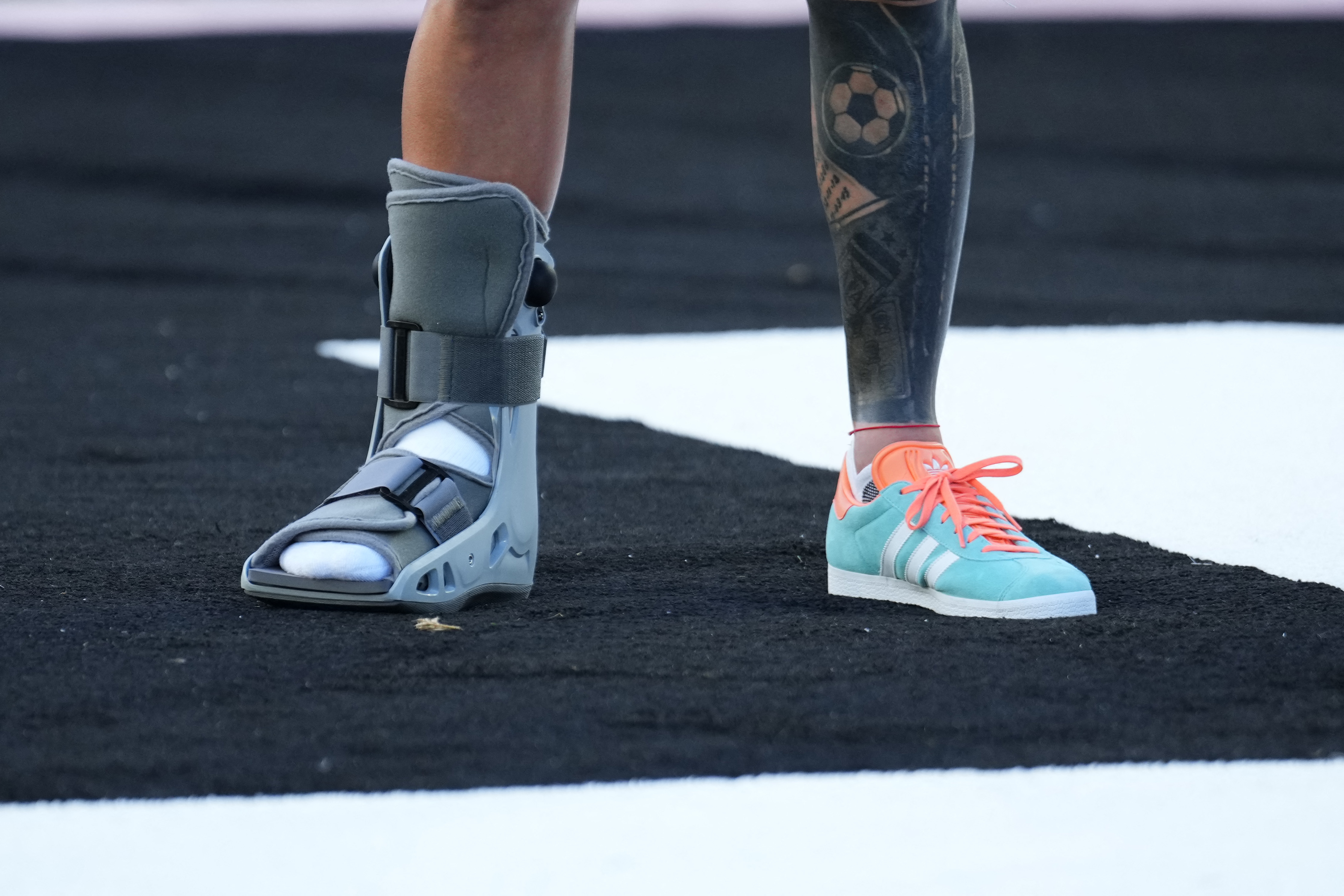
Based on these findings the footballer was immobilised in a moon boot and instructed to mobilise in a non-weight bearing manner for an initial three weeks. He was then reviewed at three weeks and instructed to commence graduated rehabilitation (this will be discussed at length in part II).
You need to be logged in to continue reading.
Please register for limited access or take a 30-day risk-free trial of Sports Injury Bulletin to experience the full benefits of a subscription. TAKE A RISK-FREE TRIAL

Latest Issue

Subscribe Today
Newsletter Sign Up
Subscriber Testimonials
Dr. Alexandra Fandetti-Robin, Back & Body Chiropractic
Elspeth Cowell MSCh DpodM SRCh HCPC reg
William Hunter, Nuffield Health
Subscribe Today


Newsletter Sign Up
Coaches Testimonials
Dr. Alexandra Fandetti-Robin, Back & Body Chiropractic
Elspeth Cowell MSCh DpodM SRCh HCPC reg
William Hunter, Nuffield Health
Subscribe Today
Latest Issue

Be at the leading edge of sports injury management
Our international team of qualified experts (see above) spend hours poring over scores of technical journals and medical papers that even the most interested professionals don't have time to read.
For 17 years, we've helped hard-working physiotherapists and sports professionals like you, overwhelmed by the vast amount of new research, bring science to their treatment. Sports Injury Bulletin is the ideal resource for practitioners too busy to cull through all the monthly journals to find meaningful and applicable studies.
*includes 3 coaching manuals
Get Inspired
All the latest techniques and approaches


Sports Injury Bulletin brings together a worldwide panel of experts – including physiotherapists, doctors, researchers and sports scientists. Together we deliver everything you need to help your clients avoid – or recover as quickly as possible from – injuries.
We strip away the scientific jargon and deliver you easy-to-follow training exercises, nutrition tips, psychological strategies and recovery programmes and exercises in plain English.
