
 close
close


 LOGIN
LOGINThe Hidden Burden of Elite Sport
Nick Pereira highlights the demands on elite-sport staff across various levels of sports, examines the consequences of chronic strain, draws parallels with the healthcare burnout literature, and outlines evidence-informed strategies to improve staff recovery and wellbeing.


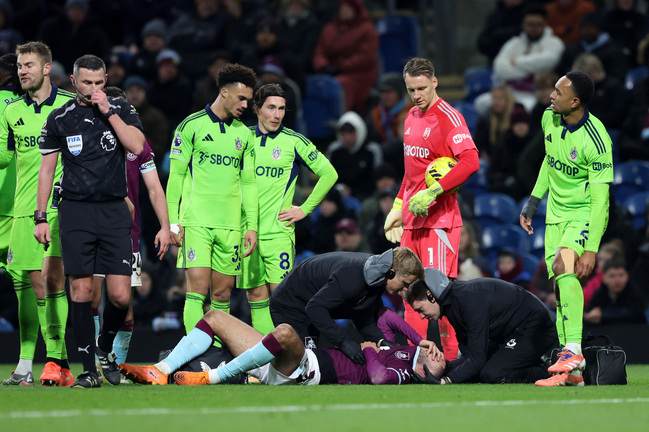
Soccer Football - Premier League - Burnley v Fulham - Turf Moor, Burnley - Burnley’s Armando Broja receives medical attention after sustaining an injury REUTERS/Scott Heppell
Elite sport has made rapid progress in understanding athlete welfare, integrating mental health support, load management, and recovery science into daily practice. Despite this evolution, one group remains overlooked: the clinicians, coaches, performance specialists, analysts, and support staff who sustain the high-performance ecosystem. These individuals prepare athletes for competition, support them through injury, and navigate complex performance environments, yet they themselves face significant physical, psychological, and emotional strain.
Researchers from the University of Technology in Sydney and the Oklahoma City Thunder Professional Basketball Club conducted a scoping review to evaluate the extent of work demands, stress responses, and coping strategies among high-performance sport staff(1). Their findings align closely with the “recovery umbrella” model, which shows that coaching and performance staff experience athlete-like fatigue but rarely receive athlete-level recovery support(2). The critical issue is that staff health directly influences the quality of athlete care, the accuracy of decision-making, and the sustainability of high-performance systems.
Demands on Staff Working in Elite Sport
There are four major domains of demand: workload pressure, organizational constraints, performance-related demands, and sociocultural expectations (see figure 1)(1). The elite-sport context is inherently intense and unpredictable, requiring staff to manage chronic fatigue, irregular schedules, and constant psychological load(2).
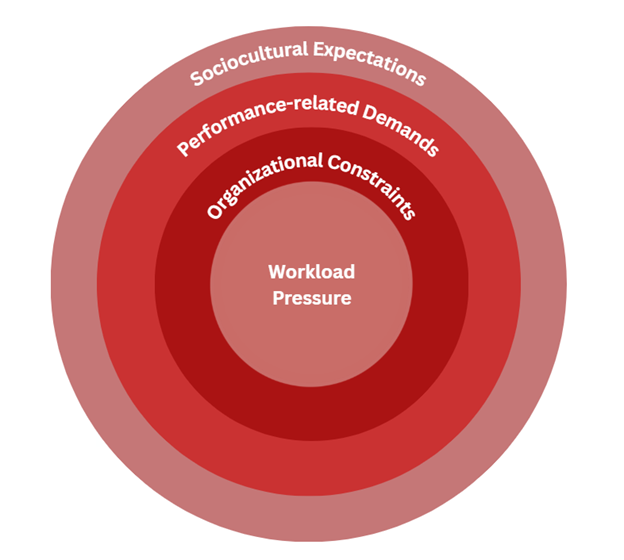
Workload pressures are one of the most consistent stressors. Staff frequently work extended and irregular hours, travel frequently, and remain on-call during both competitive and off-season periods. Late-night fixtures, early training sessions, and travel schedules disrupt sleep and restrict recovery opportunities. The cumulative effect is often chronic fatigue, compromised well-being, and a threat to professional performance in the workplace(3).
Organizational constraints further magnify this load. Short-term contracts, variable resources, and limited autonomy often shape staff roles. Many practitioners operate in a role-ambiguous environment or face shifting expectations, with job security tied to a team’s performance. That high responsibility, paired with low decision-making control, is strongly associated with occupational stress(1).
Performance-related pressures amplify these demands. Clinicians and performance staff are responsible for high-stakes decisions regarding return to play timelines, risk assessment, and injury management. Their roles create expectations regarding the balancing of the expectations of athletes, coaches, administrators, and, at times, agents or sponsors. These ethically complex situations may evoke moral distress, forcing practitioners to reconcile patient needs with external pressures(3).
Sociocultural expectations within elite environments create a final layer of strain. Many staff members internalize norms such as constant availability, emotional toughness, and self-sacrifice for the team. Such expectations discourage help-seeking and reinforce a culture of stress as a badge of honor(1). These patterns are mirrored in healthcare professions, where cultural norms are known contributors to burnout(4).
The Human Cost
The cumulative impact of these demands is reflected in psychological, physiological, and behavioral responses among elite-sport staff. Psychologically, staff commonly report chronic stress, irritability, emotional exhaustion, and a reduced sense of professional efficacy. Some exhibit depersonalization: the feeling of becoming detached from their athletes or viewing them as tasks. This constellation of symptoms closely resembles the classical burnout model(4).
“…staff health directly influences the quality of athlete care…”
Physiological responses are equally substantial. Fatigue characteristics include disrupted sleep, immune suppression during congested travel periods, musculoskeletal strain from repetitive or prolonged postures, and cognitive fatigue from high processing demands(2). Furthermore, chronic stress can impair immune function, disrupt sleep, and contribute to somatic complaints such as headaches and musculoskeletal pain(5).
Behaviorally, staff may withdraw from relationships, exercise less, and rely more heavily on stimulants such as caffeine or alcohol to cope. While these behaviors may provide short-term relief, they perpetuate a cycle of inadequate recovery and increased vulnerability to burnout.
Coping, Recovery, and Protective Factors
Staff can employ a spectrum of coping strategies to protect themselves from burnout(1). Many use adaptive strategies such as proactive planning and cognitive reframing, but avoidant behaviors, including emotional withdrawal or excessive overworking, are also common.
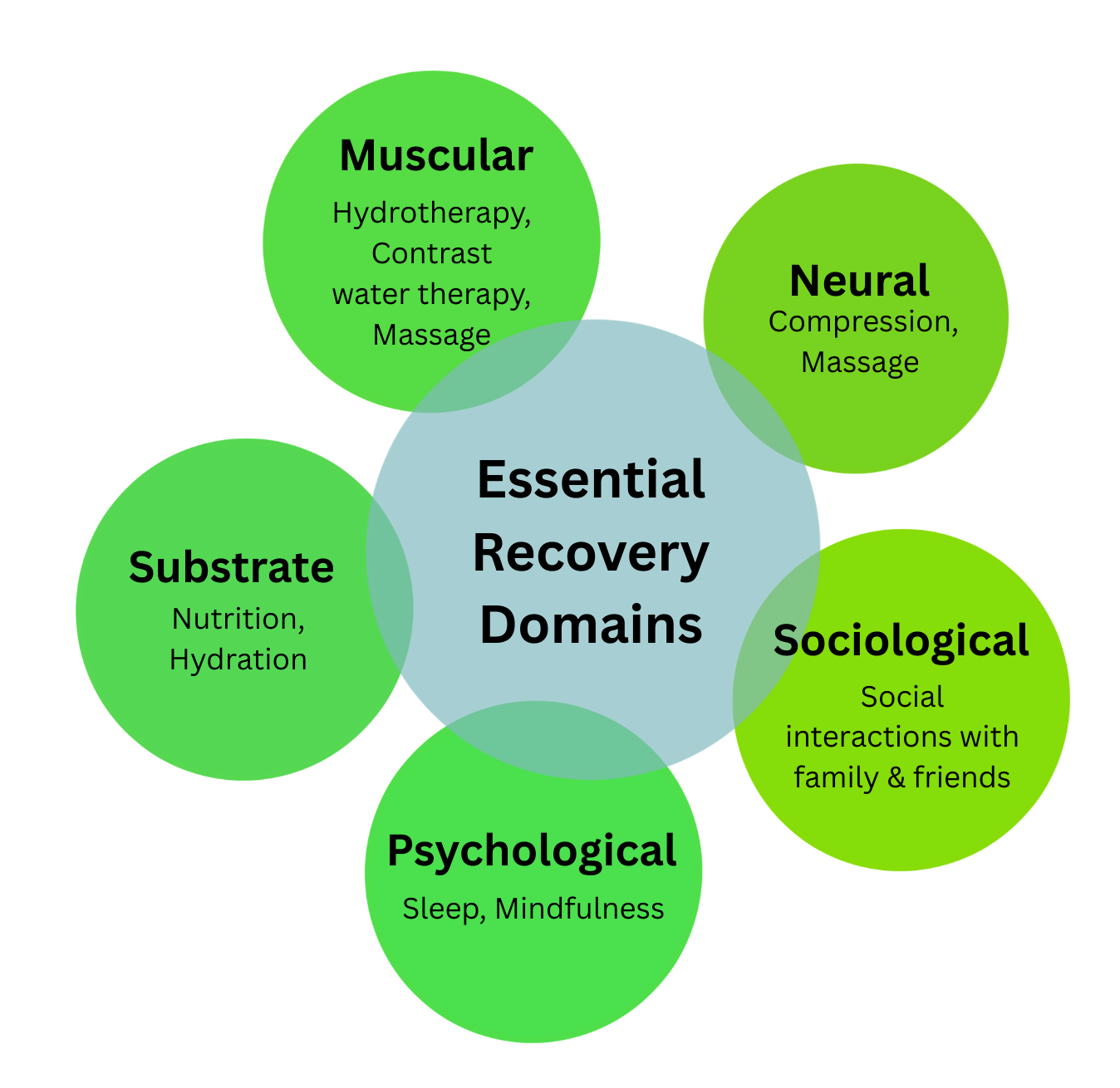
Practitioners can address neural and cognitive recovery through practices such as diaphragmatic breathing, mindfulness, and reduced late-night workload; muscular and physical recovery through postural resets, movement breaks, and physiotherapy access; substrate recovery through nutrition and hydration; psychological recovery through sleep hygiene and reflective practice; and sociological recovery through family connection and protected downtime(2).
These principles align with broader healthcare literature. Burnout among physicians, nurses, and allied health professionals is driven by similar factors: excessive workload, sleep disruption, limited autonomy, and inadequate support structures. Half of healthcare workers meet the criteria for burnout(5). This decreases the quality of care, impairs safety, and increases medical errors, underscoring the real-world consequences of prolonged occupational strain(6,7).
Why Staff Welfare Matters
The implications for sports medicine are substantial. Fatigue can impair clinical decision-making, reduce cognitive processing speed, and limit a clinician’s ability to integrate complex data. Burnout directly increases the risk of diagnostic errors and compromises safety(6,8). While direct research in elite sport is limited, the parallels are clear: fatigued practitioners may be less effective at injury triage, risk assessment, or rehabilitation planning.
Athlete care quality also depends on staff well-being. Exhausted clinicians may struggle to maintain empathy, adapt rehabilitation programs, or engage meaningfully with athletes recovering from injury. Over time, this may erode trust, influence adherence, and reduce treatment effectiveness.
Organizationally, burnout contributes to high turnover within performance departments. When experienced practitioners leave, teams lose institutional knowledge and continuity of care. This mirrors findings in healthcare, which show that burnout contributes to absenteeism, reduced morale, and workforce instability(9). In high-performance sport, this undermines both athlete development pathways and long-term planning and detracts from team culture.
A Framework for Staff Recovery
Clinicians must advocate for a structured recovery framework for staff that mirrors the athlete recovery domains. Neural and cognitive recovery can be supported by reducing late-night analytical work, providing quiet spaces for decompression, and encouraging mindfulness or breathing exercises. Physical recovery can be enhanced through short movement breaks, ergonomic support, and access to physiotherapy. Adequate nutrition and hydration during long workdays assist substrate recovery, while psychological recovery depends on consistent sleep routines, access to mental-health support, and structured debriefing after emotionally demanding events. Sociological recovery requires protecting off-days and encouraging non-sport social engagement (see figure 2).
Second, organizations must address structural factors that contribute to stress. Clear job descriptions reduce ambiguity. Rotating roles during travel or competition can reduce fatigue accumulation. Incorporating staff well-being indicators into departmental evaluations demonstrates an organizational commitment to holistic performance. This requires capital investment and resources, but moreover, an overall recognition of the value and appreciation of support staff, and a commitment to honor them by investing in their welfare and remuneration accordingly.
Third, leadership behaviors profoundly influence staff culture. Leaders who model healthy boundaries, prioritize rest, and communicate openly about well-being help establish psychological safety. Leaders should engage in transformational leadership to enhance staff well-being and performance.
Finally, confidential mental health and psychological support should be accessible to staff without stigma. Interventions that combine organizational change with individual support are most effective in reducing burnout(5,7).
Conclusion
The well-being of high-performance staff is one of the most important yet under-valued determinants of athlete performance and organizational success. This is well illustrated by the chronic and multifaceted demands placed on staff, as well as by the reported staff experience of athlete-like fatigue despite receiving formal recovery support(1,2). The costs of ignoring these issues include burnout, compromised decision-making, reduced quality of care, and organizational destabilization due to staff turnover.
“…staff recovery and welfare must be prioritized…”
For sports medicine clinicians, performance staff, and organizations, the message is clear: staff recovery and welfare must be prioritized with the same seriousness as athlete recovery. Healthy staff make better decisions, communicate more clearly, and provide higher-quality care. In a profession dedicated to supporting others, it is time we ask: Who is looking after the people who look after the athletes?
References
- Sports Med. 2025 Dec;55(12):3001-3058.
- Sports (Basel). 2021 Dec 17;9(12):169
- JAMA Internal Medicine, 178(10), 1317–1331.
- World Psychiatry, 15(2), 103–111.
- Frontiers in Psychiatry, 12, 758849.
- PLoS ONE, 11(7), e0159015.
- BMC Psychol. 2024 Nov 7;12(1):637
- Medicina (Kaunas). 2019 Aug 30;55(9):553.
- NPJ Ment Health Res. 2024 May 6;3:16
- Sports Med Open. 2024 Feb 11;10(1):16.


Latest Issue
Subscribe Today
Newsletter Sign Up
Subscriber Testimonials
Dr. Alexandra Fandetti-Robin, Back & Body Chiropractic
Elspeth Cowell MSCh DpodM SRCh HCPC reg
William Hunter, Nuffield Health
Subscribe Today

Newsletter Sign Up

Coaches Testimonials
Dr. Alexandra Fandetti-Robin, Back & Body Chiropractic
Elspeth Cowell MSCh DpodM SRCh HCPC reg
William Hunter, Nuffield Health
Subscribe Today
Latest Issue

Be at the leading edge of sports injury management
Our international team of qualified experts (see above) spend hours poring over scores of technical journals and medical papers that even the most interested professionals don't have time to read.
For 17 years, we've helped hard-working physiotherapists and sports professionals like you, overwhelmed by the vast amount of new research, bring science to their treatment. Sports Injury Bulletin is the ideal resource for practitioners too busy to cull through all the monthly journals to find meaningful and applicable studies.
*includes 3 coaching manuals
Get Inspired
All the latest techniques and approaches


Sports Injury Bulletin brings together a worldwide panel of experts – including physiotherapists, doctors, researchers and sports scientists. Together we deliver everything you need to help your clients avoid – or recover as quickly as possible from – injuries.
We strip away the scientific jargon and deliver you easy-to-follow training exercises, nutrition tips, psychological strategies and recovery programmes and exercises in plain English.
