
 close
close


 LOGIN
LOGINExercise and Endometriosis
Marianke Pienaar explores the relationship between exercise and endometriosis by examining physiological mechanisms, symptom-related outcomes, psychological benefits, and quality of life among women with endometriosis who participate in physical activity.



Southeast Asian Games - Women’s Gold Medal Match - Thailand v Philippines - Thailand’s Supavadee Kunchuan in action REUTERS/Chalinee Thirasupa
Endometriosis is an estrogen-dependent chronic inflammatory condition characterized by endometrial-like tissue growing outside the uterus(1-3). Typical symptoms include painful menstruation, pelvic pain, and discomfort during intercourse(1-6). Its complexity, coupled with delayed diagnoses and varying symptom profiles, makes it one of the most challenging gynecological conditions to manage. The most common treatments are surgery and analgesics. However, women seek long-term, less invasive methods. Physical activity influences hormone regulation, inflammation, stress responses, and, most importantly, psychological well-being(1,2,5-7). Furthermore, it improves mental health, reduces pain, and strengthens one’s self-perception(1-6).
Chronic Inflammation
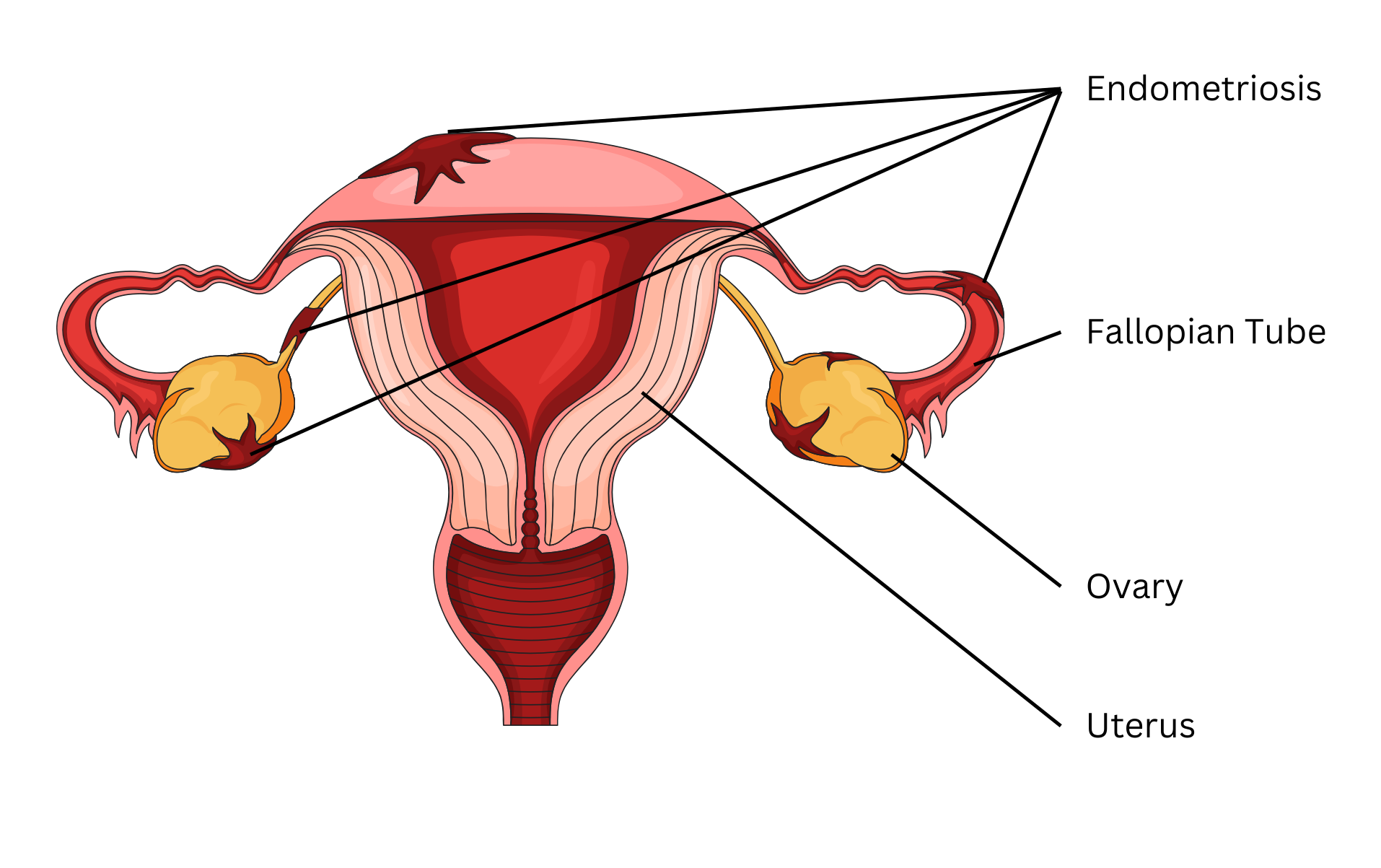
Endometriosis develops when tissue resembling the uterine lining implants in locations such as the ovaries, bladder, bowel, or peritoneum (see figure 1). These implants respond to hormonal cycles by growing and bleeding, which then triggers the chronic inflammation that can lead to scar tissue, adhesions, and ongoing pelvic pain over time(1,4). Women can be asymptomatic or experience migraines, fatigue, infertility, dysmenorrhea, dyspareunia, and bowel or bladder discomfort(4). Oxidative stress may play a big role in the progression of the disease(1). The elevated levels of reactive oxygen species in the peritoneal fluid contribute to sustained inflammation and the sensitization of the pelvic nerves(1).
Exercise
Biological mechanisms
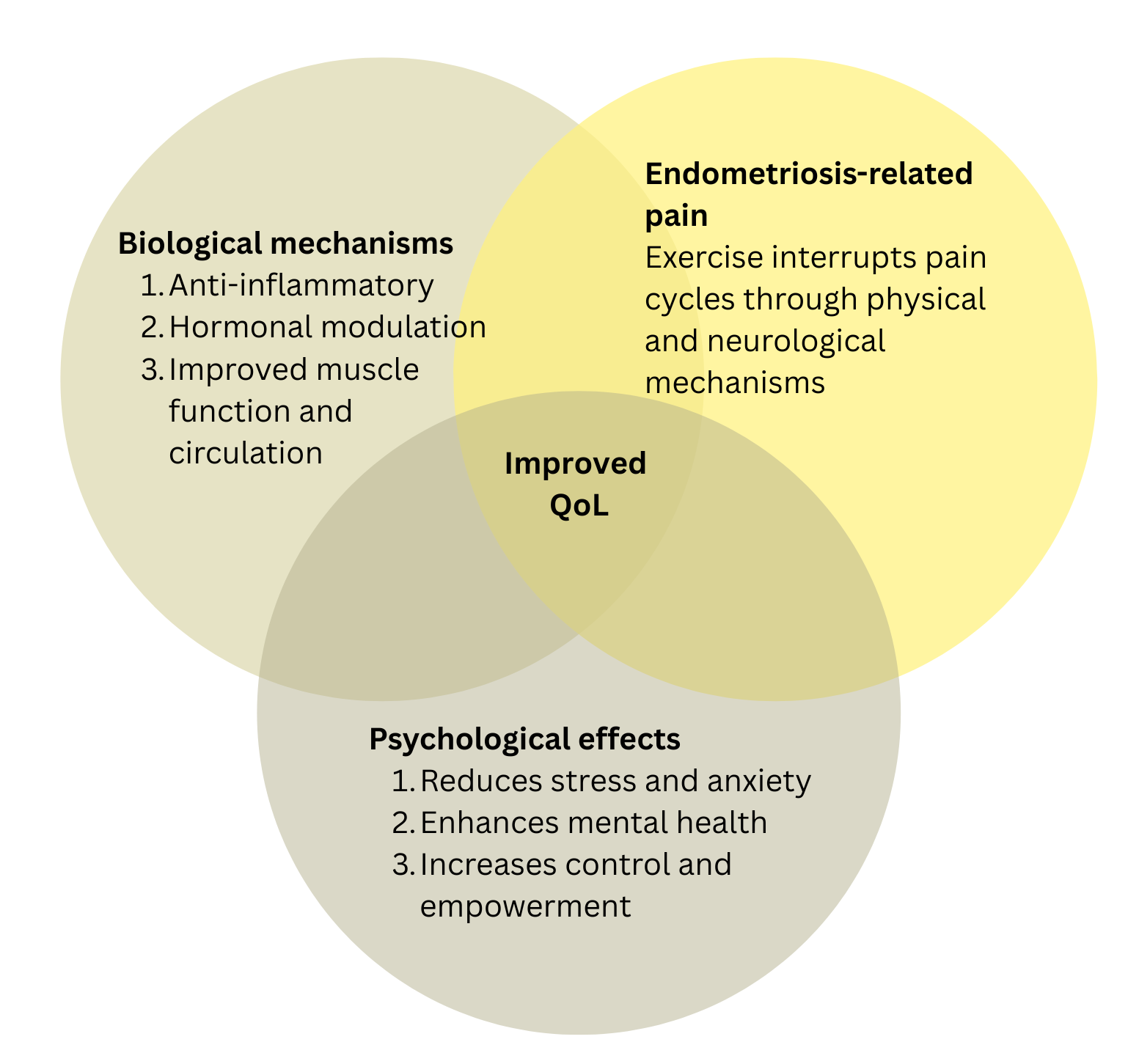
Physically active women tend to report a reduced risk of endometriosis onset and improved symptoms after diagnosis(1,2). Exercise exerts meaningful physiological effects that align closely with the underlying mechanisms of endometriosis.
- Anti-inflammatory effects: striated muscles act as an endocrine organ, releasing myokines during contraction. These molecules help regulate immune activity and counteract chronic inflammation, which is central to endometriosis(1,2). Exercise also increases the levels of adrenaline, cortisol, and certain leukocytes, all of which contribute to acute anti-inflammatory responses(2).
- Hormonal modulation: With endometriosis being estrogen-dependent, anything that influences hormonal exposure will affect symptoms. Regular physical activity reduces menstrual flow and estrogen exposure and moderates ovarian stimulation, which can help regulate disease activity(1).
- Improved muscle function and circulation: Exercise enhances blood flow to pelvic structures, thus easing muscle tension and improving mobility in areas that are affected by chronic pain. This is especially important for women with endometriosis due to the frequent pelvic floor hypertonicity(3).
Endometriosis-related pain
Pain is undoubtedly the most prominent symptom influencing movement patterns, relationships, and emotional well-being. However, exercise interrupts pain cycles through physical and neurological mechanisms. Women who engage in regular moderate-to-high-intensity exercise experience significant reductions in pelvic and menstrual pain(1,2,5). Interventions involving stretching, yoga, aerobic activity, and strength training improve pain scores, as measured with validated instruments such as the EHP-30 questionnaire(2,5). Exercise also activates the release of endorphins and modulates pain pathways in the central nervous system. Women who participate in structured programs experience less pain, cope better with their diagnosis, have enhanced body awareness, and report a restored sense of physical capability(3,6).
“Endometriosis remains a complex, life-altering condition…”
Psychological effects
Women with endometriosis commonly experience mental health problems such as depression, stress, anxiety, and emotional exhaustion(4-6). Exercise meaningfully improves psychological well-being by reducing stress and anxiety, enhancing mental health, and increasing a sense of control and empowerment(2,5). Relaxation-based movement practices, including yoga and stretching, are particularly effective. Interestingly, these changes are amplified in group settings due to additional support and a sense of less isolation. Supervised and guided exercise programs aid the restoration of confidence and foster a sense of empowerment, both of which are vital for long-term self-management(3).
Physiotherapy and Structured Exercise
Physiotherapists specializing in women’s health are instrumental in guiding safe, effective, and personalized exercise plans for women with endometriosis. Their programs typically include both general exercise and targeted pelvic floor interventions. Pelvic floor dysfunction frequently accompanies endometriosis. Pelvic floor muscle training includes strengthening and full relaxation techniques to reduce pelvic floor pain, dyspareunia, and guarding responses(3). Pelvic floor muscle training is an essential component following participation in guided programs(3). Group-based sessions create an environment of safety, accountability, and shared experiences(3). This makes exercise feel less intimidating, helps develop healthier movement patterns, and encourages consistency(3).
Exercise, Identity, and Body Image
Beyond physical symptoms, endometriosis profoundly affects body image. Many women describe feeling as though their bodies have “failed them,” or perceive themselves as less functional(6). Regular physical activity helps reshape this internal narrative. For example, physically active women with endometriosis report significantly higher physical self-concept scores than those who are inactive(6). Realizing that their bodies remain capable and adaptable boosts both confidence and emotional well-being. As exercise reinforces bodily capability, women experience increases in self-esteem, autonomy, and coping skills(6). These psychological benefits are particularly pronounced in younger women, whose identities are still forming. Although many women with endometriosis compare themselves unfavorably with healthy peers, regular physical activity helps shift attention from limitations to abilities. This shift reduces body dissatisfaction and supports healthier mental functioning(6).
Despite the benefits, women with endometriosis are generally less physically active than those without the condition(7). Pain, fatigue, emotional distress, and fear of symptom flares are major barriers. Hormonal treatments may further reduce energy and motivation. Lower physical activity levels contribute to a more sedentary lifestyle, which can exacerbate pain, reduce cardiovascular health, and increase symptom burden(7). Understanding these barriers is essential for clinicians developing supportive, flexible, and individualized exercise plans.
“Although exercise cannot cure endometriosis, it can profoundly transform the experience of living with it.”
Clinical Recommendations
- Consistency
Developing an exercise routine that is safe and manageable can be challenging for women with endometriosis, especially given the fluctuations in pain and fatigue throughout the menstrual cycle(2). Exercise does not need to be intense to be effective; consistency and gradual progression play a much more meaningful role(1). Low‑impact aerobic activities such as brisk walking, gentle cycling, or swimming support circulation, reduce pelvic stiffness, and contribute to cardiovascular health without overloading the pelvic muscles(1,3). Many women report that even 10–15 minutes of physical activity per day helps reduce morning stiffness and improve overall comfort. - Strength training
Strength training has a valuable place in symptom management when introduced gradually. Building strength in the core, hips, and lower back improves pelvic capacity and reduces compensatory muscle tension, a common consequence of chronic pelvic pain(3). Body-weight exercises, such as glute bridges, mini‑squats, and modified planks, enhance stability under excessive abdominal pressure(3). Resistance bands allow further progression while protecting the pelvic floor, which is particularly important because pelvic floor hypertonicity is common in women with endometriosis(3). - Relaxation exercises
Mind‑body movement modalities such as yoga, Pilates, and tai chi offer additional benefits by combining gentle strengthening, stretching, and controlled breathing. These practices help downregulate the nervous system and reduce sympathetic arousal, which is closely linked to pain intensity(5). Restorative yoga, in particular, improves pain, sleep quality, and emotional well-being(5). Women can make modifications during flare-ups to manage symptoms. For example, avoiding deep abdominal compression or intense hip‑openers. - Cycle‑based planning
Women with endometriosis often experience predictable fluctuations in pain levels and energy across their menstrual cycle, and adapting exercise intensity accordingly helps maintain consistency while reducing anxiety about symptom flares(2). On higher‑pain days, gentle stretching, breathing exercises, or light walking may be suitable. As symptoms ease, they can re-integrate moderate aerobic or strengthening exercises. Tracking symptoms alongside exercise habits helps identify patterns and enables confident adjustments to routines.
Clinical Take-aways
- Consistency is crucial to developing the compounding effects of exercise.
- Strength training improves overall pelvic and systemic capacity and builds resilience to stressors.
- Relaxation techniques improve stress-related symptom management.
- Cycle-based planning enhances control by identifying patterns and enabling confident adjustments to routines.
Ultimately, exercise should feel empowering rather than overwhelming. Supervised physiotherapy programs and group‑based training have been shown to increase confidence, improve adherence, and reduce pain over time(3). Small, steady steps, as opposed to high‑intensity routines, can meaningfully improve physical functioning, reduce pain, and support a better quality of life for women living with endometriosis.
Conclusion
Endometriosis remains a complex, life-altering condition defined by chronic inflammation, pain, and psychological strain. While medical and surgical treatments remain vital, exercise stands out as a powerful complementary strategy. Through its anti-inflammatory effects, hormonal modulation, improved circulation, and influence on pain perception, exercise can reduce pain severity and enhance physical functioning. At the same time, it significantly improves mental health, strengthens body image, and empowers women to take control of their own well-being.
Supervised programs, physiotherapy-led interventions, and group-based training environments increase safety, confidence, and consistency. Activities such as aerobic exercise, stretching, yoga, and pelvic floor training, even at low to moderate intensity, offer meaningful benefits.
Although exercise cannot cure endometriosis, it can profoundly transform the experience of living with it. By fostering resilience, strength, and a sense of agency, regular physical activity becomes a crucial pathway toward improved quality of life.
References
- Reproductive Biology and Endocrinology. 2014; 12(4).
- BMC Women’s Health. 2021; 21:355.
- BMC Women’s Health. 2024; 24:505.
- Frontiers in Psychology. 2024; 15:1457842.
- Acta Obstet Gynecol Scand. 2021 Sep;100(9):1595-1601.
- Frontiers in Sports and Active Living. 2025; 7:1494460.
- Int. J. Environ. Res. Public Health. 2023; 20(6659).

Latest Issue

Subscribe Today
Newsletter Sign Up
Subscriber Testimonials
Dr. Alexandra Fandetti-Robin, Back & Body Chiropractic
Elspeth Cowell MSCh DpodM SRCh HCPC reg
William Hunter, Nuffield Health
Subscribe Today




Newsletter Sign Up




Coaches Testimonials
Dr. Alexandra Fandetti-Robin, Back & Body Chiropractic
Elspeth Cowell MSCh DpodM SRCh HCPC reg
William Hunter, Nuffield Health
Subscribe Today
Latest Issue

Be at the leading edge of sports injury management
Our international team of qualified experts (see above) spend hours poring over scores of technical journals and medical papers that even the most interested professionals don't have time to read.
For 17 years, we've helped hard-working physiotherapists and sports professionals like you, overwhelmed by the vast amount of new research, bring science to their treatment. Sports Injury Bulletin is the ideal resource for practitioners too busy to cull through all the monthly journals to find meaningful and applicable studies.
*includes 3 coaching manuals
Get Inspired
All the latest techniques and approaches


Sports Injury Bulletin brings together a worldwide panel of experts – including physiotherapists, doctors, researchers and sports scientists. Together we deliver everything you need to help your clients avoid – or recover as quickly as possible from – injuries.
We strip away the scientific jargon and deliver you easy-to-follow training exercises, nutrition tips, psychological strategies and recovery programmes and exercises in plain English.
