
 close
close


 LOGIN
LOGINYou are viewing 1 of your 1 free articles
Does BMI Affect Injury Incidence?
Body Mass Index classifies athletes according to their body weight relative to height. But what does this mean for injury risk? Marianke Pienaar examines the impact of BMI on injury incidence by reviewing current research across various populations, injury types, and age groups.


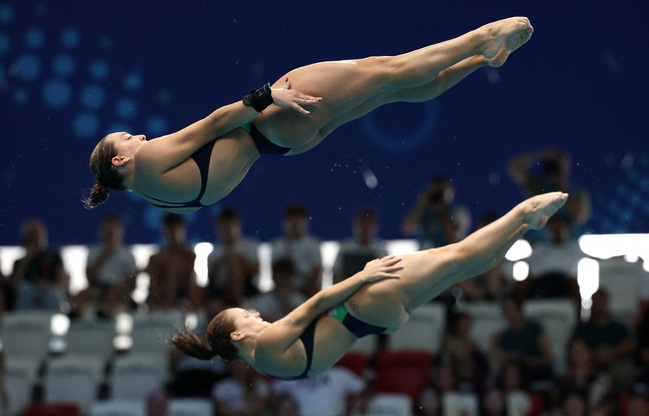
World Aquatics Championships - Women 3m Synchronised - Finals - OCBC Aquatic Centre, Singapore - July 29, 2025 Italy’s Elisa Pizzini and Chiara Pellacani in action REUTERS/Hollie Adams.
Practitioners use the Body Mass Index (BMI) to classify individuals according to their body weight relative to height(1). However, debate remains regarding the influence of BMI on musculoskeletal (MSK) injuries in both the general population and athletes. A higher BMI, often associated with obesity, is thought to contribute to an increased injury risk due to increased mechanical load, altered biomechanics, and chronic inflammation(2). However, evidence is mixed, with some studies demonstrating strong correlations and others suggesting minimal or non-significant associations.
BMI and MSK Injuries
Musculoskeletal injuries include damage to bones, joints, ligaments, tendons, muscles, and nerves(1). Researchers at the King Saud Bin Abdulaziz University for Health Sciences College of Medicine in Saudia Arabia found that while a higher BMI is generally associated with an increased risk of injury, the specific site of injury is not influenced by BMI. Their study emphasized that age and gender are more predictive of injury location, particularly showing that younger individuals (≤35 years) are more prone to upper extremity injuries due to increased participation in sports activities compared to their older counterparts(1).
Interestingly, the researchers found that individuals with higher BMI, particularly those categorized as obese (BMI > 35) are three times more likely to sustain MSK injuries compared to individuals with lower BMI(1). However, despite this elevated risk, the researchers concluded that the anatomical location of injury (e.g., lower back vs. lower extremities) did not differ significantly across BMI categories, challenging the assumption that body composition uniformly dictates injury type or site(1).
“…debate remains regarding the influence of BMI on musculoskeletal injuries in both the general population and athletes.”
BMI and Chronic Back Pain
Another dimension of injury related to BMI is chronic pain and disability, particularly in the lower back. Researchers from Monash University in Australia showed a clear link between increases in BMI over five years and high-intensity back pain and disability ten years later. Specifically, a one-unit increase in BMI, equivalent to a 3.1 kg weight gain, increased the odds of high-disability outcomes by 63% in older adults aged 60 years or older(2).
Lean mass (LM) plays a protective role in preventing high-intensity pain, suggesting that muscle composition, rather than body weight alone, plays a crucial role in injury prevention(2). The researchers propose that increased mechanical loading and reduced neuromuscular adaptation in obese individuals exacerbate spinal stress and accelerate tissue degeneration(2).
Sport-Specific
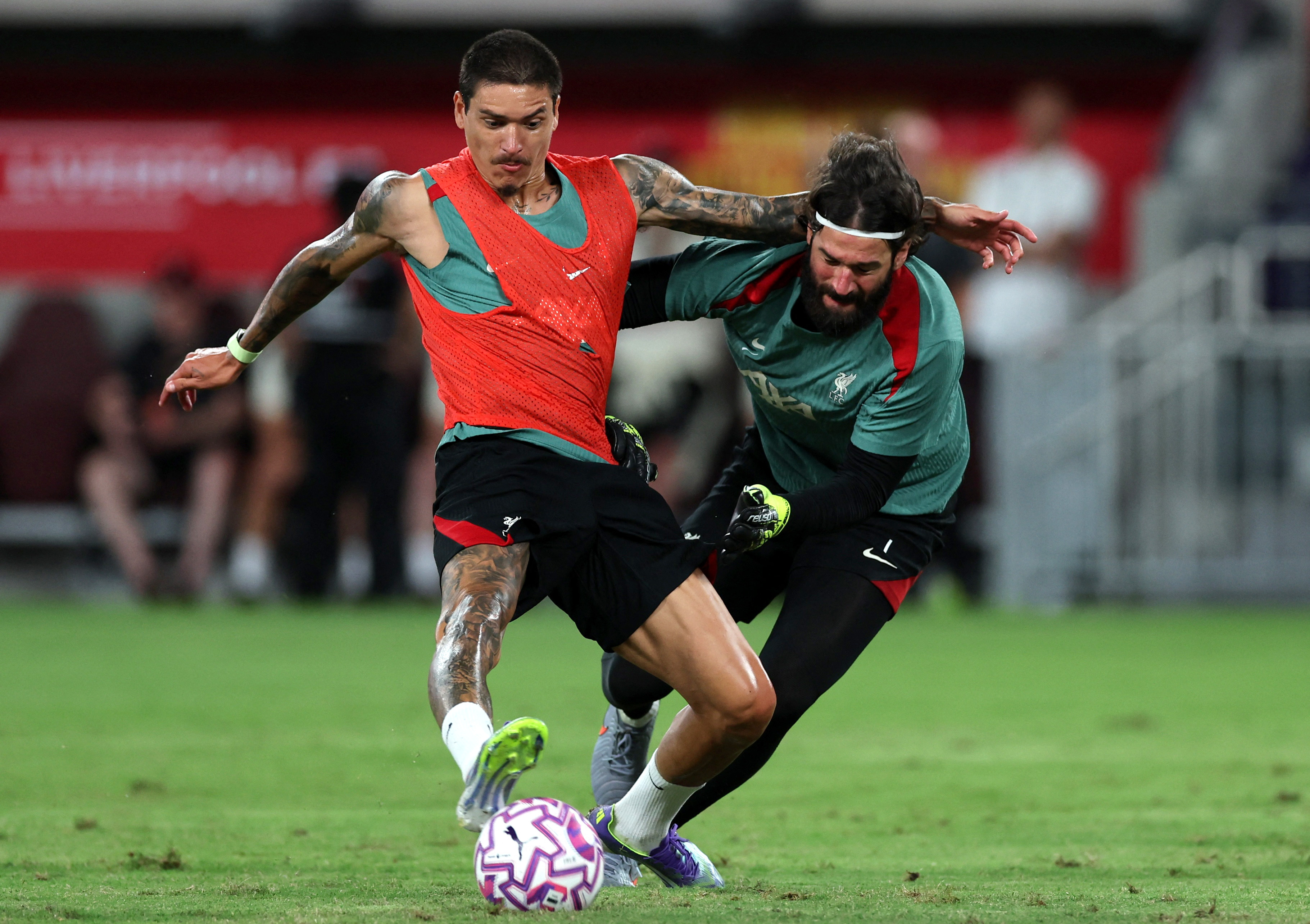
In elite sports contexts, practitioners scrutinize BMI as both a risk and protective factor. Researchers from Liverpool Football Club aimed to identify the correlation between preseason body composition and injury burden throughout the season in their elite cohort. They found a weak but notable association between injury burden and preseason body composition variables, such as BMI and waist circumference(3). Although these correlations were statistically non-significant, they suggest that players with lower BMI, waist circumference, and bone mineral density (BMD) may be more prone to longer injury recovery periods(3). On the other hand, collegiate ice hockey players with a BMI ≥25 have over twice the odds of injury compared to their peers with a BMI <25, highlighting a potential dose-response relationship(4).
Obese adolescents have a 34% higher risk of sport-related injuries compared to healthy-weight peers(5). These injuries were particularly common in the lower extremities, including the knees and ankles, likely due to increased soft tissue loading and joint stress(5). However, Canadian researchers found that overweight or obese active adolescents do not appear to be at increased risk of sports injury(6). The decreased odds among obese adolescents may be due to differences in the intensity of sport participation or the type of sporting activity(6).
Biology and Epidemiology
Biomechanically, excess body weight increases load on joints and bones, potentially leading to supra-physiological overload, especially in high-impact activities. There is a causal link between increased BMI and sports injuries, particularly in the ankles, knees, and shoulders(7). This reinforces the link between obesity and mechanical stress, as well as chronic inflammation—two pathways that independently contribute to tissue damage and delayed recovery(7).
Moreover, BMI and injury may be deeply rooted in genetic and lifestyle factors. For example, specific genetic markers linked to higher BMI are associated with higher risks of joint dislocation, sprains, and ligamentous injuries(7). Encouragingly, though, moderate physical activity is a protective factor, indicating that movement patterns and neuromuscular coordination may be just as critical in injury prevention as weight metrics alone(7).
Contradictions and Confounding Factors
Despite the robust association reported in many studies, BMI and injury risk remains a complex issue. Limitations imposed by small sample sizes and the complexities of elite athlete physiology add nuance to BMI and injury association. For example, in elite environments, athletes have access to better conditioning, medical support, and load management.
In school-based studies, confounding factors such as hours of sports participation, racial background, and level of play significantly influence injury outcomes(8). Adolescents with high BMI are at increased risk for injury only when participating in higher levels of sport or accumulating longer hours of participation(8). Indicating the layered relationship where BMI acts in conjunction with other modifiable and non-modifiable risk factors(8).
There is also age-related variability. Younger athletes might not experience the same degenerative consequences of obesity as older adults do, partly due to greater neuromuscular adaptability. However, the trade-off comes in the form of acute injuries, such as ankle sprains or knee strains, that arise from excess loading during growth spurts and underdeveloped motor control.
Prevention and Management
Given the evidence supporting BMI as a risk factor in various populations, the development of tailored injury prevention strategies is essential. Injury prevention programs, such as FIFA 11+ in football, and targeted strength and conditioning regimens, are effective in mitigating lower extremity injuries(9). Furthermore, increasing the BMI of underweight athletes should be a focus of preseason conditioning, specifically their lean mass and BMD(3,9).
Additionally, adolescent programs should integrate weight management, neuromuscular training, and balanced activity exposure to reduce injury incidence while promoting healthy growth and engagement in sports. The inclusion of lean mass development is particularly vital for older adults to counteract sarcopenia and joint degeneration(2).
“Body mass index is a significant, yet not singular, risk factor for injury.”
Conclusion
The relationship between BMI and injury incidence is multifaceted and influenced by age, gender, activity type, genetics, and physical conditioning. While a higher BMI generally correlates with an increased risk of musculoskeletal and sports injuries, especially in the lower extremities and back, the strength and nature of this relationship vary across populations. In older adults, a unit increase in BMI significantly elevates disability risk. Among adolescents, obese individuals tend to face more frequent and severe sports injuries, although exceptions exist depending on the sport context and conditioning levels.
Moreover, injury risk is not merely a function of weight but also of how that weight is distributed (i.e., fat vs. lean mass), movement patterns, and other health factors. Preventative strategies must therefore consider BMI in conjunction with muscular strength, balance, and tailored training regimes to effectively reduce injury risks.
Body Mass Index is a significant, yet not singular, risk factor for injury. Effective injury prevention requires a holistic approach that incorporates physical fitness, healthy body composition, individualized training, and continuous monitoring, particularly in populations susceptible to both excess weight and high-impact physical demands.
References
1. Cureus, 14(9), e28965.
2. J Cachexia Sarcopenia Muscle. 2025 Feb;16(1):e13641.
3. BMJ Open Sport & Exercise Medicine, 8, e001193.
4. Sports Health 2015;7:45–51. 10.1177/1941738114540445
5. Journal of Sports Medicine, 2016, Article ID 7316947.
6. British Journal of Sports Medicine 48(7):592.
7. Journal of Orthopaedic Surgery and Research, 18, 676.
8. Journal of Science and Medicine in Sport, 16(5), 401–405.
9. Sports Health. 2015 Sep-Oct;7(5):392-8.
Latest Issue
Subscribe Today
Newsletter Sign Up
Subscriber Testimonials
Dr. Alexandra Fandetti-Robin, Back & Body Chiropractic
Elspeth Cowell MSCh DpodM SRCh HCPC reg
William Hunter, Nuffield Health
Subscribe Today

Newsletter Sign Up

Coaches Testimonials
Dr. Alexandra Fandetti-Robin, Back & Body Chiropractic
Elspeth Cowell MSCh DpodM SRCh HCPC reg
William Hunter, Nuffield Health
Subscribe Today
Latest Issue
Be at the leading edge of sports injury management
Our international team of qualified experts (see above) spend hours poring over scores of technical journals and medical papers that even the most interested professionals don't have time to read.
For 17 years, we've helped hard-working physiotherapists and sports professionals like you, overwhelmed by the vast amount of new research, bring science to their treatment. Sports Injury Bulletin is the ideal resource for practitioners too busy to cull through all the monthly journals to find meaningful and applicable studies.
*includes 3 coaching manuals
Get Inspired
All the latest techniques and approaches


Sports Injury Bulletin brings together a worldwide panel of experts – including physiotherapists, doctors, researchers and sports scientists. Together we deliver everything you need to help your clients avoid – or recover as quickly as possible from – injuries.
We strip away the scientific jargon and deliver you easy-to-follow training exercises, nutrition tips, psychological strategies and recovery programmes and exercises in plain English.
