
 close
close


 LOGIN
LOGINMenstrual Cycle Tracking in Women’s Football
The effect of the menstrual cycle on athlete health continues to evolve. Daniela Batev summarizes a 2025 consensus statement on how clinicians can navigate tracking menstrual cycles in athletes.


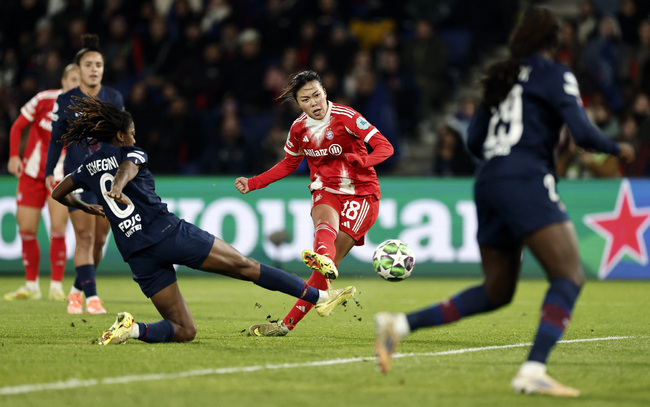
Soccer Football - UEFA Women’s Champions League - Paris St Germain v Bayern Munich - Bayern Munich’s Momoko Tanikawa scores their second goal REUTERS/Benoit Tessier
Until recently, research on menstrual cycles in sports has been fragmented, inconsistent, and often misinterpreted(1). In women’s football, research has stood on the sidelines with claims that certain phases predispose female athletes to performance dips or higher injury risk persist. The dialogue has been dominated by anecdote: coaches assuming that players are slower, weaker, or more injury-prone during particular phases of their cycle. Yet rigorous scientific evidence linking menstrual phases to measurable changes in performance or injury risk remains elusive(1,2,3).
Recognizing this knowledge gap, the Union of European Football Associations (UEFA) assembled a multidisciplinary panel of experts to develop an evidence-based consensus on best practices for menstrual-cycle tracking in women’s football. Their aim was not to create another performance algorithm, but to embed an athlete-centered, ethically responsible model that promotes health, autonomy, and long-term performance(1,5).
The resulting UEFA Consensus Statement on Menstrual Cycle Tracking in Women’s Football represents a landmark step toward standardizing how clinicians, sport scientists, and coaches monitor and interpret menstrual data across the women’s game(1,5).
“…clinicians should use menstrual tracking to monitor personal health before considering performance outcomes.”
Why The Consensus Matters
The sports science literature shows that cyclical fluctuations in estrogen and progesterone can influence physiological processes, such as thermoregulation, substrate metabolism, and ligament laxity. The findings are inconsistent and rarely football-specific. Most research has centered on endurance sports like running and cycling, where workloads differ from the intermittent, high-intensity, and tactical nature of football(2-4).
In parallel, UEFA conducted informal surveys that revealed wide variability in how elite clubs approach menstrual tracking. Some collect daily data through apps or wearables, others rely on informal check-ins, or ignore it altogether. This patchwork approach risks misinterpretation and, at worst, athlete mistrust. The new consensus aims to unify practice across five domains: why to track, what to measure, how to measure, how to implement, and how to research(1).
Participants included sports physicians, physiotherapists, sports scientists, an endocrinologist, and a gynecologist, representing multiple continents. They drafted, debated, and voted on eighty-five statements in Delphi rounds and an in-person meeting at UEFA headquarters in Nyon, Switzerland. After two rounds of voting, 82 statements reached consensus (≥80% agreement), providing scientifically grounded and pragmatic guidance for applied sport environments(1,5).
Reframing The Purpose of Tracking
A critical message from the panel is that menstrual tracking is not a reliable predictor of performance slumps or injuries. Rather, its clinical power lies in early identification of health issues and in educating athletes about their own physiology(2,3).
By recording bleeding patterns, symptoms, and ovulation markers, practitioners can detect red-flag indicators such as oligomenorrhea, amenorrhea, heavy menstrual bleeding, and potential low energy availability. For clinicians working in multidisciplinary teams, this information can guide timely referrals, nutrition assessments, and modifications to training loads, aligning with broader efforts to prevent Relative Energy Deficiency in Sport (RED-S)(7).
What to Track
The consensus proposes a practical hierarchy of meaningful metrics for clinicians:
1. cycle regularity and bleeding characteristics,
2. type, intensity, and duration of cyclical symptoms,
3. confirmation of ovulation, and
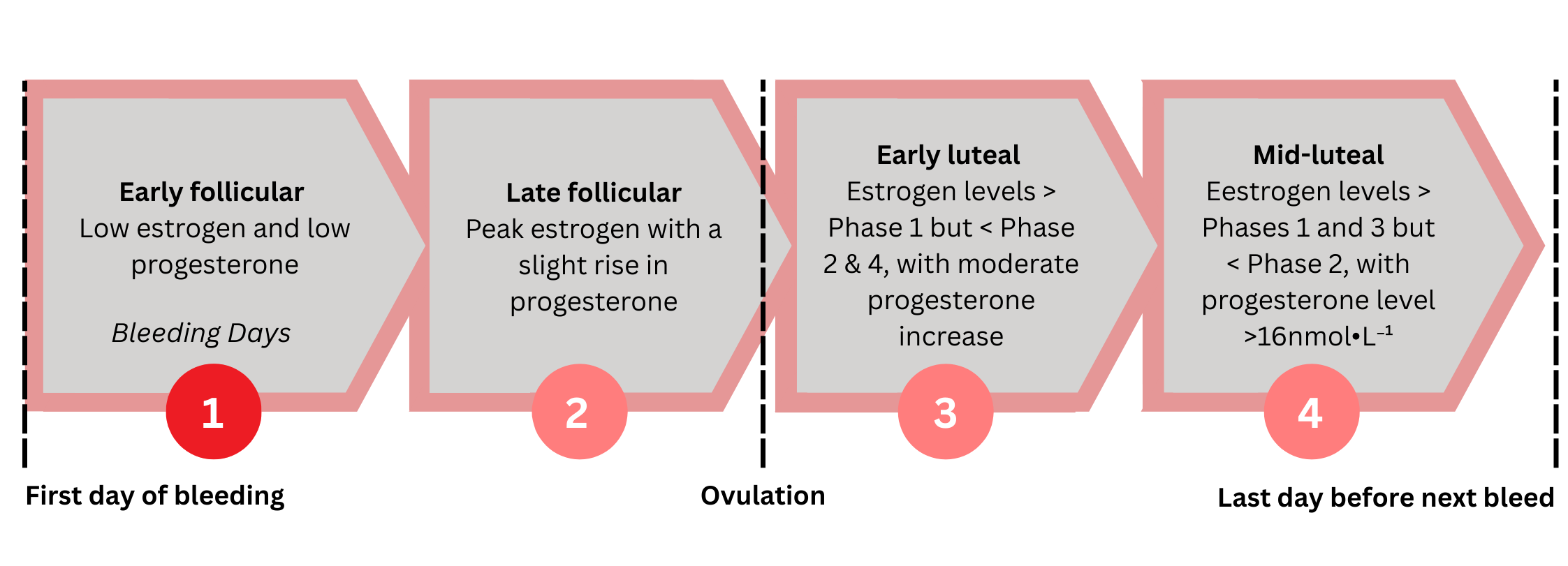
4. ovarian hormone profiles, where feasible (see figure 1).
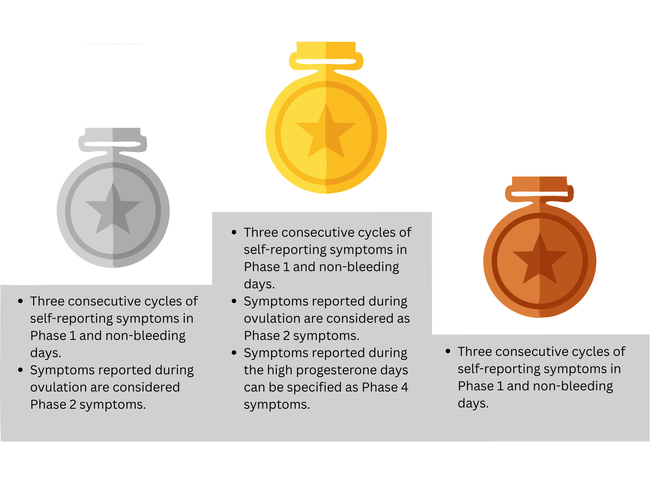
Collecting at least three full cycles before interpretation ensures that individual variability is captured rather than overgeneralized(9,11,12). Monitoring the regularity, duration, and volume of menstrual bleeding helps identify abnormalities such as abnormal uterine bleeding or heavy menstrual bleeding, conditions associated with iron deficiency and fatigue(1,9,10).
Ovulation is a key marker of endocrine health and adequate ovarian hormone exposure throughout the cycle; its absence can indicate under-fueling or chronic stress(11). Where logistics allow, ovarian hormone profiling provides a more detailed picture of physiology and can help confirm cycle phases for research or complex clinical questions(11).
How to Track Effectively
The consensus stresses shared responsibility between the club’s medical team and the athlete. Designating a qualified lead to oversee data quality and education, using simple tools (cycle/symptom diaries, pictorial blood loss charts), and providing feedback to athletes improve both data quality and trust (see figure 2)(1,8).
Ethical and Cultural Considerations
The consensus devotes substantial attention to ethics and culture, emphasizing that participation must be voluntary, confidentiality must be robust, and data use must be transparent. Approaches should respect cultural beliefs and avoid stigma or coercion; athletes should be able to opt out without repercussions regarding selection or playing time(13-15).
The Research Challenge
From a scientific perspective, sample sizes, heterogeneous definitions, and inconsistent phase verification hinder menstrual cycle research. Future work should adopt longitudinal designs, confirm phases robustly, and use statistical models that account for individual variability—moving beyond categorical phases to treat hormones as continuous predictors where appropriate(6,8).
Translating Consensus into Clinical Practice
For clinicians, the take-home is pragmatic; menstrual cycle tracking is not about predicting poor match days, it’s about early detection, education, and empowerment. Integrate a brief menstrual health screen into pre-season assessments, encourage daily wellness logs, and review patterns with the athlete after several cycles(1).
"...menstrual tracking is not a reliable predictor of performance slumps or injuries."
Over time, this information can flag energy-deficiency risks before injuries occur, tailor recovery modalities during high-symptom phases, and support return to play decisions after amenorrhea or RED-S-related conditions(1).
Implementation Checklist for Clinicians
- Start small – Begin with one or two simple screening questions.
- Build trust – Ensure confidentiality and communicate the purpose clearly.
- Monitor for red flags – Missed periods or severe symptoms warrant medical review.
- Educate and collaborate – Host short workshops to normalize discussion.
- Document and review – Summarize data trends after three cycles.
Clinical Takeaways for Practice(1)
• Monitor at least three complete cycles before interpreting trends.
• Combine subjective symptoms with objective measures.
• Be alert for warning signs: amenorrhea, irregular cycles, or heavy bleeding.
• Keep tracking voluntary, confidential, and culturally sensitive.
• Use findings to guide holistic care, not to dictate match selection.
Looking Ahead
This consensus signals a paradigm shift in how women’s health is integrated into sports medicine(1). The next frontier lies in privacy-conscious digital tools that enable multi-cycle pattern recognition and integrate smoothly with training load and wellness platforms. Until strong longitudinal evidence emerges, clinicians should use menstrual tracking to monitor personal health before considering performance outcomes.
References
- BMJ Open Sport Exerc Med 2025;11(3):e002769.
- Sports Med 2020;50:1813–27.
- Int J Environ Res Public Health 2023;20:3264.
- Sports Med 2021;51:1377–99.
- Semin Arthritis Rheum 2011;41:95–105.
- Sports Med 2025;55:1339 51.
- Br J Sports Med 2023;57:1073–97.
- Sports Med 2021;51:843–61.
- Br J Sports Med 2024;58:1237–9.
- Haemophilia 2013;19:225–30.
- Linacre Q 2017;84:343–55.
- Medicine & Science in Sports & Exercise 2019;51:2610–7.
- International Journal of Sports Science & Coaching 2024;19:2366–75.
- Sci Med Footb 2022;6:626–32.
- J Bioeth Inq 2024;21:543–57.


Latest Issue
Subscribe Today
Newsletter Sign Up
Subscriber Testimonials
Dr. Alexandra Fandetti-Robin, Back & Body Chiropractic
Elspeth Cowell MSCh DpodM SRCh HCPC reg
William Hunter, Nuffield Health
Subscribe Today

Newsletter Sign Up
Coaches Testimonials
Dr. Alexandra Fandetti-Robin, Back & Body Chiropractic
Elspeth Cowell MSCh DpodM SRCh HCPC reg
William Hunter, Nuffield Health
Subscribe Today
Latest Issue

Be at the leading edge of sports injury management
Our international team of qualified experts (see above) spend hours poring over scores of technical journals and medical papers that even the most interested professionals don't have time to read.
For 17 years, we've helped hard-working physiotherapists and sports professionals like you, overwhelmed by the vast amount of new research, bring science to their treatment. Sports Injury Bulletin is the ideal resource for practitioners too busy to cull through all the monthly journals to find meaningful and applicable studies.
*includes 3 coaching manuals
Get Inspired
All the latest techniques and approaches


Sports Injury Bulletin brings together a worldwide panel of experts – including physiotherapists, doctors, researchers and sports scientists. Together we deliver everything you need to help your clients avoid – or recover as quickly as possible from – injuries.
We strip away the scientific jargon and deliver you easy-to-follow training exercises, nutrition tips, psychological strategies and recovery programmes and exercises in plain English.
