
 close
close


 LOGIN
LOGINYou are viewing 1 of your 1 free articles
Aching Bones in Growing Athletes
Adolescence is a period of rapid change. This change brings with it unique musculoskeletal injuries. Babette Pluim, Myrthe Vestering, and Bas Maresch discuss the injuries that adolescent athletes face through their key growth and maturation years.


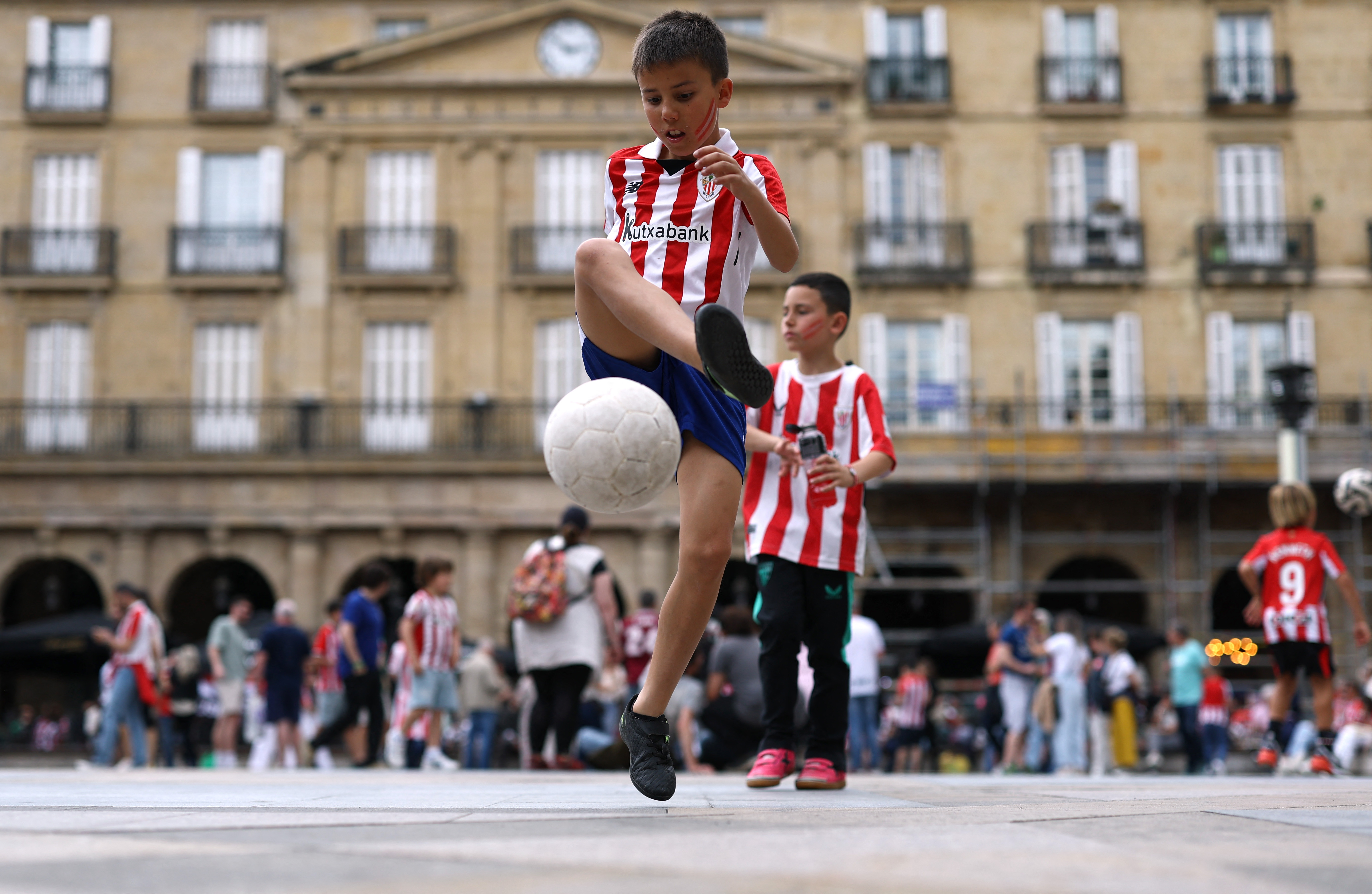
Soccer Football - Europa League - Semi Final - First Leg - Athletic Bilbao v Manchester United - Kids play football in Bilbao before the match Action Images via Reuters/Lee Smith
Youth sport participation continues to rise worldwide, with athletes beginning structured training earlier and competing at higher levels before skeletal maturity. This trend has brought an increase in overuse injuries unique to the developing musculoskeletal system. Among these, periphyseal and apophyseal stress injuries have emerged as key concerns for clinicians, coaches, and parents.
These growth-related lesions occur at predictable sites of stress in developing bones and can be broadly classified into two patterns: periphyseal injuries, involving the primary growth plate, and apophyseal injuries, arising from traction at tendon or ligament attachment sites(1,2,3). Periphyseal injuries occur most often during the pubertal growth spurt, when rapid skeletal growth and open physes increase susceptibility to stress. Apophyseal stress injuries usually affect skeletally immature athletes in early to mid-adolescence, but may also be seen in younger children.
What are Periphyseal and Apophyseal Stress Injuries?
Primary periphyseal stress injury (PPSI) refers to chronic, stress-related lesions of the epiphyseal–physeal–metaphyseal (EPM) complex caused by submaximal compressive and rotational forces(4). These forces disrupt endochondral ossification, leading to microvascular compromise, chondrocyte stress, and reversible physeal widening. Unlike acute Salter–Harris fractures, PPSIs develop gradually and may result in growth disturbance if unrecognized(5–7).
Apophyseal injuries, in contrast, involve secondary ossification centers serving as tendon or ligament attachment sites. These lesions result from repetitive tensile (traction) forces, leading to localized inflammation or partial avulsion. Injuries of the pelvis and lower limb include Osgood–Schlatter disease (tibial tubercle), Sinding–Larsen–Johansson syndrome (inferior patellar pole), Sever’s disease (calcaneal apophysis), and Iselin disease (base of 5th metatarsal)(8). Pelvic traction and avulsion injuries of the anterior superior iliac spine, anterior inferior iliac spine, and ischial tuberosity are common in sprinting, football, and dance(2,3). Upper-limb apophyseal injuries occur predominantly in throwing sports, typically involving the medial epicondyle, and in activities with chronic traction, such as judo, where olecranon apophyseal non-union may occur.
While the mechanisms differ, compressive and shear loading in PPSI vs. tensile traction in apophyseal injuries, both reflect the shared vulnerability of developing bone during rapid maturation.
Common Anatomical Locations
Periphyseal stress injuries
Periphyseal stress injuries involve the EPM complex, where repetitive compressive or shear forces disrupt endochondral ossification and impair longitudinal bone growth:
- Shoulder: Proximal humeral physis (Little Leaguer’s shoulder),
- Wrist: Distal radial physis (Gymnast’s wrist),
- Hand: Proximal phalanx of the finger(9),
- Knee: Distal femoral and proximal tibial physes, particularly during repetitive jumping or sprinting.
Magnetic resonance imaging (MRI) best demonstrates these changes, revealing physeal widening, metaphyseal marrow edema, and cortical irregularity, findings that distinguish periphyseal stress injury from traction-based apophyseal disorders such as Osgood–Schlatter disease(10).
Apophyseal stress injuries
Most apophyseal stress injuries result from repetitive traction at tendon or ligament attachment sites, leading to localized inflammation or partial avulsion:
- Elbow: Medial epicondyle apophysitis (Little Leaguer’s elbow),
- Shoulder: Acromial apophysiolysis(11),
- Hip and Pelvis: Traction and avulsion injuries of the anterior inferior iliac spine, anterior superior iliac spine, ischial tuberosity, or iliac crest(3),
- Knee: Osgood–Schlatter disease (tibial tubercle) and Sinding–Larsen–Johansson syndrome (inferior patellar pole),
- Foot: Iselin disease (base of the 5th metatarsal) and Sever’s disease (calcaneal apophysis),
- Spine: The vertebral ring apophysis is a special case—a secondary ossification center subjected primarily to axial rather than traction loading, commonly stressed in gymnastics, rowing, and weightlifting.
Risk Factors
Risk factors include rapid skeletal growth, early sport specialization, excessive training volume, muscular imbalance, and a history of overuse injury. The adolescent growth spurt creates a mismatch between bone elongation and soft-tissue adaptation, increasing tensile and compressive loads on open physes(12-14). Boys are at greater risk due to later physeal closure and higher participation in high-impact sports.
Common high-risk sports
Sports involving repetitive traction, compression, or shear loading are most often associated with growth-related stress injuries. The specific pattern reflects the dominant movement and loading direction:
- Baseball, cricket, javelin, tennis: Repetitive throwing or serving generates rotational and valgus stress on the shoulder and elbow (Little Leaguer’s elbow/shoulder, olecranon apophysiolysis)
- Soccer, sprinting, rugby: Kicking, acceleration, and rapid direction changes stress the hip, knee, and foot apophyses, including the anterior inferior iliac spine, anterior superior iliac spine, ischial tuberosity, tibial tubercle, heel, and 5th metatarsal.
- Gymnastics, diving, weightlifting: Upper-limb compression and hyperextension produce wrist, elbow, and vertebral stress injuries.
- Climbing: Sustained finger and wrist loading may lead to digital and carpal physeal stress.
- Distance running and jumping events: Repetitive impact contributes to lower-limb lesions, particularly at the heel (Sever’s disease) and knee (Osgood–Schlatter disease).
- Dance, figure skating, hockey: Repetitive hip flexion and rotation predispose to pelvic apophyseal traction and avulsion injuries.
- Rowing and gymnastics: Axial loading and spinal extension stress the vertebral ring apophyses.
Diagnosis and Imaging
A thorough history focusing on training load, growth stage, and sport-specific movement patterns is essential. Athletes typically report localized pain that worsens with activity and improves with rest, often accompanied by subtle swelling or reduced performance.
Clinicians must suspect periphyseal stress injuries when pain localizes around a growth plate. Radiographs are the first-line screening imaging modality that may show physeal widening, irregularity, and fragmentation, and clinicians use them to exclude alternative diagnoses. Magnetic resonance imaging is the gold standard for early detection, demonstrating bone marrow edema, physeal widening, with increased signal intensity and interruption of the zone of provisional calcification on the metaphyseal side of the physis (see figure 1)(15,16). These represent reversible stress-related changes rather than acute Salter–Harris fractures.
Apophyseal injuries are primarily clinical diagnoses based on focal tenderness and swelling at tendon insertions such as the tibial tubercle or calcaneal apophysis. Radiographs may show fragmentation or small avulsions, and ultrasound can identify early soft-tissue inflammation, calcifications, and cortical abnormalities suspicious of an avulsion. Again, MRI provides the most comprehensive assessment, visualizing both osseous and soft-tissue involvement(2,3).
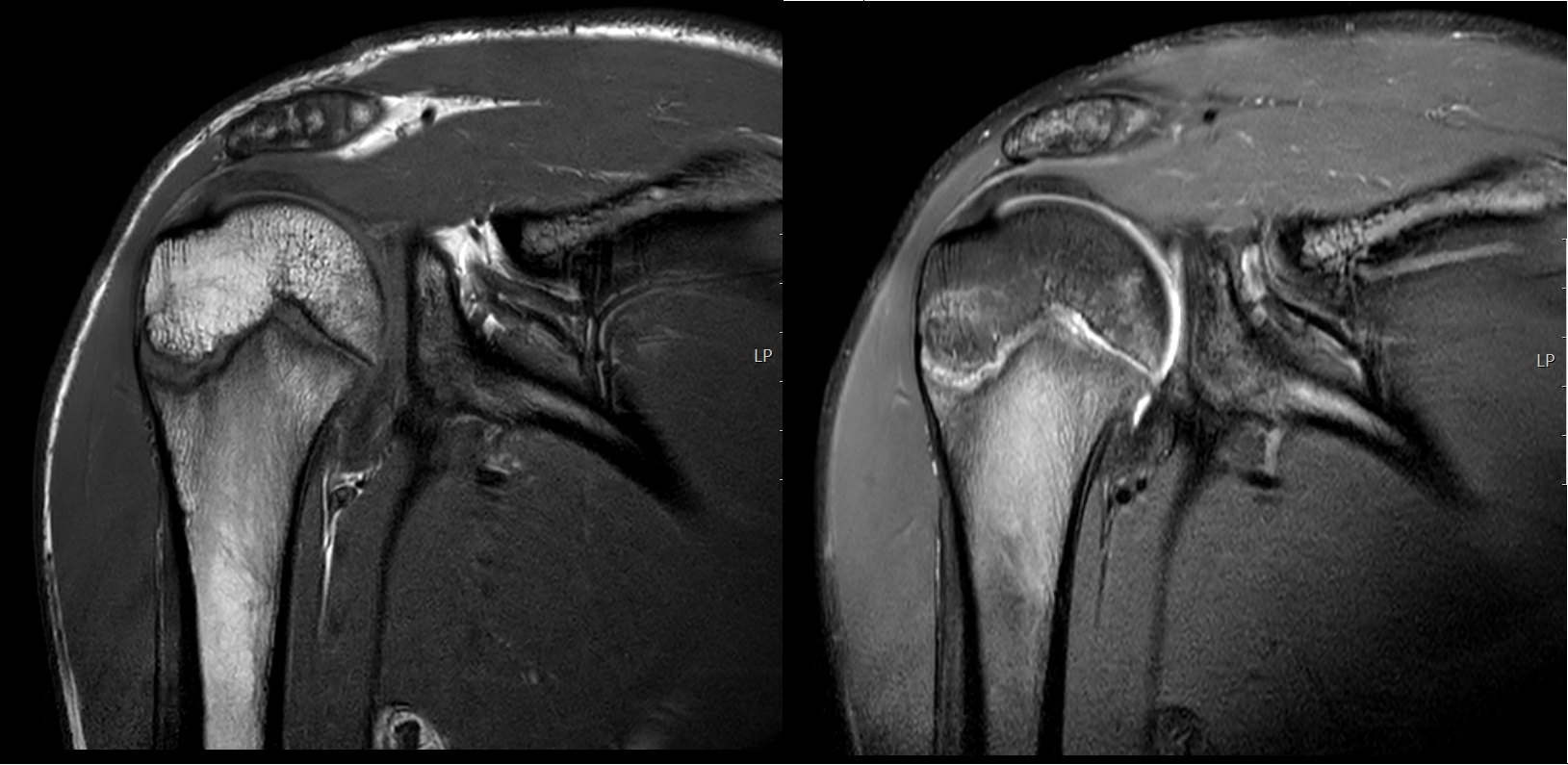
Coronal T1-weighted (left) and PD SPAIR (right) images demonstrate widening of the proximal humeral physis with associated fluid signal and surrounding bone marrow edema.
Across both patterns, MRI remains the most sensitive modality, with ultrasound and X-ray serving as useful adjuncts for superficial apophyseal lesions(17).
“Consider periphyseal stress injury in adolescents with focal pain near a growth plate…”
Management and Rehabilitation
Conservative management remains the cornerstone of treatment for both periphyseal and apophyseal stress injuries(3,10). The primary goals are to relieve pain, protect the vulnerable growth region, and support a gradual, safe return to sport. If left untreated, physeal injuries may lead to asymmetric bone growth, limb shortening from premature physeal closure, or angular deformities due to disrupted longitudinal growth.
Initial care involves temporarily modifying or ceasing aggravating activities, followed by progressive reloading as symptoms subside. Rehabilitation emphasizes flexibility, core stability, and kinetic-chain control, advancing to eccentric and strength training of affected muscle groups.
Clinicians may use short-term immobilization or bracing for severe pain or instability, though it is rarely required. Surgery is reserved for rare cases with significant displacement, growth disturbance, or complete avulsion.
For traction apophysitis (e.g., Osgood–Schlatter or Sever’s disease), symptoms may persist for months despite appropriate care. Complete rest is seldom necessary; athletes may remain active within pain tolerance if symptoms resolve post-activity and do not alter movement patterns. Ongoing strength and flexibility training should continue throughout recovery, with gradual intensity progression as tolerated. Return to sport is appropriate when pain-free or with only mild, transient discomfort, full range of motion, and symmetrical strength and control.
Prevention
Preventing hinges on coordinated load management, education, and close monitoring during growth. Key strategies include limiting weekly training volume increases, ensuring at least two rest days per week, and providing annual off-season rest. Encourage multi-sport participation to minimize repetitive stress on specific anatomical sites.
Monitoring growth and maturation, particularly tracking peak height velocity, helps identify high-risk periods for both injury types(12). Neuromuscular and flexibility programs enhance kinetic-chain balance, while progressive strength development helps distribute traction and compression forces evenly across the skeleton. Education of coaches, parents, and young athletes about early symptoms, such as localized pain, swelling, or performance decline, is critical for early detection and prevention of chronic complications(14,18).
Clinical Tip
- Consider periphyseal stress injury in adolescents with focal pain near a growth plate during peak growth.
- MRI detects early, reversible changes before radiographic signs appear, enabling timely management.
- Differential diagnoses include osteochondritis dissecans, osteochondroses, osteomyelitis, and bone or cartilage tumors.
Coach’s Corner
Coaches should track growth spurts and adjust training loads accordingly. They should also encourage young athletes to participate in a variety of physical activities as early single-sport specialization markedly increases the risk of physeal stress injuries and burnout.
“First-line management is conservative…”
Clinical Takeaways
Periphyseal and apophyseal stress injuries are the most common overuse lesions in skeletally immature athletes. Periphyseal injuries involve the primary growth plate, while apophyseal injuries occur at tendon or ligament attachment sites. High-risk regions include the shoulder, elbow, wrist, hand, pelvis, knee, foot, and spine.
Magnetic resonance imaging is the gold standard for early detection. Ultrasound and radiography are valuable for evaluating surface apophyseal lesions. First-line management is conservative and includes activity modification, flexibility, progressive strengthening, and a gradual return to play. Clinicians developing prevention programs should focus on load management, growth monitoring, adequate rest, and avoiding early specialization.
References
1. Sports Med. 2022a;52:741–772.
2. Appl Sci. 2024;14(24):11795.
3. Front Pediatr. 2022;10:947463.
4. Sports Med 2022b;52:685-707.
5. EFORT Open Rev. 2020;5:498–507.
6. Endocrinol Metab. 2015;30:523–528.
7. J Pediatr. 2016;173:32-38.
8. J Foot Ankle Surg 1999;38 (6):409-16.
9. Skeletal Radiol 2025;54(6):1215-24.
10. Clin Ter. 2016;167(6):e152–e159.
11. Radiology 2015;274(1):201-9.
12. Br J Sports Med. 2024;58:1001–1010.
13. Sports Health. 2017;9(2):139–146.
14. Br J Sports Med. 2015;49:843–851.
15. Curr Radiol Rep. 2014;2:45.
16. Orthop Traumatol Surg Res. 2015;101 (1 suppl):S139-47.
17. Radiographics. 2022;42(3):861-79.
18. Br J Sports Med. 2014;48:287–288.

Latest Issue
Subscribe Today
Newsletter Sign Up
Subscriber Testimonials
Dr. Alexandra Fandetti-Robin, Back & Body Chiropractic
Elspeth Cowell MSCh DpodM SRCh HCPC reg
William Hunter, Nuffield Health
Subscribe Today
Newsletter Sign Up
Coaches Testimonials
Dr. Alexandra Fandetti-Robin, Back & Body Chiropractic
Elspeth Cowell MSCh DpodM SRCh HCPC reg
William Hunter, Nuffield Health
Subscribe Today
Latest Issue

Be at the leading edge of sports injury management
Our international team of qualified experts (see above) spend hours poring over scores of technical journals and medical papers that even the most interested professionals don't have time to read.
For 17 years, we've helped hard-working physiotherapists and sports professionals like you, overwhelmed by the vast amount of new research, bring science to their treatment. Sports Injury Bulletin is the ideal resource for practitioners too busy to cull through all the monthly journals to find meaningful and applicable studies.
*includes 3 coaching manuals
Get Inspired
All the latest techniques and approaches


Sports Injury Bulletin brings together a worldwide panel of experts – including physiotherapists, doctors, researchers and sports scientists. Together we deliver everything you need to help your clients avoid – or recover as quickly as possible from – injuries.
We strip away the scientific jargon and deliver you easy-to-follow training exercises, nutrition tips, psychological strategies and recovery programmes and exercises in plain English.
