
 close
close


 LOGIN
LOGIN11 Factors that Differentiate Sciatica from Hamstring or Other Causes of Posterior Thigh Pain
Michael Lancaster discusses potential diagnoses in cases presenting with rear thigh pain, and how to sleuth out the cause.


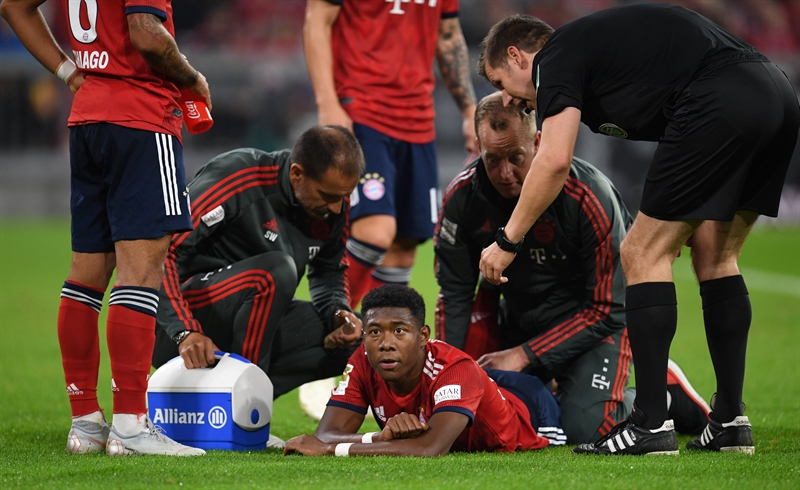
Posterior thigh pain provides a great challenge to sports physiotherapists around the world, with the most common cause being hamstring strains(1). However, there are a number of structures that cause pain both locally or referred. Identification of the pain source allows the practitioner to effectively manage the return to sport. Ultimately one must ascertain if the injury to the posterior thigh is an acute muscle injury or referred pain from another source. An understanding of the relevant anatomy of the posterior thigh, sacroiliac joint, and lumbar spine is therefore essential for effective diagnosis.
Anatomy
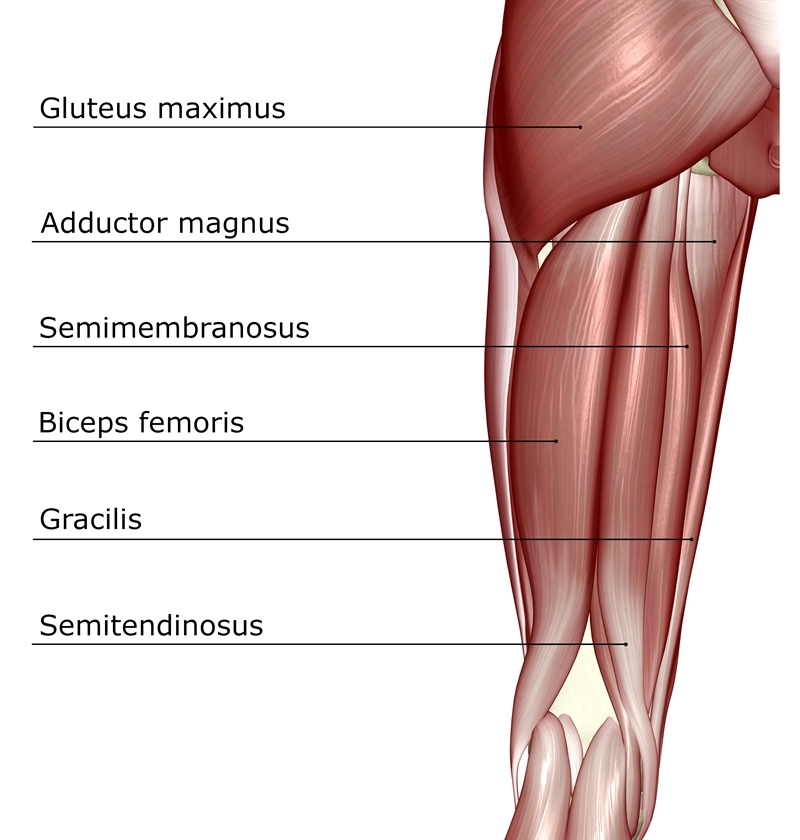
The hamstrings consist of the bicep femoris (BF), semimembranosus (SM) and semitendinosus (ST) (see Figure 1). The ST and the BF unite to form a conjoined tendon before attaching to the posteromedial portion of the ischial tuberosity. The SM is considered to have a deeper attachment, originating just anterolaterally to the conjoined attachment on the ischial tuberosity. The adductor magnus also shares a common attachment to the medial border of the ischial tuberosity. It’s important to note that the proximal tendon has an intimate relationship with the inferior gluteal nerve and artery, the sciatic nerve and the adductor insertion. This can lead to proximal hamstring or adductor entities being accompanied by a neural irritation.
Subjective examination
The importance of a detailed history cannot be overstressed in the differential diagnosis of posterior thigh pain. A strain to the hamstring muscles occurs as a result of significant force. The individual will remember a specific incident such as sprinting or excessive eccentric force (e.g. the ‘Jackal’ position in rugby union with forced hip flexion whilst in relative knee extension). The mechanism of injury (MOI) is a key tool in the differential diagnosis of posterior thigh pain; if the athlete cannot provide an MOI and there are no local muscles signs, one should consider pain to be referred from another source.
The number of potential causative structures can be significantly reduced via appropriate questioning and reasoning. The working diagnosis is further refined via appropriate structuring of the objective examination (see below).
11 Factors that differentiate the diagnosis
1. Symptom Onset
Was there a specific incident or injury mechanism?
- Yes: Consider:
- Hamstring strain
- Fascial injury
- Neural trauma
- No: Consider:
- Overuse injuries
- Referred pain
- Other pathological causes
2. Location of Symptoms
Are the symptoms mainly proximal (near the ischial tuberosity/buttock) with tenderness on palpation?
- Yes: Consider involvement of local anatomical structures such as:
- Proximal hamstring tendon
- Ischiogluteal bursa
- Deep gluteal structures
- No: More distal symptoms increase the likelihood of a muscular strain, particularly if there is a clear injury mechanism. However, referred pain and neural compromise should still be excluded.
3. Presence of Neurological Symptoms
Any signs of neural involvement require a detailed neurological and lumbar spine examination.
This may include:
- Radiating pain
- Numbness or tingling
- Burning sensations
- Weakness
- Altered neural tension testing
4. Causative Factors
Were there any symptoms prior to the current presentation?
Identifying aggravating or causative factors helps guide management and activity modification.
Example:
- Poor Romanian deadlift technique may increase proximal hamstring compression and shear forces against the ischial tuberosity.
- The provoking activity should initially be modified or removed until symptoms settle and correct technique can gradually be reintroduced.
5. Progress After Injury
How have symptoms progressed over time?
- Slow improvement: May indicate a more severe injury.
- Variable or inconsistent progress: Makes a simple strain less likely or suggests symptoms are continually being aggravated.
This requires review of:
- Current rehabilitation
- Training loads
- Daily activities
- Sitting tolerance
- Exercise technique
6. Response to Activity
How do symptoms behave during and after exercise?
- Symptoms that worsen during activity and remain worse afterward may suggest an inflammatory pathology.
- Symptoms that begin mildly, increase during exercise, but ease shortly after stopping may indicate:
- Neural claudication
- Vascular claudication
7. Recurrent Problem
Is there a history of previous posterior thigh injuries?
Recurrent hamstring injuries require:
- Thorough biomechanical assessment
- Review of movement patterns
- Evaluation of training loads and strength deficits
Treating the strain alone may not prevent recurrence unless the underlying contributing factors are addressed.
8. Level of Activity
Has there been a recent change in training volume or intensity?
A sudden increase in loading is a common injury mechanism:
- Increased total training volume may contribute to:
- Proximal hamstring tendinopathy
- Gluteal tendinopathy
- Increased sprint exposure may predispose the athlete to:
- Hamstring strains
Adequate training preparation and load management should be assessed.
9. Lifestyle and Occupation
Are there non-sporting activities aggravating symptoms?
Common aggravating factors include:
- Prolonged sitting
- Long-distance driving
- Desk-based work
- Repeated bending or lifting (e.g., caring for young children)
These factors may perpetuate symptoms despite rehabilitation.
10. Age and Gender
Certain pathologies are more common in specific populations.
Examples:
- Younger athletes:
- Traction apophysitis
- Apophyseal avulsion injuries
- Female athletes:
- Increased risk of stress fractures, particularly in the context of the female athlete triad / RED-S
11. Night Pain
Night pain may indicate a more serious pathology, particularly without a clear sporting mechanism.
This should prompt:
- Medical review
- Further investigation
- Possible imaging or specialist referral
Night pain should always be considered a potential red flag.
Objective examination
The objective examination that follows the subjective history will further refine your working hypotheses. A pragmatic approach to assessment will ensure all potential pathologies have been considered. An ability to conduct a thorough objective examination is assumed; however, points that the author considers especially pertinent to each potential diagnosis are highlighted in Table 1 below.
| Possible Differential Diagnosis | Exclusion Criteria |
|---|---|
| Lumbar spine facet arthropathy / disc degeneration / radiculopathy | No diffuse leg referral; positive hamstring load tests; lumbar palpation NAD; negative quadrant test |
| Hip joint ischiofemoral impingement ± quadratus femoris abnormalities | Femoral external rotation in hip neutral negative; MRI negative (no narrowing/loss of ischiofemoral space and quadratus femoris normal); FADDIR negative |
| SIJ somatic referral | Laslett’s SIJ provocation tests negative |
| Sciatic nerve compression | Sciatic tenderness at quadratus femoris negative; slump test positive only for hamstring symptoms with no change using sensitizers (hip adduction/internal rotation); modified slump (lumbar extension) differential test favors proximal hamstring tendinopathy (PHT). Coexisting pathology still possible. |
| Deep gluteal syndrome / piriformis syndrome | Sciatic nerve non-tender at piriformis; no further provocation with piriformis stretch/contraction or slump with adduction/internal rotation; MRI negative |
| Gluteal tendinopathy | Hamstring load tests positive; gluteal load tests negative; MRI negative |
| Ischiogluteal bursitis | Pain with stretch and localized palpation; irritable symptoms with sitting; MRI and ultrasound negative |
| Partial or complete tear of the gluteal or hamstring muscle/tendon | Gluteal and hamstring tests positive, but MRI and ultrasound negative for muscle or tendon tear |
| Posterior pubic or ischial ramus stress fracture | Tenderness over ischial ramus; MRI negative; higher suspicion in female athlete triad presentations |
| Adductor magnus pathology, tear, or tendinopathy | Adductor tests negative; PSST adductor stretch and resisted tests negative; MRI negative |
| Vascular endofibrosis | No immediate symptom resolution on cessation of provocative exercise; bruit sign negative; echography/arteriography negative |
Hamstring strains
Acute hamstring strains are often our first thought when a player grabs at their posterior thigh. Local pain with tenderness on direct palpation, loss of range and loss of muscle power can help confirm this diagnosis. The single leg bridge is a recognized quick and easy test to assess hamstring function. Tendon involvement will lengthen the time frame and likely alter the management plan, imaging will confirm this(10). Table 2 provides an easily digestible comparison between hamstring strain and tendinopathy to surrounding structures and referred pain.
Avulsion of the hamstring tendon - although not common - may occur in the sporting population; an older runner with chronic proximal hamstring tendinopathy may rupture from its proximal bony attachment. In the younger population, (aged 14-18 years) avulsions of the ischial apophysis can occur. This will present as a high hamstring injury, and imaging will help clarify the extent(11). In adults, complete rupture is rare but may occur with sudden forced hip flexion and knee extension, such as in powerlifting and rugby(12, 13).
| Clinical features | Acute hamstring strain (Type I or II) | Hamstring/Adductor/Gluteal Tendinopathy | Referred pain to the posterior thigh |
|---|---|---|---|
| Onset | Sudden | Gradual onset, progressive over time | May be sudden onset or gradual feeling of tightness |
| Pain | Moderate to severe | Low to moderate | Usually less severe, may feel like cramping or twinge |
| Ability to walk | Disabling - Difficulty walking, unable to run | Often able to walk pain free | Often able to walk / jog pain free |
| Stretch | Markedly reduced | Combined hip flexion and knee extension reduced range with possible symptom reproduction | Minimal reduction |
| Strength | Markedly reduced contraction with pain against resistance | May be reduced when assessed in hip flexion position | Full or near to full muscle strength against resistance |
| Local signs | Hematoma, bruising | None | None |
| Tenderness | Focal tenderness | Deep palpation of proximal or distal tendon reproduces symptoms | Variable tenderness, usually non-specific |
| Slump test | Negative | Occasionally positive due to proximity to neural tissue | Frequently positive |
| Trigger points | May have secondary gluteal trigger points | May have secondary gluteal and adductor trigger points | Gluteal or adductor magnus trigger points that reproduce hamstring pain on palpation or needling |
| Lumbar spine / SIJ signs | May have abnormal lumbar spine / SIJ signs | May have abnormal lumbar spine / SIJ signs | Frequently have abnormal lumbar spine / SIJ signs |
| Investigations | Abnormal ultrasound / MRI | Possibly abnormal ultrasound / MRI | Normal ultrasound / MRI |
Referred pain
In the absence of clear muscle injury signs and symptoms, referred pain must be considered. Posterior thigh pain could be caused by the lumbar spine, sacroiliac joint, hip joint, or neural or vascular compromise, and these must all be fully excluded. The slump test should be used to detect neural mechano-sensitivity. A positive slump test is strongly suggestive of referred pain. However, a negative slump doesn’t exclude this possibility(14). It is important to note that predisposing factors for hamstring injury may be found when the detailed proximal assessment has been completed.
Trigger points are common sources of referred pain to the posterior thigh. The most common trigger points that refer pain to the hamstring are in the gluteus minimus, medius and piriformis(15). The classic presentation will be a feeling of tightness or cramping and the athlete may report that the hamstring feels like it is ‘on the edge of a strain’. Further examination may highlight restriction within the hamstring and the gluteals, but with direct referral into the hamstring on trigger point palpation.
Lumbar spine and other articular structures
The lumbar spine is a common source of posterior thigh pain. Pain may be referred from a number of structures such as discs, facet joints, muscles, ligaments, nerve roots(16). A detailed examination including a thorough neurological screen is vital, and imaging may help with this. However, caution is advised as pre-existing changes may be present. Nerve root compression will usually provide a much more definitive presentation. One must always consider red flags; cauda equina identification is vital to allow appropriate and timely management(17). Spondylolisthesis and spondylolysis have both been associated with hamstring pain and tightness and should be excluded in recurrent/recalcitrant presentations.
The sacroiliac joint (SIJ) often refers pain to the buttocks and high hamstring region; 94% of SIJ dysfunction cases report buttock pain(18). SIJ provocation tests can be used to highlight the involvement of the SIJ(19). Anterior hip impingement can present with groin pain, lateral hip/thigh pain and buttock pain(20). A negative FAIR/FABER test is commonly used to rule out significant FAI and/or labral pathology(21).
Deep gluteal syndrome
Deep gluteal syndrome (DGS) is an umbrella term that covers a number of pathologies. Piriformis syndrome, compressing the sciatic nerve is the most common(22), but there can also be fibrous bands tethering the sciatic nerve, compression within the Gemelli–obturator internus complex, vascular pathologies or space-occupying lesions. Piriformis overactivity is a common response to weak gluteals; the need to assess the biomechanical control of athletes will allow for possible causative factors to present themselves. McCory and Bell highlight that it is also the hip external rotators that can compress the sciatic nerve(23). A combination of the seated pirformis stretch test and active piriformis test has high sensitivity and specificity for sciatic nerve entrapment.
Vascular
Endofibrosis of the external artery can produce posterior thigh pain (although very rare compared to the more common presentation of lateral and anterior thigh pain). This can occur in cyclists or triathletes. Pain is claudicant in nature and progresses within 10-20mintues of exercise, but resolves immediately on termination of exercise.
In summary
When assessing posterior thigh pain, the practitioner should take a stepwise approach, first forming a working diagnosis based on subjective findings, having excluded any red flags. A thorough objective assessment can then either rule in or rule out the working hypotheses. It is important we don’t allow our own confirmation bias to guide us to the most common pathology. We owe it to the athlete to ensure we have excluded as many potential causes prior to our definitive diagnosis. This allows implementation of the most appropriate evidence-based management plan and a prompt return to sport.
References
- Br J Sports 2012; 46: 86-7.
- B Prac Res Clin Rheumatol 2007; 21 (2): 261-77.
- Br J Sports 2012; 46: 833-834.
- Sports Med 2002; 32: 371-91.
- Eur J Vasc Endo Surj 2003; 26 (6).
- Br J Sports Med 2016; 0: 1-9.
- Military Med 2011 176; 420-430.
- BMJ 2013; 347: f7095.
- Sports Physio 2017; 2: 20-24.
- Am J Sports Med 2012; 41 (1): 111-115.
- Clinical Sports Medicine 2012; 30: 600.
- Am J Sports Med 1998; 26 (6): 785-8.
- Knee Surg Sports Traumatol Arthrosc 2008; 16: 797-802.
- JCR 2008; 14 (2): 87-91.
- B J Sports Med 2005; 39 (2): 84-90.
- Spine 2002; 27 (22): 2538-2545.
- Br J Neurosurg; 2010; 24 (4): 383-6.
- Arch Phys Med Rehabil 2000; 81 (3): 334-8.
- Arthroscopy J 2005; 10 (3): 207 – 18.
- Clin Orth & Rel Res 2009; 467 (3): 638-644.
- Scand J Med Sci Sports 2017 27 (3): 342-350.
- Am J Sports Med 1998; 16 (5): 517-21.
- Sports Med 2002 32 (6) 371-91

Latest Issue

Subscribe Today
Newsletter Sign Up
Subscriber Testimonials
Dr. Alexandra Fandetti-Robin, Back & Body Chiropractic
Elspeth Cowell MSCh DpodM SRCh HCPC reg
William Hunter, Nuffield Health
Subscribe Today

Newsletter Sign Up




Coaches Testimonials
Dr. Alexandra Fandetti-Robin, Back & Body Chiropractic
Elspeth Cowell MSCh DpodM SRCh HCPC reg
William Hunter, Nuffield Health
Subscribe Today
Latest Issue

Be at the leading edge of sports injury management
Our international team of qualified experts (see above) spend hours poring over scores of technical journals and medical papers that even the most interested professionals don't have time to read.
For 17 years, we've helped hard-working physiotherapists and sports professionals like you, overwhelmed by the vast amount of new research, bring science to their treatment. Sports Injury Bulletin is the ideal resource for practitioners too busy to cull through all the monthly journals to find meaningful and applicable studies.
*includes 3 coaching manuals
Get Inspired
All the latest techniques and approaches


Sports Injury Bulletin brings together a worldwide panel of experts – including physiotherapists, doctors, researchers and sports scientists. Together we deliver everything you need to help your clients avoid – or recover as quickly as possible from – injuries.
We strip away the scientific jargon and deliver you easy-to-follow training exercises, nutrition tips, psychological strategies and recovery programmes and exercises in plain English.
