
 close


 LOGIN
Pilates Pillars for Sports
Pilates continues to gain attention from athletes and clinicians worldwide. As they apply Pilates principles in training, they must understand the pillars that make it a powerful tool in sports medicine. Tracy Ward unpacks these pillars for clinicians to use in daily practice.


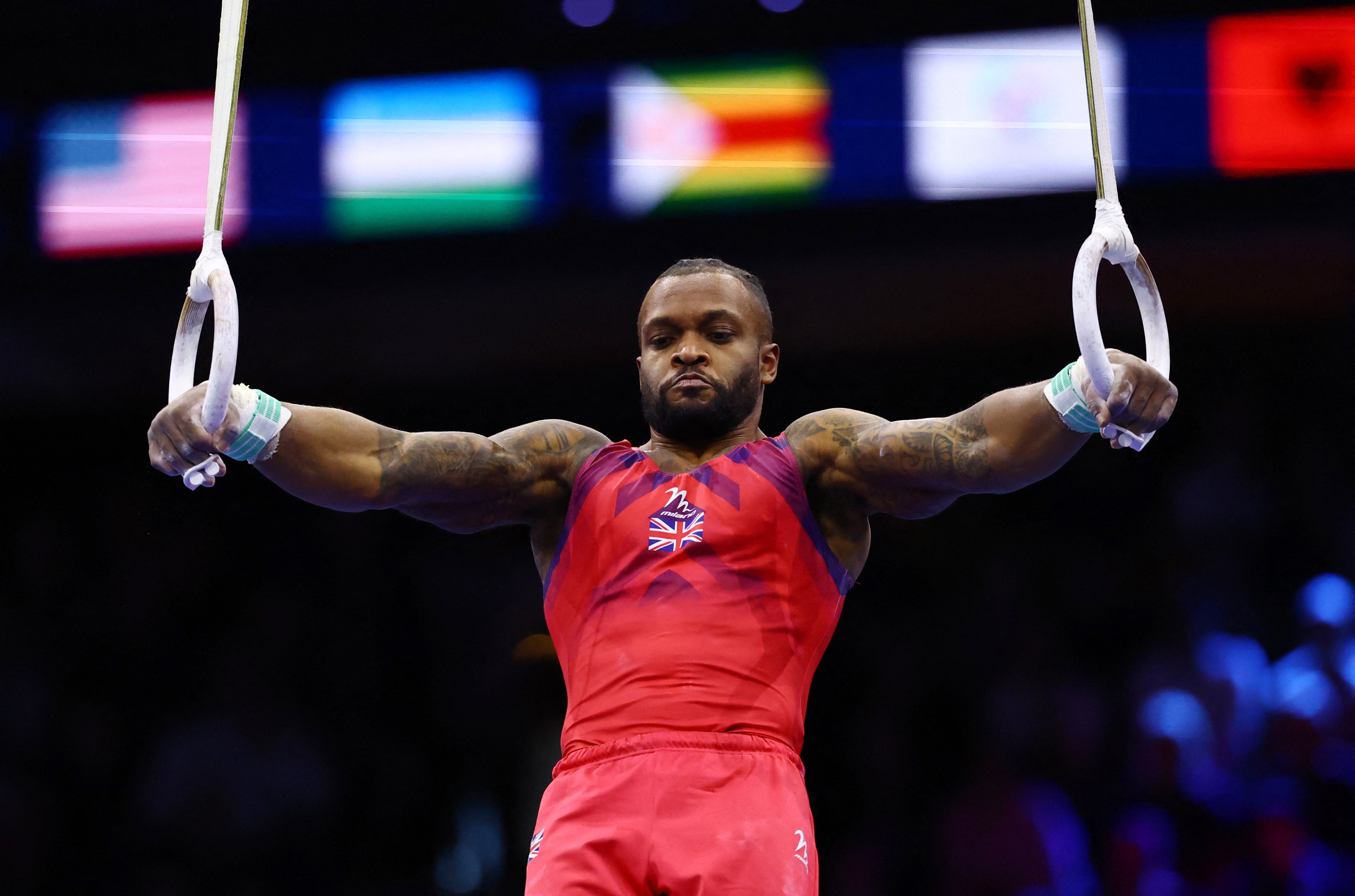
Britain’s Courtney Tulloch in action during the men’s rings final, 2026 World Artistic Gymnastics Championships, Rotterdam Ahoy, Rotterdam, Netherlands, October 24, 2026. Credit: REUTERS/Yves Herman
Pilates has evolved from a specialist exercise method into a mainstream component of modern fitness and sport. Recreational and elite athletes increasingly value Pilates for its potential to develop strength, mobility, control, coordination and movement efficiency. As its role in sport grows, so does the need to understand what Pilates can genuinely contribute to athletic performance and injury prevention.
What is Pilates?
Pilates is an exercise system based on controlled movement, precision, coordination, breathing, mobility, and muscular endurance. It is characterized by a specific set of exercises and the way movements are performed, controlled, and progressed.
The method originated with Joseph Pilates, who developed his approach in the early twentieth century and originally called it Contrology(1). His method incorporated a specific repertoire of 34 original exercises alongside the principles of concentration, control, centering, breathing, flow and precision(1). Each of these principles translates directly to the demands of sport (see table 1). Since then, Pilates has continued to evolve, influenced by modern living, general ability, and developments in exercise science, physiotherapy, biomechanics, and strength and conditioning.
Table 1: The six Pilates principles and how they apply in sport
| Principle | Application in sport |
| Concentration | Builds the movement awareness athletes need to detect and correct faulty patterns, e.g., trunk lean or knee collapse on landing |
| Control | Develops the ability to decelerate and stabilize during landing, cutting and follow-through |
| Centering | Provides a stable base for transferring force from the legs to the arms in throwing, striking and kicking |
| Breathing | Supports trunk control under load and helps athletes regulate arousal before and during competition |
| Flow | Encourages efficient timing and sequencing of multi-joint sport movements |
| Precision | Reinforces optimal joint alignment, e.g., knee over foot in single-leg tasks |
As a result, contemporary Pilates encompasses a broad spectrum of practices, from matwork to reformer and other large apparatus-based training. While some approaches remain closely aligned with the traditional repertoire, others adapt Pilates principles to modern fitness and rehabilitation settings. These approaches share an emphasis on purposeful, controlled movement and the ability to modify and progressively challenge exercises to match an individual’s ability, experience, physical capacity, and goals, making Pilates applicable across a wide range of fitness and rehabilitation settings.
Therefore, clinicians should not view Pilates simply as stretching, flexibility work or core training. Although trunk control is an important component of many exercises, Pilates is a whole-body workout, challenging muscular endurance, strength, balance, coordination, mobility and movement control. How athletes develop these physical qualities depends on how they select, perform, and progress exercises, so how Pilates is programmed matters as much as the exercises themselves.
“…how Pilates is programmed matters as much as the exercises themselves.”
When clinicians and athletes select and adapt Pilates exercises to reflect a particular sport’s demands, this learning becomes even more relevant to performance. Clinicians can tailor position, range of movement, loading, and movement patterns to replicate the sport’s physical demands, helping athletes develop greater control and coordination in positions and movements that matter for performance.
Core Stability Explained
The core is a functional system of muscles surrounding the trunk and pelvis that work together to control movement, stabilize the spine and pelvis, regulate intra-abdominal pressure, and transfer forces between the upper and lower limbs. It consists of the transversus abdominis (front), multifidus (back), pelvic floor (bottom), and diaphragm (top). Rather than functioning as an isolated muscle group, the core operates as an integrated system that provides both stability and mobility based on task demands.
Early research suggested that these muscles respond collectively, so that activating one activates the others and creates a ‘corset’ of support around the spine. Core stability is now more often defined as the ability to control the trunk’s position and movement over the pelvis, allowing optimal production, transfer, and control of force to the limbs while minimizing joint loads(2). If core stability is deficient, movements such as bending or reaching away from the body may place extra strain on the spine.
“…teaching athletes to use the trunk effectively...”
However, the core requires a balance between stability and mobility. It needs to provide enough control to transfer forces between the upper and lower limbs while still allowing the spine and pelvis to move when required. For an athlete, this matters because the trunk links the limbs. For example, during running, throwing, kicking, or changing direction, the trunk must efficiently transmit forces generated by the legs or arms(2).
Pilates and Core Stability
Pilates provides an effective link between core strength and functional movement because it does not train the trunk in isolation. Instead, the core is challenged as part of an integrated movement system, requiring the trunk and pelvis to coordinate with the limbs while maintaining control of the spine and pelvis. Simultaneously, Pilates trains flexibility and mobility through specific exercises and movements, alignment and long lever lengths, giving athletes the muscle and joint mobility to move through the full ranges their sport demands while maintaining control.
It provides repeated practice in maintaining control as the limbs move, helping develop the coordination, proprioception and motor control needed to transfer forces efficiently through the body. For this reason, the value of Pilates in sport is not simply that it can make the core “stronger”. Its greater potential lies in teaching athletes to use the trunk effectively while the rest of the body moves.
Pilates and Pain
Researchers in Turkey found that eight weeks of supervised Pilates reduced pain intensity and functional disability and improved quality of life in adults with subacute low back pain, with greater benefits than a structured home exercise program(3).
Gentle inward movement of the lower abdominal wall during core engagement can recruit the transversus abdominis (TrA) while activating the larger, more superficial abdominal muscles relatively little(4). Like other abdominal muscles, the TrA contains a slight majority (around 55–58%) of fatigue-resistant Type I muscle fibers, suiting it for the sustained, low-level activity involved in postural control(5). In contrast, maximal abdominal bracing requires greater force and recruits more of the higher-threshold Type II fibers, which fatigue more rapidly.
During Pilates, controlled exhalation is coordinated with abdominal and trunk muscle activity. Because the TrA contributes to forced expiration, exhalation can reinforce abdominal activation while maintaining controlled, sustained muscle activity. This may support trunk control and endurance during movement. Effective trunk control allows the spine to move while distributing loads appropriately(2). This is especially important in sport, where the spine is subject to large, often accelerated and unpredictable forces.
A Model Under Debate
Clinicians should be aware that the emphasis on the TrA has been contested. Physiotherapists at Curtin University in Australia argued that the focus on isolated TrA activation, developed for chronic low back pain, had spread into rehabilitation for other injuries and into injury prevention for pain-free people(6). In response, a researcher at the University of Queensland argued that the TrA data had been over-interpreted rather than disproved, that the muscle can serve several functions at once, and that TrA training was only ever meant to form part of a broader motor control approach rather than the end point(7).
For athletes, the practical message is that teaching a gentle ‘draw-in’ may help some learn trunk awareness, but trunk control should progress quickly into whole-body, sport-relevant movement. This is where well-programmed Pilates fits.
Performance
Trunk rotation in sport places multiple demands on the TrA. Researchers at the University of Queensland found that the TrA is consistently active during trunk rotation, with different regions working harder depending on the direction of rotation(8). This highlights the need for trunk stability to control the mechanical demands of rotational movements. Many sports involving throwing, racket, or stick use require this trunk control; otherwise, the movement shifts to the shoulder or wrist, generating much less power than when the whole body is behind the action. This also leaves the extremity susceptible to injury when large forces pass through it without support elsewhere.
“…Pilates can change injury-related movement qualities...”
Most sports involve repeated joint impacts, and fatigue during running can alter knee and tibial rotation and increase joint loading, potentially changing how forces distribute through the body(9). Pilates may help by improving strength and alignment around major joints. Researchers in Turkey found that six weeks of supervised Pilates reduced knee valgus during drop jumps, increased quadriceps strength and improved postural stability in young adults with dynamic knee valgus(10). This may reduce excessive loading on individual tissues.
Recent trials in athletes point the same way. In Iran, 30 female youth volleyball players who completed eight weeks of Pilates (three 50-minute sessions per week) made fewer landing errors and showed fewer trunk and ligament-dominance faults during tuck jumps than controls(11). Researchers in Jordan and Egypt found that adding six weeks of Pilates to rehabilitation for 88 men with athletic pubalgia (sports hernia) produced clinically meaningful improvements in lower limb function and hip scores, although the additional pain relief was modest(12). These trials are small and short, and none measured injury rates, so they show that Pilates can change injury-related movement qualities rather than prove it prevents injury.
Mindfulness
Pilates develops mind–body awareness by integrating movement, breathing and concentration. Its repertoire of exercises, combined with deliberate breathing patterns, encourages the athlete to remain focused on how they move, ensuring that each action is controlled, intentional and precise.
This heightened awareness and specific breathing cues may also support autonomic regulation. A systematic review from the University of Pisa in Italy found that slow breathing (fewer than 10 breaths per minute) is linked to greater heart rate variability, a marker of parasympathetic activity, and to lower anxiety and arousal(13).
The concentration and motor control required to perform Pilates exercises provide repeated practice of specific movement patterns, helping to refine motor learning. With repetition, athletes can develop greater awareness of efficient and inefficient movement strategies, making it easier to recognize and correct compensatory patterns(11).
Putting it Into Practice
Clinicians can apply these principles by taking a sport-relevant movement and progressing it from simple matwork to loaded, sport-specific exercises. For example, a tennis player requires significant trunk rotation control and strength, the engine of the serve and groundstrokes.
A Rotation Progression for a Tennis Player
- Spine twist (seated): Cue: “Sit tall, keep the pelvis still and rotate from the ribcage as you exhale.” Progress: hold the end position for longer, then add a light resistance band.
- Side plank with thread-the-needle rotation: Cue: “Keep the hips stacked and lifted; rotate the upper body under, then open the chest.” Progress: move from the knees to the feet, then hold a light weight.
- Kneeling side arm rotation: Kneeling side-on, the athlete pulls the strap across the body. Cue: “Turn from the trunk, not the arm; keep the hips square.” Progress: increase spring tension, then move to half-kneeling.
- Standing split-stance rotation pull: The athlete mimics the forehand pattern. Cue: “Drive from the back leg, rotate through the trunk and finish balanced over the front foot.” Progress: increase tempo, then transfer to medicine ball throws and on-court strokes.
Summary
Pilates can be an excellent addition to an athlete’s training program, complementing strength and conditioning and sport-specific training. Pilates builds body awareness, coordination, balance and control; fosters more efficient movement patterns; supports force transfer through the core; and heightens movement intention. The mindfulness component can help regulate breathing patterns, sharpen focus and lower stress, further preparing an athlete for competition.
Ultimately, Pilates within sport is best understood not as a strictly fixed sequence of exercises, but as a system that can be adapted, progressed and applied according to the individual and the specific sport.
References
1. Pilates’ Return to Life Through Contrology. Revised edition for the 21st century. 2012 (book).
2. Sports Med. 2006;36(3):189-198.
3. Ir J Med Sci. 2025 Jun;194(3):949-956.
4. Man Ther. 2005 May;10(2):144-153.
5. Acta Physiol Scand. 1979 Dec;107(4):319-325.
6. Br J Sports Med. 2008 Nov;42(11):930-931.
7. Br J Sports Med. 2008 Dec;42(12):941-944.
8. Eur Spine J. 2005 May;14(4):393-400.
9. J Biomech. 2010 Nov;43(15):2993-2998.
10. Res Sports Med. 2026 May-Jun;34(3):350-365.
11. BMC Sports Sci Med Rehabil. 2025 Jul;17(1):206.
12. J Integr Complement Med. 2026 Jul;32(7):573-582.
13. Front Hum Neurosci. 2018;12:353.

Latest Issue
Subscribe Today
Newsletter Sign Up
Subscriber Testimonials
Dr. Alexandra Fandetti-Robin, Back & Body Chiropractic
Elspeth Cowell MSCh DpodM SRCh HCPC reg
William Hunter, Nuffield Health
Subscribe Today

Newsletter Sign Up
Coaches Testimonials
Dr. Alexandra Fandetti-Robin, Back & Body Chiropractic
Elspeth Cowell MSCh DpodM SRCh HCPC reg
William Hunter, Nuffield Health
Subscribe Today
Latest Issue

Be at the leading edge of sports injury management
Our international team of qualified experts (see above) spend hours poring over scores of technical journals and medical papers that even the most interested professionals don't have time to read.
For 17 years, we've helped hard-working physiotherapists and sports professionals like you, overwhelmed by the vast amount of new research, bring science to their treatment. Sports Injury Bulletin is the ideal resource for practitioners too busy to cull through all the monthly journals to find meaningful and applicable studies.
*includes 3 coaching manuals
Get Inspired
All the latest techniques and approaches


Sports Injury Bulletin brings together a worldwide panel of experts – including physiotherapists, doctors, researchers and sports scientists. Together we deliver everything you need to help your clients avoid – or recover as quickly as possible from – injuries.
We strip away the scientific jargon and deliver you easy-to-follow training exercises, nutrition tips, psychological strategies and recovery programmes and exercises in plain English.
