
 close


 LOGIN
The Female Fast Bowler: Clinical Management
Female fast bowlers play a vital role in their teams, yet keeping them available through increasingly congested seasons remains a challenge. Jolandi Jacobs draws on female-specific research and applied experience in elite women’s cricket and explores injury patterns and physical demands, and offers practical strategies to keep them on the park.


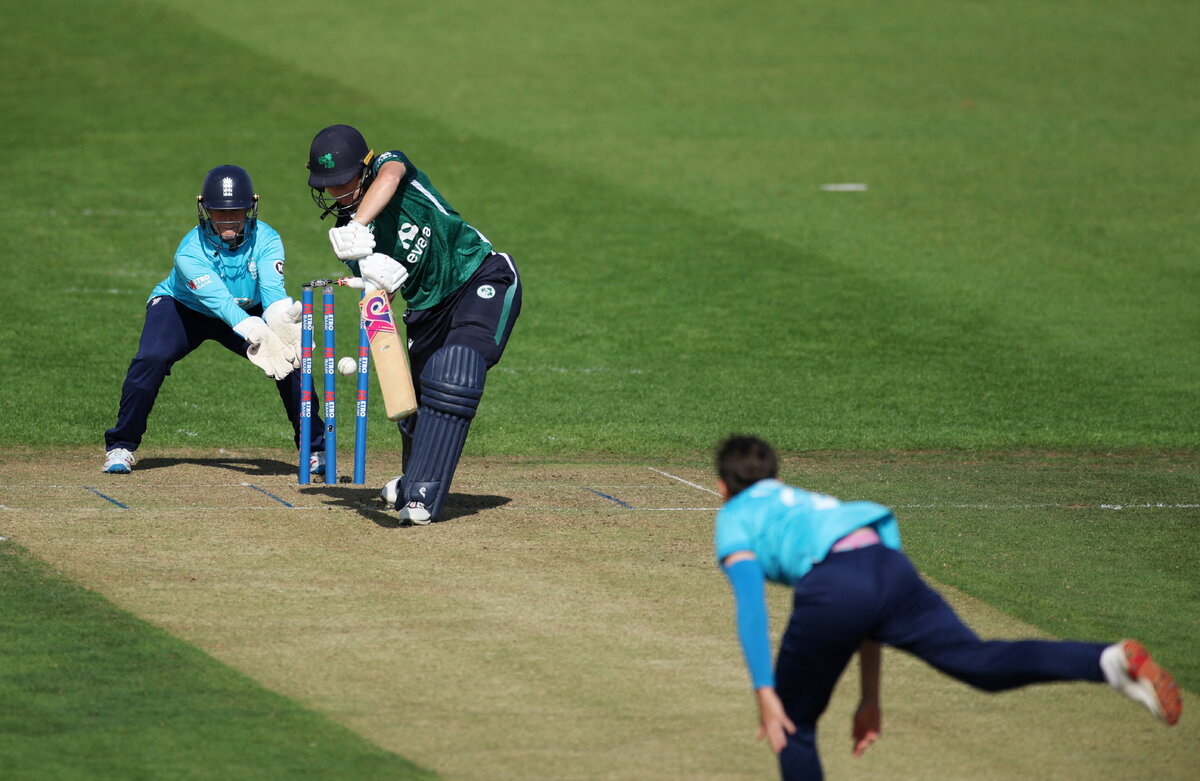
Ireland’s Gaby Lewis is bowled out by England’s Issy Wong, first women’s One Day International, England v Ireland, Uptonsteel County Ground, Leicester, September 1, 2026. Credit: Action Images via Reuters/Andrew Boyers
Why Availability Matters
Women’s cricket has professionalized rapidly, bringing about longer seasons, more formats and denser fixtures. Fast bowlers create scoring pressure on batters through ball speed and bowling variations, even though most squads have only a handful of these players. Losing a fast bowler reshapes selection, strategy and the workload of the rest of the bowling group. Availability is not independent of performance, and players can only ultimately perform when available to train to improve their skill and demonstrate this skill when they are available to play in matches.
For clinicians, the practical question is not ‘how do we prevent all injuries’ but more ‘how do we keep this bowler bowling, at her best, for as long as the season requires’. Answering this starts with recognizing that female fast bowlers are not simply reduced versions of male bowlers. Researchers from Loughborough University in the UK found that elite female bowlers carry less run-up momentum than males and rely more on whole-body rotation, predominantly by using muscles around the pelvis and trunk, and land with a straighter front knee(1,2).
Female cricket players also spend fewer years in full-time professional training environments and have lower yearly accumulative load capacity. Each of these differences shapes where female bowlers break down and how clinicians should load them (see table 1).
Table 1: Key findings and what they mean for clinicians
| Finding | Clinical action |
| Lumbar bone stress injuries cost the most time (about 110 days each), and a previous one is the strongest predictor of another | Investigate persistent, activity-related low back pain early; factor injury history into bowling progression |
| Lower-limb bone stress injuries mainly affect pace bowlers, most often at the tibia and metatarsals | Ask about shin and foot pain; build calf, quadriceps and landing capacity |
| Bowlers with a history of low back pain show greater lateral trunk flexion during delivery | Assess trunk control and lumbar lateral flexion; share video with bowling coaches |
| A higher internal-to-external rotation strength ratio predicts dominant-shoulder injury; pace bowlers account for half of gradual-onset shoulder injuries | Track rotation strength, build external rotation, and monitor both bowling and throwing loads |
Findings are from elite Australian female cricketers, except injury-history data, which come from a mixed-sex youth cohort.
Common injuries in female fast bowlers
At the elite level, bone stress injuries represent a costly injury in terms of total days lost in women’s cricket. Cricket Australia surveillance data show that lumbar bone stress injuries result in an average of 110.5 days lost per injury(3). Similarly, a case series of 47 elite Australian female cricketers with lower-limb bone stress injuries found that more than half were pace bowlers, with the tibia and metatarsals most frequently affected. The median time to return to full availability was 107 days(4). For squads with relatively few fast bowlers, a single bone stress injury can rule a player out for the rest of the season.
Shoulder injuries are another important consideration in women’s cricket. Across eight seasons of surveillance involving elite and emerging Australian female cricketers, pace bowlers accounted for 51% of gradual-onset shoulder injuries, while most sudden-onset shoulder injuries occurred during fielding(5). Fast bowling imposes considerable physical demands, with elite female fast bowlers generating peak front-foot vertical forces of approximately 3.5 kN within 33 milliseconds of front-foot contact(6). Shoulder distraction forces during the follow-through are also comparable to those reported in baseball and softball pitchers(7).
Injury rates seem slightly different at the sub-elite level. Research from the University of the Witwatersrand in South Africa found that female fast bowlers had the highest injury incidence across playing roles, although wrist and hand, knee and lower-leg injuries were more prevalent than lower back injuries(8). A meta-analysis from the same university also found that fast bowlers had the highest injury prevalence among female cricketers(9). These findings highlight the importance of recognizing injury presentations beyond the lumbar spine.
Evidence specific to younger female fast bowlers remains limited but is gradually emerging. Researchers from Griffith University in Queensland followed 98 youth bowlers, including 23 girls, over one season and reported lumbar bone stress injuries in 13.0% of girls and 17.3% of boys(10). However, with only three girls sustaining an injury, meaningful comparisons between sexes could not be made. A previous lumbar bone stress injury was the only factor independently associated with subsequent injury among fast bowlers(10). Cricket Australia currently applies the same junior bowling guidelines to both girls and boys(11). From a clinical perspective, persistent, activity-related lower back pain in a young female fast bowler should raise suspicion of a possible lumbar bone stress injury and requires early investigation.
Availability
Female-specific intervention evidence remains limited; the following suggestions draw on observational findings, broader sports medicine principles and clinical reasoning rather than validated injury-prevention protocols. In elite female fast bowlers, a history of low back pain is associated with greater thorax-to-pelvis lateral flexion during delivery and differences in lumbar lateral flexion range toward the bowling-arm side(12,13). These associations do not show that technique modification prevents injury.
For the shoulder, the strongest female signal comes from a prospective study in Australia of 115 elite female cricketers across all roles. A higher internal:external rotation strength ratio was the only independent risk factor for dominant-shoulder injury, with each 0.1 increase raising risk by 79%(14). Weaker back-foot hip abduction strength also showed an association in the initial screening, suggesting a potential kinetic chain contribution(14). One-off comparisons help less: an earlier study of 26 elite female fast bowlers found no strength or range differences linked to shoulder pain history(15).
Clinical considerations
Lumbar spine and lower limb
Back care should start in the off-season as a proactive strategy, rather than mid-season. In the off-season and early pre-season, when bowling is minimal, controlled axial loading can build trunk and lower-limb capacity(16). Once a bowler is bowling more than twice a week, gym work for elite female fast bowlers should shift to unilateral, split-stance, tempo and isometric exercises that maintain strength without adding spinal compression(16). Given the rotational demands of female fast bowling, incorporating rotational strength and trunk control exercises may be a useful component of physical preparation, although their effectiveness in reducing injury risk has yet to be established(1).
Clinicians can screen for excessive lumbar lateral flexion toward the bowling-arm side and share videos with bowling coaches when lateral trunk flexion appears excessive late in the delivery stride(12,13). Given the tibial and metatarsal injury burden and the high front-foot forces, clinicians should ask about shin and foot pain when screening players and build landing capacity through calf, quadriceps, and plyometric work(4,6). A single-leg calf raise endurance test offers a simple benchmark, with a squad of 16 elite female cricketers averaging 25.4 repetitions(16).
Shoulder
Clinicians can measure isometric internal and external rotation strength at 90° of abduction with a handheld dynamometer and track the ratio across the season(16). In a squad of 16 elite female cricketers, the mean dominant-shoulder ratio was 1.09, above the 1.0 level Australian researchers associated with higher risk(14,16). Testing methods differ, but this suggests room to build external rotation strength. A six-exercise shoulder preparation, completed twice weekly, includes band-resisted rotation at 90°, push-up plus and face pull to overhead press, alongside back-foot hip strength work(14,16).
Clinicians and players are encouraged to monitor throwing loads, volume, intensity, and distance. Most sudden-onset shoulder injuries in elite and emerging female players occur during fielding, and recurrent shoulder injuries take significantly longer to recover than index injuries(5).
Bowling workload management
The Cricket Australia junior guidelines, which apply to girls and boys, provide a sensible starting point for pathway bowlers aged 17 to 19(11). They cap bowling days and spell length and build in an eight-week pre-season, regular light weeks and a three-month end-of-season break(11). For developing elite female fast bowlers aged 18 to 24, the same principles apply, with weekly ball targets added (see table 2).
Female workload evidence is still scarce. In the Griffith youth cohort, where most injured bowlers were boys, injured fast bowlers had fewer rest days in the week before injury, and workload spikes occurred within six weeks of diagnosis(10). In the elite female case series, session frequency before injury did not clearly differ once players were compared with matched controls(4). Researchers from the University of Technology Sydney, writing about sport in general, argue that no evidence supports the acute:chronic workload ratio as an injury-reduction tool(17). The pragmatic approach is to track rolling one-week and four-week ball counts as a planning tool and avoid both sudden spikes and long gaps. Applied data from developing elite female fast bowlers show chronic loads of roughly 60 balls per week, peaking near 120 balls in weeks with two 50-over matches, and yearly volume rises by about 20 to 30%(16).
Table 2: Bowling workload guide for pathway and developing elite female fast bowlers
| Pathway bowlers, 17 to 19 years (Cricket Australia guidelines)(11) | Developing elite bowlers, 18 to 24 years (applied data)(16) | |
| Bowling days | Up to four per week, no more than two in a row | Up to three per week, avoiding back-to-back days |
| Session volume | Up to six overs per spell and 18 overs per match day | About 30 balls per skills session, plus an optional 18-ball top-up before matches |
| Weekly volume | Track overs across spells, sessions and weeks | About 60 balls on average (50–100), peaking near 120 in weeks with two 50-over matches |
| Pre-season and recovery | Eight-week build; light week every 4–6 weeks; 7–10 days off every 10–12 weeks; about three months off at season end | Eight-week build; reduced-load block every 10–12 weeks and after congested tournaments; extended off-season break |
| Monitoring | Bowling days, overs per spell, weekly volume and perceived intensity | Rolling one-week and four-week ball counts, intensity, match exposure and running load |
These are planning starting points, not validated injury thresholds. Injured youth bowlers had fewer rest days before injury, and rolling workloads should guide planning rather than predict injury(10,17). Individualize to training age, maturation, injury history, role and schedule.
Managing total load
Bowling is only one component of a fast bowler’s physical workload. Data from elite female cricketers describe pre-season running totals of about 5–7 km per week, including 200–400 m of high-speed running (18–24 km/h). Competition weeks may involve 14–23 km of running and substantially higher GPS-derived player load(16). Australian data across all playing roles indicate that a single international women’s T20 match involves approximately 5.3 km of running, meaning a four-match tournament can accumulate more than 20 km of match-related running alone(18). For fast bowlers, the run-up adds high-intensity running demands, with research from the Women’s Big Bash League showing an association between faster run-ups and greater ball release speeds(19). During congested schedules, clinicians may have greater scope to adjust gym volume, axial loading, supplementary conditioning and recovery strategies than match exposure (see table 3).
Managing the whole athlete
Workload management also requires attention to athlete health. The International Olympic Committee’s consensus statement on Relative Energy Deficiency in Sport (REDs) identifies low energy availability as a potential concern for bone health and menstrual function and supports appropriate clinical screening(20). In a case series of elite Australian female cricketers, low energy availability scores did not clearly differ between injured and uninjured athletes(4). This finding does not exclude an individual role for inadequate fueling. Nutritional intake, menstrual function, previous bone stress injury and other clinical factors should therefore be considered alongside physical workload monitoring.
Table 3: Typical running and bowling loads across competition phases in elite female fast bowlers
| Training phase | Total running (km/week) | High-speed running (18-24km/h) | Bowling load |
| Pre-season | 5–7 km, progressing toward match demands | 200-400m | Gradual eight-week progression |
| One 50-over match | 14-18km | 0.8-1.8km | 30-ball skills session + optional 18-ball top-up + ≤60 match balls |
| Two 50 over matches | 20-23km | 0.8-1.5km | Optional 18-ball top-up + ≤120 match balls |
| Four-match T20 tournament | 18-23km | 1.0-1.5km | Optional 18-ball top-up + ≤96 match balls |
| Deload week | Reduced running volume | Individualized | Reduced or no bowling |
Running and bowling figures reflect data applied from elite female cricketers(16). Match-ball maxima assume four overs per bowler in T20 cricket and 10 overs in 50-over cricket; actual bowling exposure depends on selection and match circumstances. Individualize all examples to the player’s role, training history, health and schedule.
Conclusion
Keeping female fast bowlers healthy and available requires more than simply monitoring the number of balls bowled. Although female-specific research continues to emerge, current evidence highlights the importance of recognizing bone stress injuries, shoulder health and the broader physical demands of fast bowling. Integrating progressive bowling workloads with appropriate strength and conditioning, total load management and routine athlete health screening provides a practical foundation for clinical care. As the evidence base develops, clinicians should continue to individualize their approach, balancing the demands of performance with the long-term health and availability of female fast bowlers.
References
1. J Sports Sci. 2019 Mar;37(6):665-670.
2. Int J Sports Sci Coach. 2024;19(5):2136-2143.
3. J Sci Med Sport. 2019 Sep;22(9):1014-1020.
4. Clin J Sport Med. 2026 Apr 10 [Epub ahead of print].
5. Shoulder Elbow. 2026 Jul;18(3):497-505.
6. J Sci Med Sport. 2009 Mar;12(2):258-261.
7. J Appl Biomech. 2010 Aug;26(3):373-377.
8. Phys Ther Sport. 2024 May;67:125-130.
9. JBI Evid Synth. 2022 Jul;20(7):1741-1790.
10. J Sci Med Sport. 2026 Jun 26 [Epub ahead of print].
11. Cricket Australia. Junior Pace Bowling Workload Guidelines. 2026. play.cricket.com.au/community/resources/player-safety/junior-bowling-guidelines
12. J Appl Biomech. 2010 Feb;26(1):52-61.
13. Phys Ther Sport. 2008 May;9(2):82-88.
14. Transl Sports Med. 2020;3(5):404-414.
15. J Sci Med Sport. 2008 Nov;11(6):575-580.
16. J Aust Strength Cond. 2026;34(4).
17. Int J Sports Physiol Perform. 2020 Jul;15(6):907-913.
18. J Sci Med Sport. 2020 Jan;23(1):89-93.
19. J Sport Exerc Sci. 2023;7(1):21-26.
20. Br J Sports Med. 2023 Sep;57(17):1073-1097.

Latest Issue
Subscribe Today
Newsletter Sign Up
Subscriber Testimonials
Dr. Alexandra Fandetti-Robin, Back & Body Chiropractic
Elspeth Cowell MSCh DpodM SRCh HCPC reg
William Hunter, Nuffield Health
Subscribe Today



Newsletter Sign Up
Coaches Testimonials
Dr. Alexandra Fandetti-Robin, Back & Body Chiropractic
Elspeth Cowell MSCh DpodM SRCh HCPC reg
William Hunter, Nuffield Health
Subscribe Today
Latest Issue

Be at the leading edge of sports injury management
Our international team of qualified experts (see above) spend hours poring over scores of technical journals and medical papers that even the most interested professionals don't have time to read.
For 17 years, we've helped hard-working physiotherapists and sports professionals like you, overwhelmed by the vast amount of new research, bring science to their treatment. Sports Injury Bulletin is the ideal resource for practitioners too busy to cull through all the monthly journals to find meaningful and applicable studies.
*includes 3 coaching manuals
Get Inspired
All the latest techniques and approaches


Sports Injury Bulletin brings together a worldwide panel of experts – including physiotherapists, doctors, researchers and sports scientists. Together we deliver everything you need to help your clients avoid – or recover as quickly as possible from – injuries.
We strip away the scientific jargon and deliver you easy-to-follow training exercises, nutrition tips, psychological strategies and recovery programmes and exercises in plain English.
