
 close
close


 LOGIN
LOGINYou are viewing 1 of your 1 free articles
Rehab for RC Tears: Optimizing Recovery in Soccer Goalkeepers
Joshua Smith provides an evidence-informed, biomechanics-sensitive framework for rehabilitating rotator cuff tears in soccer goalkeepers, from early tissue protection to advanced sport-specific reconditioning.


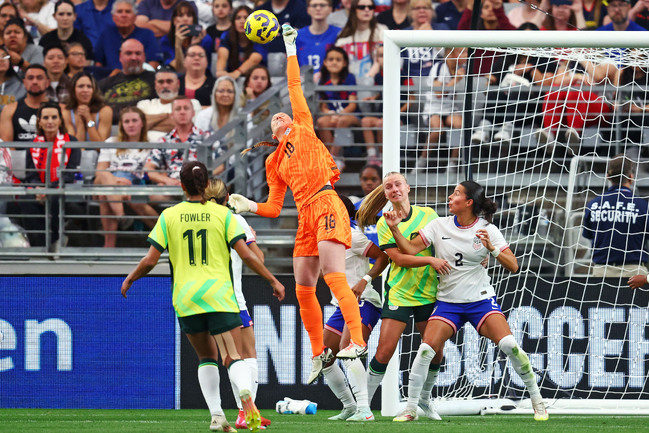
USA goalkeeper Mandy McGlynn makes a save during the first half against Australia in the SheBelieves Cup at State Farm Stadium. Mandatory Credit: Mark J. Rebilas-Imagn Images
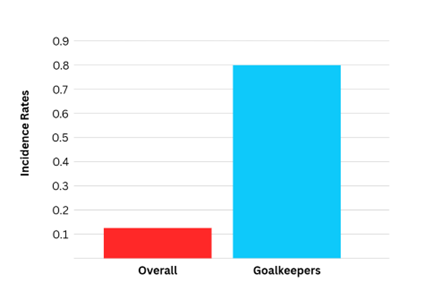
Soccer goalkeepers (GKs) occupy a unique physical role on the field, performing frequent overhead reaches, rapid dives, high-velocity arm actions when catching or parrying shots, and abrupt deceleration or impact on landing. These high-intensity actions repeatedly subject the glenohumeral joint and surrounding musculotendinous structures, particularly the rotator cuff (RC), to substantial mechanical stress. Goalkeepers experience a disproportionately larger burden of shoulder and elbow injuries compared with field players. In a National Collegiate Athletic Association cohort from 2009–2014, goalkeepers had a 4.6-fold higher incidence of shoulder and elbow injuries than field players, including RC tears and sprains (see figure 1)(1). Furthermore, researchers from the University of Barcelona found that upper-extremity injuries, including RC pathology, account for up to 20% of all goalkeeper time-loss injuries and are often linked to repetitive eccentric loading during dives and saves(2).
“…a 4.6-fold higher incidence of shoulder and elbow injuries…”
Despite this elevated risk, rehabilitation recommendations for RC tears in soccer goalkeepers remain limited. Clinicians derive rehabilitation protocols from general shoulder injury research or from studies of overhead athletes, such as swimmers or throwers. Position-specific preventive and rehabilitative strategies, including adaptations of the FIFA 11+S shoulder program, primarily focus on prevention rather than on the treatment of established cuff tears(3,4). Consequently, clinicians must integrate general evidence with goalkeeper-specific biomechanical demands to design effective rehabilitation programs.
Mechanisms of RC Injury
Acute injury in goalkeepers may result from traumatic events such as falls onto an outstretched arm or sudden forced external rotation or abduction of the shoulder(4). Chronic overload, in contrast, arises from repetitive eccentric loading, accumulation of microtrauma, and periodic tensile and compressive stressors. Repetitive overload or high-load motion, combined with instability or subacromial impingement, leads to tendon degeneration or partial tears(4-6).
Youth and professional goalkeepers demonstrate higher rates of shoulder injury than outfield players, with repetitive dives, parries, overhead reaches, and rapid deceleration imposing cumulative mechanical demands on the supraspinatus, infraspinatus, and periscapular musculature(1,3,6). Elite goalkeepers are at particular risk due to their high-volume and high-force training and match demands, underscoring the susceptibility of the shoulder complex to acute and chronic loads(6,7). Furthermore, biomechanical analyses reveal that goalkeeper dives generate peak glenohumeral joint forces exceeding 1.5 times body weight, with eccentric rotator cuff demands peaking during the landing phase due to rapid arm deceleration and ground impact, which can exacerbate subacromial compression and supraspinatus tendon tensile failure(8). Shoulder dislocations, a proxy for instability that contributes to rotator cuff strains, often occur via direct contact (42%) or falls (35%), highlighting the need for rehabilitation emphasizing eccentric control and proximal stability(9).
Assessment and Early-Phase Rehabilitation
Rehabilitation begins with a thorough clinical assessment, including evaluation of pain irritability, active and passive range of motion, scapular positioning and control, glenohumeral stability, RC strength, and functional tasks that mimic goalkeeping actions. Validated tools such as the scapular dyskinesis test, closed-kinetic-chain upper-extremity stability test, and isokinetic dynamometry for external rotation strength provide objective baselines, helping quantify deficits in eccentric capacity, which is critical for dive landings(5,10). Clinicians may refer the athlete for imaging when they suspect full-thickness tears, when the athlete presents with persistent dysfunction, or for pre-surgical planning.
Early-phase rehabilitation
Clinicians should prioritize pain management, tissue-healing timelines, and reactivation of shoulder and scapular stabilizers without provoking excessive loading. Scapular stabilization exercises reduce pain and improve function in RC pathology(5,6). Optimal activation ratios (<1.00) for periscapular stabilizers relative to the upper trapezius minimize dominance and enhance mechanics (see table 1)(11). For goalkeepers, clinicians may include low-load drills like prone/side-lying external rotation and isometric external rotation to preserve tendon activation without strain. Add submaximal non-throwing drills for neuromuscular control. Prone/side-lying/supine open-chain exercises optimize protraction/retraction for scapular stability during healing.
Table 1: Optimal Scapular Stabilization Exercises(11)
| Target Muscle | Exercise Name | Optimal Ratio (UT/Target) |
| MT | Prone ER at 90° Abd, 90° Elbow Flexion | 0.44-0.72 |
| MT | Side-lying ER with Elbow at 90° | 0.37-0.54 |
| LT | Prone ER with Shoulder Abducted to 90° | 0.25-0.79 |
| LT | Prone Flexion | 0.06 |
| LT | High SR, Sitting | 0.03 |
| LT | High SR, Standing | 0.28 |
| SA | Diagonal Exercise | 0.66 |
| SA | Bilateral Scapular Protraction | 0.13 |
| SA | Bench Press, Seated | 0.30 |
| SA | Supine Press | 0.06-0.11 |
Key: lower trapezius (LT)/middle trapezius (MT)/serratus anterior (SA)/upper trapezius (UT)
Progressive Rehabilitation
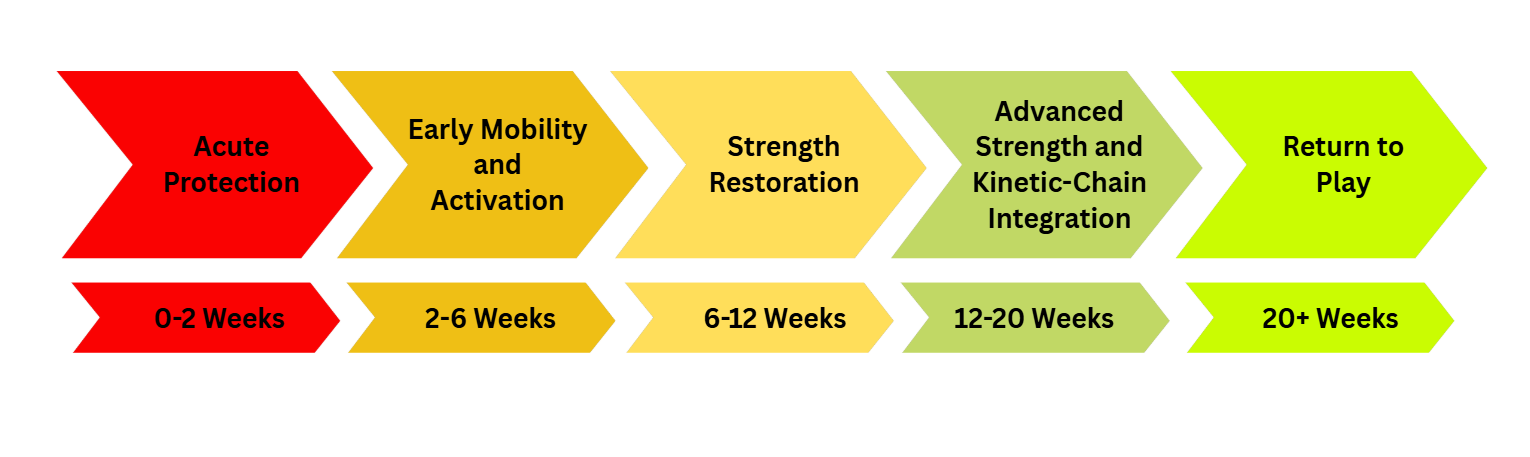
Once the athlete’s pain is controlled and they tolerate basic shoulder activation, rehabilitation should progress to dynamic strengthening, including RC eccentric and concentric loading, periscapular muscle strengthening, and core/trunk stabilization. Kinetic-chain exercises are crucial for goalkeepers, whose performance relies on the coordinated movement of the spine, pelvis, lower limbs, and upper limbs (see figure 2)(5,6). For instance, anti-rotation cable presses or single-leg deadlifts with overhead reaches can integrate lumbopelvic control, reducing compensatory glenohumeral stress during simulated parry motions(2).
Eccentric exercises for the RC help the tendon adapt to deceleration stresses associated with diving, abrupt arm braking, and repeated shot saves. Neuromuscular conditioning should incorporate proprioceptive training and perturbation drills to re-establish joint position sense, reaction capability, and coordinated control under variable loads. Closed-chain and unstable-surface work may enhance sensorimotor control, which is critical for rapid, unpredictable goalkeeper tasks(5,6). Progression criteria include achieving pain-free performance of three sets of 15 repetitions at 60–70% of maximal voluntary contraction before advancing loads.
Advanced GK-Specific Reconditioning
As the GK’s shoulder and kinetic-chain capacity improve, the final rehabilitation phase should simulate the demands of actual play. This includes high-velocity overhead movements, explosive dives, reactive saves, rapid deceleration, catch or parry mechanics, and unpredictable directional changes(3,6,7). Biomechanically, these drills should target peak eccentric rotator cuff loads (e.g., 120–150% body weight during landing) while monitoring scapulohumeral rhythm to prevent impingement(8).
Advanced drills might include medicine-ball throws and slams; reactive catching/punching drills with variable ball speeds; plyometric push-ups on unstable surfaces; overhead reach with rapid deceleration using resistance bands; controlled diving onto soft surfaces, with emphasis on tucked-elbow positioning; and progressive reintroduction of full-diving drills at gradually increasing intensity. Objective monitoring should guide progression through functional tests, including closed-kinetic-chain upper-extremity stability, single-arm medicine-ball overhead throw, reach-and-catch drills, maximal external rotation strength, and symmetry measures(5-7). Goalkeeper-specific metrics, such as dive reaction time (<0.5 seconds) and save success rate in simulated scenarios, can further tailor reconditioning(2).
“Rehabilitation should adopt a structured, biomechanics-informed approach…”
Return to Play Considerations
Return to play (RTP) after an RC tear in a GK should rely on functional readiness, objective performance metrics, and psychological confidence, rather than a strict timeline (see table 2). Retrospective analyses indicate that most professional goalkeepers can return to full competition after shoulder surgery, though persistent symptoms or reinjury may occur(7). In overhead athletes undergoing arthroscopic RC repair, return to play rates average 75%, with 62% resuming pre-injury levels within six months, emphasizing the role of eccentric strength restoration(12).
Return to play benchmarks include:
• ≥90–95% Upper-limb strength symmetry index in external/internal rotation,
• Completion of sport-specific drills without pain or altered mechanics,
• Adequate scapular control and kinetic-chain coordination,
• Psychological readiness to perform dives, parries, and overhead saves.
Clinicians must implement a graded, staged return, beginning with non-contact technical drills, progressing to full-intensity training, and culminating in competitive matches, with ongoing monitoring by clinicians and coaching staff. Consensus guidelines recommend clearance only when athletes achieve pre-injury throwing velocity and show no compensatory patterns on video analysis(10).
Table 2: Summary of return to play benchmarks(2,10-12)
| Category | Benchmark Metric | Target Value | Biomechanical Link |
| Strength Symmetry | External/Internal Rotation Strength | ≥90–95% of uninjured side | Ensures eccentric control for dive deceleration |
| Functional Performance | Closed-Kinetic-Chain Upper Extremity Stability Test | ≥85% of GK norms | Mimics ground reaction forces in saves/landings |
| Scapular Control | Scapular Assistance Test | Pain-free upward rotation | Prevents impingement during overhead reaches |
| Sport-Specific | Dive Reaction Time | <0.5 seconds | Replicates reactive parry demands |
| Psychological | Fear-Avoidance Beliefs Questionnaire | Score <15 | Addresses confidence in high-velocity actions |
Conclusion
Rotator cuff tears in soccer GKs pose unique challenges due to the high mechanical demands of dives, saves, and landings. Verified epidemiological and case-report data support a higher incidence of shoulder injury in GKs compared to field players. Rehabilitation should adopt a structured, biomechanics-informed approach, progressing from early scapular control and isometric activation to dynamic strengthening, neuromuscular conditioning, and sport-specific reconditioning. Objective assessment, progressive loading, and kinetic-chain integration are critical to safe RTP and long-term shoulder health. The limitations of current literature highlight the need for further goalkeeper-specific research, including prospective trials on RTP outcomes and biomechanical interventions.
References
1. Phys Sportsmed. 2018;46(3):304–311.
2. Arch Med Deporte. 2024;41(5):281-290.
3. Open Access J Sports Med. 2016;7:75–80.
4. Sports Med. 1997;24(3):205–220.
5. J Athl Train. 2000;35(3):300–315.
6. Sports Med Arthrosc Rev. 2014;22(2):101–109.
7. Knee Surg Sports Traumatol Arthrosc. 2021;29(12):3943-3950.
8. J Sports Sci. 2019;37(10):1135-1142.
9. J Exp Orthop. 2024;11(1):e70121.
10. J Orthop Sports Phys Ther. 2022;52(1):4–20.
11. Int J Sports Phys Ther. 2016;11(3):321-336.
12. J Orthop Traumatol. 2023;24(1):6.
Joshua Smith
Latest Issue
Subscribe Today
Newsletter Sign Up
Subscriber Testimonials
Dr. Alexandra Fandetti-Robin, Back & Body Chiropractic
Elspeth Cowell MSCh DpodM SRCh HCPC reg
William Hunter, Nuffield Health
Subscribe Today

Newsletter Sign Up
Coaches Testimonials
Dr. Alexandra Fandetti-Robin, Back & Body Chiropractic
Elspeth Cowell MSCh DpodM SRCh HCPC reg
William Hunter, Nuffield Health
Subscribe Today
Latest Issue
Be at the leading edge of sports injury management
Our international team of qualified experts (see above) spend hours poring over scores of technical journals and medical papers that even the most interested professionals don't have time to read.
For 17 years, we've helped hard-working physiotherapists and sports professionals like you, overwhelmed by the vast amount of new research, bring science to their treatment. Sports Injury Bulletin is the ideal resource for practitioners too busy to cull through all the monthly journals to find meaningful and applicable studies.
*includes 3 coaching manuals
Get Inspired
All the latest techniques and approaches


Sports Injury Bulletin brings together a worldwide panel of experts – including physiotherapists, doctors, researchers and sports scientists. Together we deliver everything you need to help your clients avoid – or recover as quickly as possible from – injuries.
We strip away the scientific jargon and deliver you easy-to-follow training exercises, nutrition tips, psychological strategies and recovery programmes and exercises in plain English.
