
 close
close


 LOGIN
LOGINYou are viewing 1 of your 1 free articles
Optimizing Cricket Performance: The Role of S&C
To underpin the design, delivery, and evaluation of strength and conditioning programs aimed at optimizing performance and reducing injury risk in cricketers, Anthony Weldon emphasizes the importance of using research-informed methods appropriately applied in real-world settings.


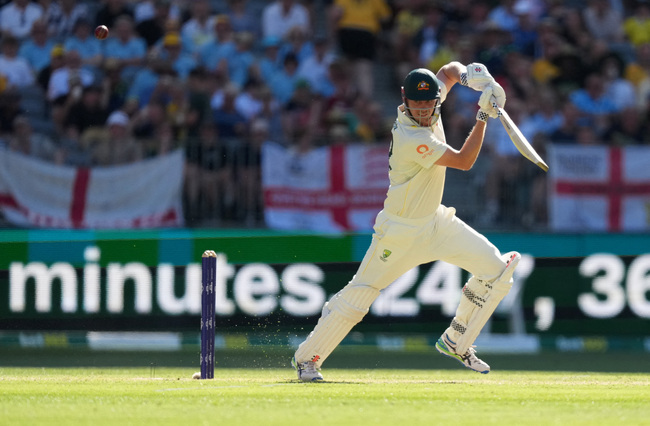
Cricket - The Ashes - Australia v England - First Test - Australia’s Cameron Green in action REUTERS/Asanka Brendon Ratnayake
Modern strength and conditioning (S&C) in cricket extends beyond gym-based training(1,2). While the primary aims remain enhancing performance and reducing injury risk, S&C coaches now work more collaboratively with the athlete support team(1–3). The role of S&C in cricket has evolved, and S&C coaches now have to develop individualized programs and may face challenges when implementing injury-reduction strategies.
The Importance of S&C
Strength and conditioning develops key physical (strength, power, speed, mobility) and physiological (aerobic, anaerobic) qualities essential for cricket performance(4–8). More robust cricketers are better equipped to withstand the demands of modern cricket, such as frequent matches and high-intensity actions (fast bowling, sprinting between the wickets)(9–11). These cricketers are also less prone to non-contact injuries, thus improved fitness maximizes training and match availability(10). However, when injuries do occur, S&C coaches apply their knowledge in sports science and medicine to collaboratively work with the athlete support team to manage rehabilitation and reduce the risk of re-injury through tailored S&C programs(10,12). Accordingly, generic team training is no longer adequate, and individualized approaches based on positional, physiological, and contextual factors are now standard(2).
“As the game evolves, so too must S&C practices…”
Factors Influencing Program Design
Match format
Cricket’s three main formats, T20 (20 overs per team), One Day (50 overs), and Multi-Day (up to five days), differ in intensity and duration. As match length shortens, intensity increases, particularly for fast bowlers(13,14). Global positioning system (GPS) studies show T20 matches produce higher relative demands across movement variables compared to longer formats(15). In contrast, longer formats result in a greater overall physical load(13). Accordingly, training load, recovery, and energy-system emphasis must reflect format-specific demands(13,14,16–18). Movement variables and category distances vary greatly across formats (see tables 1, 2, and 3).
Position-specific demands
Cricket’s primary disciplines, bowling, batting, fielding, and wicketkeeping, require distinct movement patterns and conditioning priorities that S&C coaches should consider when developing S&C, prehabilitation, and rehabilitation programs(19). S&C coaches must understand their different qualities and their importance, along with recommended exercises and prescriptions for each discipline (see tables 4a–4d).
Table 1: Movement variables for the three main formats of cricket (mean ± SD)
| Distance covered (metres/hour) | |||||
| Game format |
Walking (0-2.00 m/s) |
Jogging (2.01-3.50 m/s) |
Running (3.51-4.00 m/s) |
Striding (4.01-5.00 m/s) |
Sprinting (≥5.01 m/s) |
| T20 (n=83) | 2083.6 ± 297.8 | 603.4 ± 194.8 | 132.6 ± 62.4 | 174.8 ± 84.4 | 170.0 ± 99.2 |
| One Day (n = 126) | 2121.8 ± 314.2 | 543.2 ± 157.4 | 117.4 ± 40.0 | 143.0 ± 60.4 | 127.6 ± 64.8 |
| Multi-Day (n=43) | 2006.0 ± 296.5 | 454.3 ± 159.3 | 97.75 ± 42.0 | 114.5 ± 61.3 | 97.75 ± 60.0 |
adapted from Petersen et al., 2010(13)
Table 2: Movement category distances for the three main formats of cricket (mean ± SD)
| Game Format | Sprints per hour (n) | Mean sprint distance (m) | Maximum sprint distance (m) | Efforts per hour (n) | Recovery ratio (1:x) |
| T20 (n=83) | 11.2 ± 6.0 | 14.8 ± 3.4 | 24.6 ± 9.8 | 40.6 ± 18.2 | 44.0 ± 23.2 |
| One Day (n = 126) | 8.4 ± 3.8 | 15.0 ± 4.8 | 31.2 ± 12.2 | 34.4 ± 11.0 | 51 ± 20.6 |
| Multi-Day (n=43) | 7.5 ± 5.0 | 10.6 ± 8.5 | 21.75 ± 9.0 | 28.75 ± 12.25 | 89.0 ± 41.5 |
adapted from Petersen et al., 2010(13)
Sex
Male and female cricketers differ morphologically, physically, and physiologically(23,24). Males generally exhibit greater muscle mass and strength, while females possess different force-velocity profiles and bowling kinematics(25,26). For example, female fast bowlers display slower run-ups, lower ball release speeds, and distinct joint angles(27). Programs for female cricketers should therefore address these differences through tailored strength, power, and injury-prevention programs(28).
Age
Adolescent cricketers experience higher injury rates than adults, often due to growth-related changes and immature movement control(10,29,30). Therefore, programs must be age-appropriate, technique-focused, and individualized. For example, when developing bowlers, S&C coaches should emphasize eccentric strength (shoulder rotators, hamstrings), hip adduction, trunk endurance, neuromuscular control, and gradual load progression(31,32).
Table 3: Physical demands (mean ± SD) of fast bowlers for One Day vs. T20 cricket matches
| One Day (n=157) | T20 (n=38) | |
| Absolute Physical Performance | ||
| Decelerations ≤4 m/s (n) | 2.7 ± 2.3 | 3.0 ± 2.3 |
| Decelerations -2-4 m/s (n) | 25.9 ± 12.6 | 19.1 ± 7.8 |
| Accelerations 2-4 m/s (n) | 35.8 ± 18.9 | 29.1 ± 13.8 |
| Accelerations >4 m/s (n) | 4.2 ± 6.3 | 4.1 ± 3.1 |
| Maximum velocity (km/hr) | 29.2 ± 2.5 | 30.0 ± 2.8 |
| Total distance (m) | 11927.0 ± 2726.1 | 6616.8 ± 962.2 |
| Distance 0-7 km/hr (m) | 8317.5 ± 1919.5 | 4115.4 ± 970.5 |
| Distance 7-15 km/hr (m) | 2147.4 ± 665.7 | 1545.2 ± 441.3 |
| Distance 15-20 km/hr (m) | 563.0 ± 180.7 | 453.0 ± 160.4 |
| Distance 20-25 km/hr (m) | 840.8 ± 298.2 | 354.5 ± 155.9 |
| Overs | 7.3 ± 2.2 | 2.4 ± 0.5 |
| Duration (mins) | 208 ± 37 | 101 ± 15 |
| Relative Physical Performance | ||
| Decelerations ≤4 m/s (n/min) | 0.01 ± 0.009 | 0.03 ± 0.03 |
| Decelerations -2-4 m/s (n/min) | 0.13 ± 0.06 | 0.19 ± 0.06 |
| Accelerations 2-4 m/s (n/min) | 0.18 ± 0.10 | 0.29 ± 0.12 |
| Accelerations >4 m/s (n/min) | 0.02 ± 0.03 | 0.04 ± 0.03 |
| Metres per minute (m/min) | 58.0 ± 10.3 | 66.0 ± 7.6 |
| Distance 0-7 km/hr (m/min) | 40.3 ± 6.9 | 41.2 ± 8.9 |
| Distance 7-15 km/hr (m/min) | 10.5 ± 3.0 | 15.4 ± 4.3 |
| Distance 15-20 km/hr (m/min) | 2.7 ± 0.8 | 4.5 ± 1.3 |
| Distance 20-25 km/hr (m/min) | 4.1 ± 1.5 | 3.5 ± 1.4 |
| Distance 25+ km/hr (m/min) | 0.3 ± 0.2 | 0.6 ± 0.4 |
adapted from Bliss et al., 2021(15)
Contemporary Practices
Evidence-based practice combines research with coaching expertise to guide training design and evaluation(33–35). However, there are common criticisms concerning a gap between academic research and practical relevance(35,36). To further investigate this, researchers have used surveys to identify which practices S&C coaches in professional and high school cricket use. These surveys have demonstrated consistent evidence-informed practices, especially regarding injury prevention, are applied(1,2,37).
Physical testing
Across traditional and franchised cricket, S&C coaches regularly conduct physical testing, which is mainly performed during the pre-season, but often throughout the year(1,2). Common tests include strength, endurance, power, speed, and cardiovascular fitness(1,2). These qualities are key for bowlers, batters, and wicketkeepers, and fundamental to guiding program design and identifying development needs(1,2). They frequently use body composition and anthropometrics, such as fat percentage and muscle mass, to track physical targets and guide rehabilitation(1,2). While direct performance links are limited, such metrics help monitor progress and inform individualized programming.
“More robust cricketers are better equipped to withstand the demands of modern cricket…”
Periodization
Most S&C coaches in professional cricket use periodization strategies(2). Pre-season emphasizes higher training volumes to develop physical qualities, while in-season training volume is reduced to accommodate increased sport-specific training and match demands(2). Typically, S&C coaches schedule strength, power, and speed sessions around cricket practice while ensuring 36–48 hours of recovery before competition(2). This approach balances adaptation with performance optimization.
Types of training
Surveys in professional cricket show that all S&C programs include strength, speed, plyometrics, and flexibility(1,2). Each with strong evidence for injury reduction and performance enhancement(10,12,38–41). For example, plyometrics improves speed and reduces injury risk by enhancing proprioception and muscular control(2,42). Combined with strength and agility training, plyometric exercises may lower the incidence of knee injuries by improving landing mechanics and reducing joint stress, which is crucial for managing repetitive force attenuation, such as in fast bowling(42).
Workload monitoring
Excessive or abrupt increases in workload are linked to elevated injury risk in cricketers(10). Therefore, S&C coaches should monitor internal load (physiological strain) and external load (total work) using subjective and objective measures(43). Surveys in professional cricket indicate widespread use of athlete wellbeing questionnaires (online 64%, written 24%) and technology such as GPS (49%), heart rate monitors (49%), and smart wearables (42%)(2). Combining these tools supports S&C coaches to make data-informed adjustments to training intensity, recovery, and readiness.
Table 4a: Position-specific considerations for program design for fast bowlers
| Quality | Importance | Exercises | Prescription |
| Lower-Body Strength | Withstand high ground reaction forces (~6x bodyweight). Develop force for ball speed and bounce. | Squat and deadlift variations (e.g., back squat, Romanian deadlift). |
> 85% 1RM 3-4 sets |
| Upper-Body Strength | Strong correlation with delivery speed. | Push/pull variations (e.g., bench press, shoulder press, bent over row, pull up). | > 85% 1RM < 6 repetitions 3-4 sets |
| Power and Reactive Strength | Enhances rate of force development during acceleration (ball release). | Weightlifting, jump, and medicine ball drills (e.g., hang clean, drop jump, chest pass). | |
| Speed, Agility, and Quickness | Improves delivery speed (~95% maximal velocity). | Acceleration, sprint, deceleration, and change of direction drills. | |
| Core Strength | Optimizes spinal control during bowling action. | Core and anti-rotation movements (e.g., Turkish get up, medicine ball rotations, Pallof press). | |
| Conditioning | Develops repeated sprint ability. | Repeated shuttles with work-to-rest ratios. | 80-100% maximum speed |
adapted from Mukandi et al., 2014(20)
Table 4b: Position-specific considerations for program design for batters
| Quality | Importance | Exercises | Prescription |
| Lower-Body Strength | Transfers force through the kinetic chain to optimize ball impact. | Squat, lunge, deadlift, and hip extension variations (e.g., overhead squat, dumbbell lunge, hex bar deadlift, hip thrust). |
> 85% 1RM 3-4 sets |
| Upper-Body Strength | Force generation for powerful hitting. | Push/pull variations (e.g., bench press, shoulder press, bent over row, pull up). | > 85% 1RM < 6 repetitions 3-4 sets |
| Power and Reactive Strength | Improves rate of force development during downswing and ball impact. | Weightlifting, jump, and medicine ball variations (e.g., hang snatch, depth jump, and rotational throws). | |
| Speed, Agility, and Quickness | Enhances the ability to run between wickets repeatedly. | Acceleration, sprint, deceleration, change of direction, and reactive drills. | |
| Core Strength | Enables explosive torso rotation for ball impact. | Core and anti-rotation movements (e.g., half-kneeling wood chop, isometric back extension). | |
| Conditioning | Builds endurance for repeated batting and running between wickets. | Interval training with work-to-rest ratios. | HRmean >75% HRmax |
adapted from Mathankar et al., 2023(21)
Table 4c: Position-specific considerations for program design for fielders
| Quality | Importance | Exercises | Prescription |
| Lower-Body Strength | Enhances force production during accelerations, jumping, diving, and fielding movements. | Squat, lunge, and deadlift variations (e.g., Bulgarian split squat, barbell deadlift, lateral lunge) |
> 85% 1RM 3-4 sets |
| Upper-Body Strength | Increases throwing velocity and protects the shoulder (glenohumeral joint). | Push/pull variations (e.g., bench press, shoulder press, bent over row, pull up). | > 85% 1RM < 6 repetitions 3-4 sets |
| Power and Reactive Strength | Improves rate of force development during dynamic actions (e.g., jumping to catch). | Weightlifting and jump variations (e.g., jump shrug, loaded squat jump). | |
| Speed, Agility, and Quickness | Develops acceleration, deceleration, and change-of-direction speed for ball retrieval. | Acceleration, sprint, deceleration, change of direction, and reactive drills. | |
| Core Strength | Builds trunk stiffness and transfers momentum efficiently during throwing. | Core and anti-rotation movements (e.g., landmine rotations, dumbbell suitcase carry). | |
| Conditioning | Enhances the ability to sprint for ball retrieval repeatedly under match conditions. | Interval sprints replicating match pace and work-to-rest ratios. | HRmean >75% HRmax |
adapted from Lim et al., 2024(16)
Table 4d: Position-specific considerations for program design for wicketkeepers
| Quality | Importance | Exercises | Prescription |
| Lower-Body Strength | Enhances force production during short accelerations, jumps, dives, and quick stops from a ready position. | Squat, lunge, and deadlift variations (e.g., skater squat, unilateral deadlift, offset lunge). | > 85% 1RM < 6 repetitions 3-4 sets |
| Upper-Body Strength | Enables explosive multi-directional movements in response to the ball. | Weightlifting and jump variations (e.g., clean, countermovement jump). | |
| Power and Reactive Strength | Improves recovery speed and accuracy when throwing or stumping. | Acceleration, sprint, deceleration, change of direction, and reactive drills. | |
| Conditioning | Maintains performance over long innings. | Aerobic training mimicking match speed and work-to-rest ratios. | >75% HRmax |
| Flexibility, Mobility, and Stability | Supports optimal ready position and safe diving/catching mechanics while reducing injury risk. | Assessment-based corrective and mobility exercises targeting imbalances or weaknesses. |
adapted from Wong et al., 2024(22)
Cricket-specific Injury Reduction
Injury surveillance among franchise-level teams identifies fast bowlers’ hamstrings and lower backs as the most common injury sites(1). To mitigate risk, S&C coaches implement targeted programs year-round, emphasizing exercises that focus on posterior-chain strength, core stability, and hip mobility(1). More broadly, for all players, prehabilitation sessions may be integrated into warm-ups or technical practice due to high workloads and limited time afforded to S&C during the in-season(2).
Integration and collaboration
Strength and conditioning coaches are integral members of the athlete support team, often collaborating with physiotherapists, sports scientists, and technical coaches. Forty percent of S&C coaches in professional cricket also hold cricket coaching qualifications, enhancing their understanding of skill demands and facilitating interdisciplinary coordination(2). This integration enables S&C coaches to influence broader performance strategies by combining technical and physical elements through integrated conditioning drills. For instance, an S&C coach and a fielding coach might co-design repeated-sprint and acceleration drills for a fielder, tracked via GPS to monitor workload in real time.
Implementation challenges
Despite established best practices, implementing S&C programs in professional cricket presents various logistical and interpersonal challenges. Common difficulties are largely due to condensed playing schedules that limit opportunities for structured training and recovery(2). Additional challenges include athlete adherence and maintaining effective relationships within multidisciplinary teams, which may be amplified when S&C coaches have intermittent contact with players at club, franchise, or international levels(2). They can mitigate many challenges through mobile applications used for effective communication, movement analysis, physical testing, program design, and monitoring. However, the effective use of such technologies remains a skill in itself.
Conclusion
Strength and conditioning is central to modern cricket, underpinning athletic development, injury prevention, and performance optimization across all formats and roles. Effective S&C requires individualized, evidence-informed programming that accounts for match format, position, sex, and age. Collaboration with the athlete support team ensures cohesive planning and informed rehabilitation processes.
While practical challenges persist, especially concerning planning, periodization, athlete adherence, and relationships, a sport-specific understanding of cricket’s demands and technology integration continues to advance the discipline. As the game evolves, so too must S&C practices, reinforcing their critical role in sustaining player performance and reducing injury rates.
References
- S. Afr. J. Sports Med. (2020); 32, 1–5.
- Int. J. Sports Sci. Coach. (2020); 16, 585–600.
- J. Strength Cond. Res. (2022); 36, 1335–1344.
- J. Strength Cond. Res. (2021); 35, 941–948.
- PLOS ONE. (2024); 19, e0302647.
- J. Strength Cond. Res. (2024); 38, 1095–1102.
- J. Sports Sci. (2000); 18, 919–929.
- Biol. Sport. (2020); 38, 507–515.
- BMJ Open Sport Exerc. Med. (2021); 7, e001168.
- Strength Cond. J. (2018); 40, 34–43.
- Strength Cond. J. (2014); 36, 65–72.
- Strength Cond. J. (2017); 39, 14–19.
- J. Sports Sci. (2010); 28, 45–52.
- J. Strength Cond. Res. (2011); 25, 1368–1373.
- J. Sci. Med. Sport. (2021); 24, 505–510.
- Strength Cond. J. (2023); 45, 509.
- Int. J. Perform. Anal. Sport. (2008); 8, 63–69.
- J. Strength Cond. Res. (2011); 25, 1306–1311.
- Int. J. Perform. Anal. Sport. (2018); 18, 609–621.
- Strength Cond. J. (2014); 36, 96–106.
- Strength Cond. J. (2021); 43, 42–52.
- Strength Cond. J. (2024); 47, 8–19.
- Int. J. Sports Sci. Coach. (2018); 13, 708–712.
- Int. J. Health Sci. Res. (2019); 9, 1–6.
- South Afr. J. Sports Med. (2023); 35.
- Int. J. Exerc. Sci. (2020); 13, 1305–1316.
- J. Sports Sci. (2019); 37, 665–670.
- J. Sports Sci. (2021); 39, 2393–2400.
- S. Afr. J. Sports Med. (2014); 26, 123–127.
- S. Afr. J. Sports Med. (2018); 14, 107–113.
- J. Sci. Med. Sport. (2020); 23, 475–480.
- Sports Med. (2018); 48, 2449–2461.
- J. Strength Cond. Res. (2017); 31, 517.
- Strength Cond. J. (2024); 46, 725–728.
- Int. J. Strength Cond. (2020); 1.
- Biol. Sport. (2021); 39, 715–726.
- J. Strength Cond. Res. (2016); 30, 3464–3470.
- Sports Med. (2017); 47, 907–916.
- Int. J. Environ. Res. Public Health. (2014); 11, 11986–12000.
- Int. J. Sports Physiol. Perform. (2021); 16, 456–461.
- Phys. Sportsmed. (2010); 38, 147–157.
- J. Physiother. (2022); 68, 255–261.
- Int. J. Sports Physiol. Perform. (2018); 14, 1–27.

Anthony Weldon

Latest Issue

Subscribe Today
Newsletter Sign Up
Subscriber Testimonials
Dr. Alexandra Fandetti-Robin, Back & Body Chiropractic
Elspeth Cowell MSCh DpodM SRCh HCPC reg
William Hunter, Nuffield Health
Subscribe Today
Newsletter Sign Up
Coaches Testimonials
Dr. Alexandra Fandetti-Robin, Back & Body Chiropractic
Elspeth Cowell MSCh DpodM SRCh HCPC reg
William Hunter, Nuffield Health
Subscribe Today
Latest Issue

Be at the leading edge of sports injury management
Our international team of qualified experts (see above) spend hours poring over scores of technical journals and medical papers that even the most interested professionals don't have time to read.
For 17 years, we've helped hard-working physiotherapists and sports professionals like you, overwhelmed by the vast amount of new research, bring science to their treatment. Sports Injury Bulletin is the ideal resource for practitioners too busy to cull through all the monthly journals to find meaningful and applicable studies.
*includes 3 coaching manuals
Get Inspired
All the latest techniques and approaches


Sports Injury Bulletin brings together a worldwide panel of experts – including physiotherapists, doctors, researchers and sports scientists. Together we deliver everything you need to help your clients avoid – or recover as quickly as possible from – injuries.
We strip away the scientific jargon and deliver you easy-to-follow training exercises, nutrition tips, psychological strategies and recovery programmes and exercises in plain English.
