
 close
close


 LOGIN
LOGINA 'Hands-On' Approach to Axillary Nerve Injury



In today’s feature article, Chris Mallac explores the impact of axillary nerve injury. Damage to the axillary nerve occurs in athletes via a stretch from a fall or shoulder dislocation, compression, trauma, or as an unwelcome result of shoulder surgery. This peripheral nerve injury decreases both the strength around the shoulder, as the nerve innervates the deltoid and teres minor muscles, and the feeling at the shoulder, as it also provides cutaneous sensation to the regimental badge area. Movements effected by the injury include shoulder abduction and external rotation.
Mallac’s approach to rehab of the shoulder with an axillary nerve injury may be novel to some in the sports rehab field. He uses what’s often considered a traditionally neurological rehab technique: proprioceptive neuromuscular facilitation (PNF). However, his selection of this method fits right in since the injury is indeed neurological. Recruiting muscle contractions in specific movement patterns offers a ‘helper’ effect to the injured area (see Figures 1 and 2).
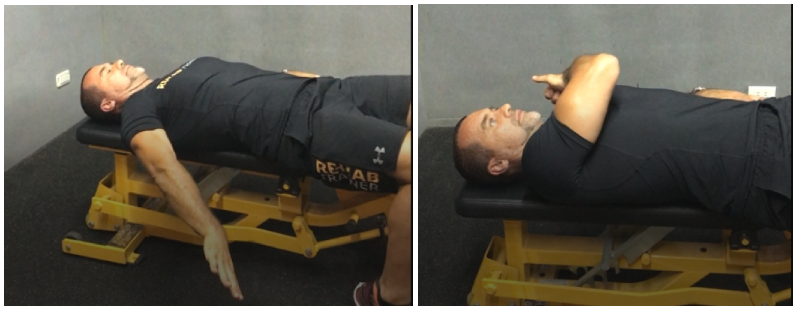
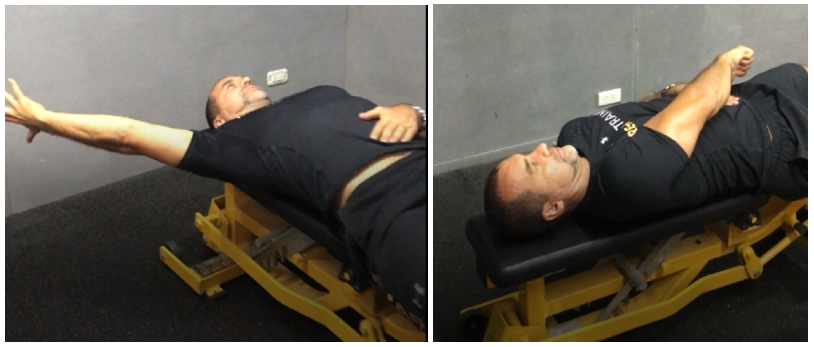
These patterns of movement, though beneficial, are only part of the PNF protocol. In a climate of ‘hands off’ therapy, sports professionals may instruct athletes through these movements using resistance bands or free weights. By doing so, they may not be getting the full benefit of the technique. After all, PNF, by its very nature, requires proprioceptive input to provide the neuromuscular facilitation.
Spanish researchers wondered if using dumbbells in shoulder movement patterns was as effective as therapist led movements(1). They tested the muscle activation of 19 healthy individuals when performing PNF upper extremity D2 diagonal movement patterns with therapist-guided facilitation and with a dumbbell at an intensity of 75% of maximal effort (see Figure 3)(1).
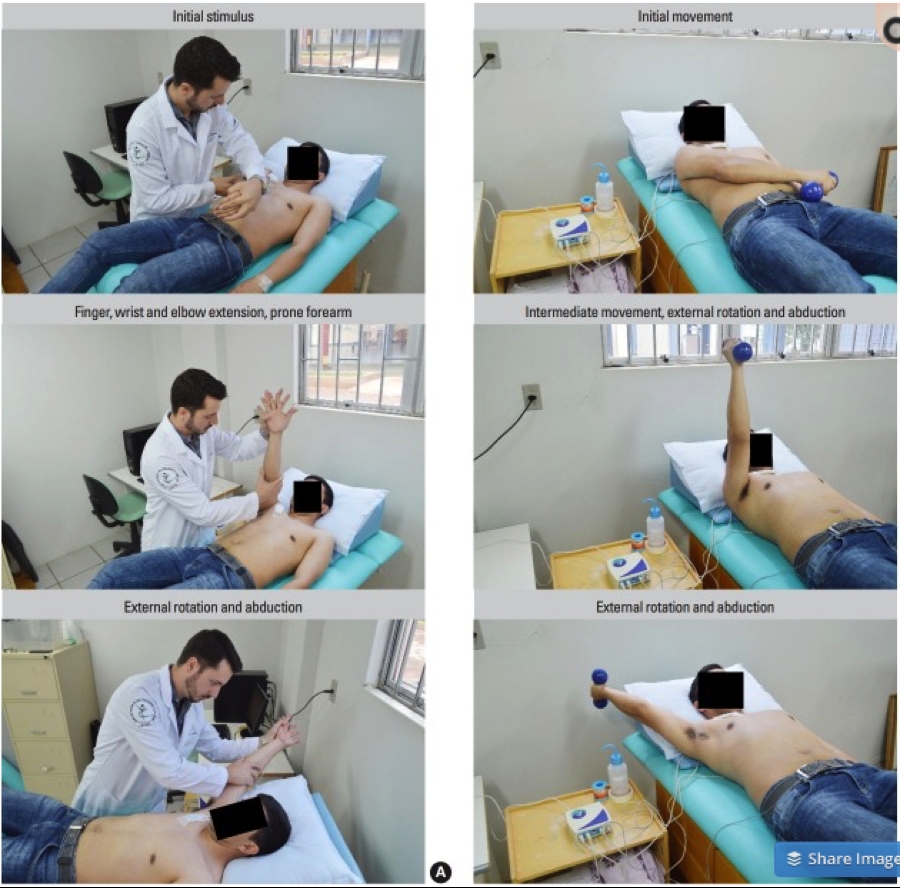
They measured more muscle activation when a therapist facilitated the movement. In addition, they found that the average time of co-contraction between the agonist and antagonist muscles increased with facilitated movement. This co-contraction works to increase stability around the shoulder joint.
Although PNF patterns are also effective at increasing range of motion, avoid further stress to the nerve in extremes of shoulder abduction and flexion. Using PNF during peripheral nerve recovery helps recruit the impacted muscles in functional movements that protect and stabilize the joint. Performing these movements using a PNF hands-on techniques appears to benefit the athlete more than when they perform the movements on their own.
Reference
- J Exerc Rehabil. 2018 Apr 26;14(2):219-225

Alicia Filley

Latest Issue

Subscribe Today
Newsletter Sign Up
Subscriber Testimonials
Dr. Alexandra Fandetti-Robin, Back & Body Chiropractic
Elspeth Cowell MSCh DpodM SRCh HCPC reg
William Hunter, Nuffield Health
Subscribe Today

Newsletter Sign Up
Coaches Testimonials
Dr. Alexandra Fandetti-Robin, Back & Body Chiropractic
Elspeth Cowell MSCh DpodM SRCh HCPC reg
William Hunter, Nuffield Health
Subscribe Today
Latest Issue

Be at the leading edge of sports injury management
Our international team of qualified experts (see above) spend hours poring over scores of technical journals and medical papers that even the most interested professionals don't have time to read.
For 17 years, we've helped hard-working physiotherapists and sports professionals like you, overwhelmed by the vast amount of new research, bring science to their treatment. Sports Injury Bulletin is the ideal resource for practitioners too busy to cull through all the monthly journals to find meaningful and applicable studies.
*includes 3 coaching manuals
Get Inspired
All the latest techniques and approaches


Sports Injury Bulletin brings together a worldwide panel of experts – including physiotherapists, doctors, researchers and sports scientists. Together we deliver everything you need to help your clients avoid – or recover as quickly as possible from – injuries.
We strip away the scientific jargon and deliver you easy-to-follow training exercises, nutrition tips, psychological strategies and recovery programmes and exercises in plain English.
