
 close
close


 LOGIN
LOGINLower Limb Orthotic Support
Lower limb orthotics support movement by improving alignment, load distribution, and overall biomechanics. Evan Schuman discusses how clinicians can use them most effectively when prescribing them to athletes.


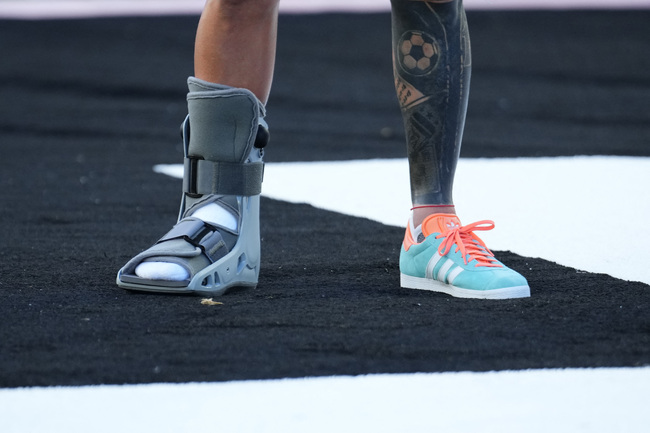
An orthosis is an externally applied device used to support or enhance anatomical function(1, 2). Clinicians commonly prescribe them to address abnormal lower-limb biomechanics and to manage conditions associated with pain, impaired joint or motor function, and deformity(3, 4). Orthoses are made from various materials based on the support required and their intended function(1). As clinicians, it is essential to understand orthotic types, biomechanical functions, indications, and when to prescribe or refer athletes for orthotics.
"The goal is to maintain neutral subtalar joint alignment throughout the gait cycle."
Orthotic Design Principles
- Three-point force systems
This controls or corrects joint alignment using two opposing forces with a counterforce between them. The counterforce acts on the convex side near the affected joint, while opposing forces are applied proximally and distally on the concave side(5). - Total contact
Increasing the contact area reduces soft-tissue pressure (Pressure = Force/Area), thus reducing the risk of skin/tissue irritation(5). - Kinesthetic reminder
The physical sensation of wearing the orthosis prompts the patient to modify movement patterns, encouraging improved alignment and function(5).
The Goals of Orthotics(2, 4, 6)
- Shock absorption
- Cushion tender foot areas
- Reduce abnormal plantar pressure
- Support and protect healed fracture sites (total-contact)
- Minimize shear forces
- Correct flexible deformities or provide stability
- Restrict motion of painful joints
- Accommodate rigid deformities
Foot Orthoses
The desired effect of an orthosis is achieved by applying controlled forces to the foot to facilitate pressure redistribution or restrict motion(4). The goal is to maintain neutral subtalar joint alignment throughout the gait cycle(4). Foot orthoses can be divided into two broad categories(4, 6):
- Over-the-counter (OTC) or prefabricated orthoses:
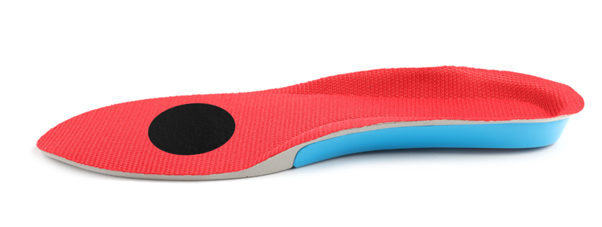
These are indicated for patients with no deformity to provide cushioning and shock attenuation(4, 6). - Custom foot orthoses (CFOs):
Custom-made, durable, and are subdivided into three categories(4, 6).
- Accommodative (soft) foot orthoses: Indicated for cushioning and protection, soft orthoses provide padding, shock attenuation, and reduced friction and shear, and clinicians commonly use them for insensate feet and fixed deformities, particularly those with bony prominences(4, 6).
- Rigid orthoses: Provide arch support and control for flexible deformities(4). They also control or reduce motion in the forefoot or midfoot in arthritis but provide minimal cushioning, shock absorption, and protection(4).
- Semi-rigid orthoses: They combine the benefits of accommodative and rigid designs, with a soft top layer for cushioning and a firmer core for support, helping to redistribute plantar pressure and offload high-pressure areas(4).
The University of California Biomechanics Laboratory Foot Orthosis
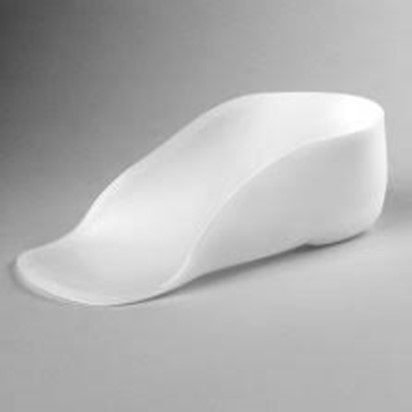
The University of California Biomechanics Laboratory (UCLB) Foot Orthosis controls flexible postural deformities by maintaining the hindfoot in a neutral position. Its biomechanical principle is to stabilize and immobilize the transverse tarsal joints by keeping the calcaneus neutral, thereby limiting pronation and forefoot abduction (see Figure 1)(4).
Ankle-Foot Orthoses
The two basic forms of ankle–foot orthoses (AFOs) are the double-upright construction attached to the shoe and the molded ankle-foot orthosis (MAFO). Depending on the pathology, they may be fixed or articulated to permit ankle motion, with various adjustments used to improve deformity control and extend their use to both flexible and rigid deformities(4).
Dynamic AFO
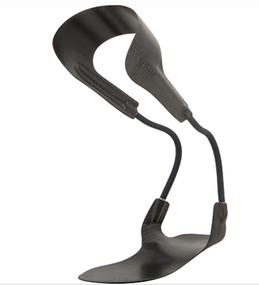
This brace provides proprioceptive feedback from the ground through the footplate and assists ankle dorsiflexion by leveraging the material’s flexibility, which stores and releases energy during walking (see Figure 2)(4).
Hinged AFO
Clinicians prescribe the hinged AFO to patients with foot drop, with the degree of dorsiflexion assistance determined by the type of hinge used(4).
The Arizona brace AFO
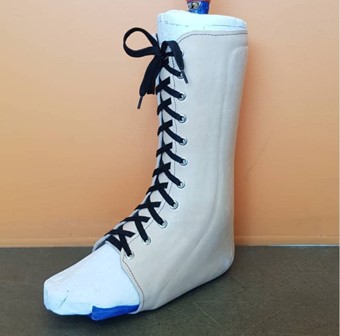
Clinicians use this brace to manage tibialis posterior pathology and other hindfoot conditions, aiming to achieve a neutral hindfoot by correcting hindfoot valgus and stabilizing the ankle, subtalar, and midtarsal joints to provide medial and lateral support (see Table 1 and Figure 3)(4).
Orthotics for Specific Conditions
Plantar fasciopathy
Night splints maintain ankle dorsiflexion to prevent fascia shortening during rest(7). Orthotics provide medial arch support and increase midfoot contact, reducing heel pain and plantar fascia strain(4). Soft hindfoot orthotics decrease heel-strike force(4). Prefabricated insoles are often effective, but patients with structural malalignment may benefit from custom-molded orthoses(4, 8).
Table 1: Posterior Tibial Tendon Dysfunction (PTTD)(4, 6, 9)
| Stage of PTTD | Orthotic used | Orthotic rationale |
| Stage 1: Acute | CAM boot initially, and later a semi-rigid foot orthosis with medial posting. | Immobilization offloads the tendon. Medial posting supports the arch and decreases pronation, taking load off the tendon. |
| Stage 2: Flexible deformity | UCLB custom articulated AFO, over-the-counter ankle-stirrup brace, or Arizona brace. | Restore the medial arch, maintain a neutral hindfoot, and limit forefoot abduction. |
| Stage 3: Rigid deformity | Arizona brace or MAFO. | The brace cannot correct rigid malalignment but supports the collapsed arch, reduces pain, and stabilizes the foot. |
| Stage 4: Rigid deformity with ankle involvement | Solid (non-articulated) AFO. | A rigid brace stabilizes the ankle and foot in deltoid ligament failure and ankle arthritis, supporting the deformity without correction to avoid pressure. |
Achilles tendinopathy
In insertional Achilles tendinopathy, management may include a heel lift to reduce tendon strain and compression during dorsiflexion(10). Clinicians should use heel lifts bilaterally to avoid a leg-length discrepancy(4). In non-insertional Achilles tendinopathy, clinicians may treat acute symptoms with immobilization in a CAM boot to offload the tendon(4). Foot orthoses should address excessive pronation and calcaneal eversion to reduce strain on the tendon(11).
Pes cavus
Cavus feet demonstrate a tripod weight bearing, resulting in increased pressure under the first and fifth metatarsal heads and the heel(12). The high arch and reduced flexibility predispose patients to increased heel force, whilst a varus hindfoot places stress on the lateral ankle ligaments, contributing to chronic ankle instability(12). In hindfoot-driven cavus, a custom orthosis is usually a semi-rigid, full-length device with an elevated heel to accommodate gastrocnemius/soleus tightness, a lateral hindfoot-to-midfoot wedge, and a lateral forefoot post or first-ray recess, without medial arch support(12).
Pes planus
Medial arch support insoles, which redistribute pressure, reduce strain on the tibialis posterior tendon and improve overall foot mechanics, and decrease ground reaction force(9, 13).
Morton’s neuroma
Athletes should avoid high heels and footwear with a narrow toe box, as these increase the pressure on the nerve(14). Metatarsal pads spread the metatarsals and decrease pressure on the nerve by offloading the metatarsal heads; the pad should be placed proximal to the lesion to redistribute pressure away from it (see Figure 3)(14).
Arthritis
- Ankle arthritis: Orthotic management should aim to limit excessive and painful dorsiflexion and plantarflexion while maintaining gait(4, 6). A molded AFO or Arizona brace can reduce ankle loading and, when combined with a rocker-bottom shoe, help compensate for restricted motion and aid propulsion during walking(4, 6).
- Subtalar arthritis: Patients usually experience pain at heel strike and during inversion and eversion. A hinged AFO controls coronal plane motion and limits subtalar movement while improving hindfoot stability(4, 6).
- Midfoot arthritis: Pain commonly occurs during dorsiflexion while walking. Management includes stiff-soled shoes, modified lacing, and a UCLB orthosis to stabilize the midtarsal joint and limit midfoot abduction and adduction(4, 6).
- Forefoot arthritis: Management focuses on limiting the motion of the metatarsophalangeal joint. Common options include Morton extension plates, rocker-bottom shoes, and metatarsal bars(4, 6).
Hallux disorders
- Hallux rigidus: Clinicians use orthotics to reduce movement across the first MTP joint while providing protection and improving plantar pressure distribution(15). They typically advised a Morton’s extension along with a rocker-bottom sole to decrease dorsiflexion of the first MTP joint by rocking the foot from heel-strike to toe-off(15). Shoes should also have a high and wide toe-box(15).
- Hallux valgus: Narrow shoes and high heels increase valgus stress at the first metatarsophalangeal joint, and athletes should avoid these where possible. Use of a foot orthosis with medial arch support decreases peak pressure in the forefoot(16, 17).
Ankle sprains
Ankle braces differ in materials, design, and degree of motion restriction, aiming to prevent excessive inversion while preserving functional mobility(18). Semi-rigid braces are made of thermoplastic medial and lateral stirrups secured with straps, limiting inversion and eversion while allowing relatively free plantarflexion and dorsiflexion(18). Semi-rigid ankle braces are effective in reducing the incidence of ankle sprains and offer superior preventive support compared with taping(19). Lace-up braces are fabric-based orthotics that often incorporate figure-of-eight straps and provide moderate restriction of inversion, eversion, plantarflexion, and dorsiflexion. Braces allowing greater plantarflexion may permit higher inversion velocities, whereas designs with subtalar locking mechanisms more effectively limit inversion(18, 20). There are contrasting findings regarding the effect of ankle bracing on performance, with some studies reporting reductions in jump height and agility, while others show no change (see Table 2)(19).
Table 2: Pros and cons of ankle braces(19, 21, 22)
| Pro’s | Con’s |
| Reduces ankle inversion | Increases knee valgus |
| Improves balance | Increases knee internal rotation |
| Enhances joint position sense | Increased foot pronation |
| Reduces ankle inversion velocity and displacement during simulated sprains | Decreased sagittal-plane ankle motion may shorten force absorption time and increase ground-reaction forces and loading rates |
ACL reconstruction
Clinicians classify knee braces as prophylactic, rehabilitative, or functional(23). Prophylactic braces look to prevent injury in healthy athletes; rehabilitative braces offer protection in the early post-surgical phase, and functional braces support an injured or reconstructed knee during sport(23). Functional braces are usually rigid and hinged, designed to limit forces associated with ACL injury, including anterior tibial translation, rotation, and valgus movement(23). Braces may reduce anterior tibial translation under controlled conditions. Still, their ability to control knee motion during dynamic activities is less clear, and the current literature does not support routine use after reconstruction(23).
Medial knee osteoarthritis
A valgus knee brace uses a three-point bending system to unload the medial compartment(24). Valgus braces reduce pain, decrease the medial-lateral knee loading ratio, and reduce the knee adduction moment(24). Comparisons of different brace designs, including a three-point valgus brace, an unloader brace inducing valgus and external rotation, and a functional ligament brace, show that all provide immediate pain relief and reduce medial knee loading during gait(24). Valgus braces appear most effective in reducing pain. In contrast, braces incorporating valgus alignment and external rotation may further decrease knee loading by promoting a toe-out gait and shifting the ground reaction force laterally. Functional braces reduce loading through improved joint stability and proprioceptive support(24).
Patellofemoral pain syndrome
The On-Track patellar tracking brace and the dynamic patellar orthosis both significantly reduce pain with minimal changes in patellar alignment(25). Bracing increases patellofemoral contact area, suggesting symptom relief may result from improved patellar seating in the trochlear and redistribution of joint forces(25).
"Orthoses can play an important role in managing lower limb pathology..."
Conclusion
Orthoses can play an important role in managing lower limb pathology by supporting structures and modifying biomechanics. An appropriate prescription requires an understanding of the design, function, and clinical indications of the device. However, orthotics should be used as an adjunct to rehabilitation, alongside targeted strengthening, mobility, and functional exercises.
References
1. Oxford Handbook Rehabil Med. 3rd ed. Oxford University Press; 2019:290–304.
2. Int J Health Sci Res. 2022;12(10):78–83.
3. Man Ther. 2004;9(4):185–196.
4. Foot Ankle Orthop.2023;8(3):24730114231193419
5. Intro Orthotics Clin Reasoning Probl Solving Approach. Elsevier/Mosby; 2020.
6. Cureus. 2023;15(11):e49103.
7. Phys Ther Rev. 2000;5(3):147–154.
8. Biomed Res Int. 2018 Dec 12;2018:3594150.
9. Clin Rehabil. 2021;35(2):159–168.
10. Orthop J Sports Med. 2024;12(2):23259671231221583.
11. J Foot Ankle Res. 2009;2:27
12. Foot Ankle Int. 2005;26(3):256–263.
13. PLoS One. 2020;15(8):e0237382.
14. Acta Biomed. 2020;91(4-S):60-68.
15. EFORT Open Rev. 2017;2(1):13-20.
16. Prosthet Orthot Int. 2015;39(2):134-139
17. Prosthet Orthot Int. 2018;42(2):163-170
18. J Athl Train. 2014;49(5):608-616.
19. J Athl Train. 2002;37(4):436-445.
20. J Orthop Sports Phys Ther. 2009;39(12):875-883.
21. Int J Sports Phys Ther. 2018;13(3):379-388.
22. J Sci Med Sport. 2016;19(7):531-540.
23. J Pediatr Soc North Am. 2025;12:100215.
24. Knee. 2014;21(6):1107-1114.
25. Med Sci Sports Exerc. 2004;36(7):1226-1232.
Latest Issue
Subscribe Today
Newsletter Sign Up
Subscriber Testimonials
Dr. Alexandra Fandetti-Robin, Back & Body Chiropractic
Elspeth Cowell MSCh DpodM SRCh HCPC reg
William Hunter, Nuffield Health
Subscribe Today

Newsletter Sign Up
Coaches Testimonials
Dr. Alexandra Fandetti-Robin, Back & Body Chiropractic
Elspeth Cowell MSCh DpodM SRCh HCPC reg
William Hunter, Nuffield Health
Subscribe Today
Latest Issue
Be at the leading edge of sports injury management
Our international team of qualified experts (see above) spend hours poring over scores of technical journals and medical papers that even the most interested professionals don't have time to read.
For 17 years, we've helped hard-working physiotherapists and sports professionals like you, overwhelmed by the vast amount of new research, bring science to their treatment. Sports Injury Bulletin is the ideal resource for practitioners too busy to cull through all the monthly journals to find meaningful and applicable studies.
*includes 3 coaching manuals
Get Inspired
All the latest techniques and approaches


Sports Injury Bulletin brings together a worldwide panel of experts – including physiotherapists, doctors, researchers and sports scientists. Together we deliver everything you need to help your clients avoid – or recover as quickly as possible from – injuries.
We strip away the scientific jargon and deliver you easy-to-follow training exercises, nutrition tips, psychological strategies and recovery programmes and exercises in plain English.
