
 close
close


 LOGIN
LOGINAssess, Don’t Guess: Using Objective Data to Guide Sports Injury Rehabilitation
Luke van Zyl explores how objective data can sharpen clinical reasoning and improve decision-making throughout sports injury rehabilitation. Drawing on his experience in elite football and performance technology, he highlights why clinicians should assess, not guess, when guiding patients back to activity.


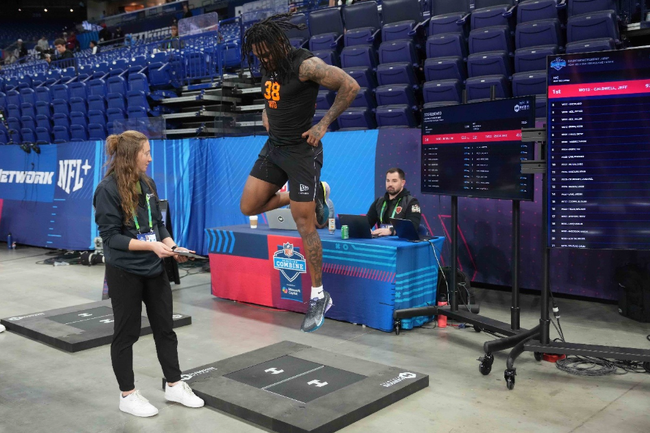
Technology has changed the way practitioners understand health, performance, and recovery. From step counts and resting heart rate to sleep and recovery scores, data is now part of daily life. Yet in rehabilitation, many important decisions are still made based solely on experience, timelines, symptoms, and clinical judgment.
Clinical reasoning remains essential. However, objective measurement can sharpen that reasoning. When practitioners measure strength, range of movement, power, explosiveness, reactive strength, or speed, they gain information that the eye cannot always see and the patient cannot always describe.
The aim is not to replace clinical skill. It adds another layer of information to the rehabilitation process, helping practitioners make better decisions, improve patient engagement, and guide safer progression.
Why Objective Measurement Matters
Rehabilitation often requires key progression decisions. Is the patient ready to return to running? Can they begin plyometric work? Are they prepared to return to sport or their chosen activity?
Without objective testing, these decisions are often based on time since injury, symptom response, movement quality, or educated estimation. These factors matter, but they may not reveal underlying deficits in strength, asymmetry, power, or tissue capacity.
Objective testing allows practitioners to identify deficits, monitor change, and create clearer progression criteria. It also helps patients understand their rehabilitation journey. When someone can see a measurable deficit, improvement becomes visible and meaningful.
1) Improving patient engagement
Rehabilitation compliance can make or break outcomes. Patients are often motivated when pain is high, but once symptoms reduce, engagement may drop. This is where objective feedback becomes powerful. Showing a patient a left-to-right strength deficit, reduced jump power, or poor force output gives them something specific to target. Their rehabilitation becomes more than “doing exercises”; it becomes a measurable process of improvement.
When symptom reduction is combined with objective progress, patients can see and feel change. This helps maintain motivation beyond the point where they feel “good enough”.
2) Using exit criteria and benchmarks
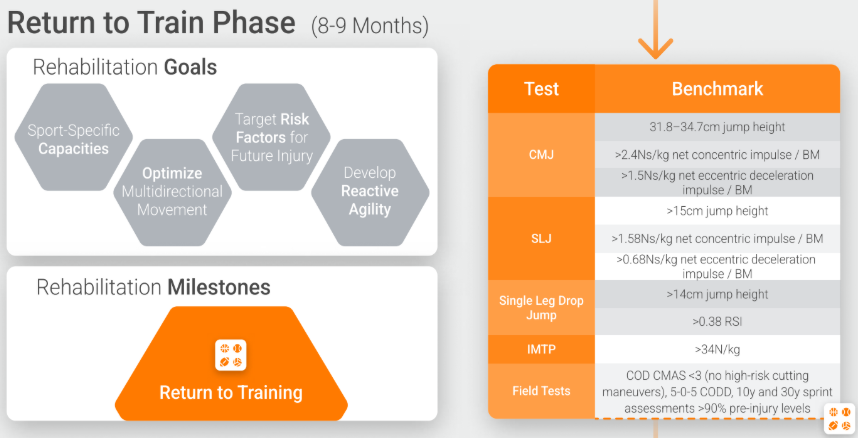
Clear criteria give structure to rehabilitation. They provide short-, medium-, and long-term goals and help patients understand what is required before progressing to the next stage (see Figure 1). For example, in a hamstring strain rehabilitation pathway, objective testing might progress from early strength testing to higher-force isometric or eccentric measures to sprint exposure and return to performance markers. The exact values will depend on the athlete, sport, level, and clinical context, but the principle remains the same: progression should be earned, not assumed.
Benchmarking can also help practitioners avoid under-preparing patients. The limp symmetry index is useful, but it has limitations. In long-term injuries, the uninvolved limb may also decondition. A patient may appear “symmetrical” even when both sides remain below the level required for safe performance.
Relative measures, such as strength relative to body mass, can provide more useful insight. They help practitioners understand whether the patient has the capacity to tolerate the loads they are likely to experience.
3) Adding context with normative data
Collecting data is only the first step. The next challenge is interpretation.
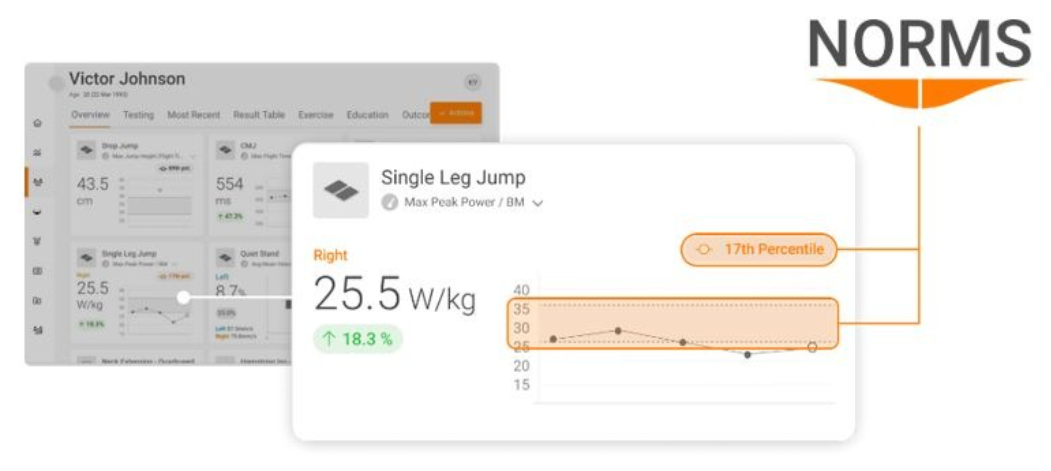
Patients often ask, “Is that good?” Normative data can help answer this question by comparing an individual’s results with those of age- and sex-matched peers (see Figure 2). This gives the practitioner and patient a clearer understanding of whether a score is below average, average, or high-performing.
Normative data can also be useful before injury. Baseline screening and physical profiling may highlight areas that need development, identify potential vulnerabilities, and guide more individualized programming.
4) Improving accountability, efficiency, and specificity
Objective measurement can make rehabilitation more efficient. If a practitioner can identify the specific deficit, they can target the program more accurately. This prevents patients from spending weeks working on the incorrect quality. It also allows the practitioner to assess whether the exercise dosage, intensity, and volume are producing the desired adaptation.
Regular retesting creates accountability for both the patient and the practitioner. It can show whether the patient has completed their program, whether the program is working, and whether the next phase of rehabilitation is appropriate. This accountability should not be viewed negatively. It helps practitioners refine their practice and helps patients understand why consistency matters.
Table 1: Practical tips for getting started
| Principle | Clinical Application |
| Start small |
Begin with one testing tool or one clinical pathway before expanding. |
| Allocate learning time |
Build confidence with equipment, software, testing protocols, and interpretation. |
| Use data as a clinical tool |
Objective testing should support reasoning, not become a standalone service. |
| Retest regularly |
Measurement becomes meaningful when change is tracked over time. |
| Keep the patient involved |
Show athletes their progress and explain what the numbers mean. |
Return to Running: A Practical Example
Return to running is a common challenge in musculoskeletal rehabilitation. Many patients want to resume running as soon as symptoms improve, particularly recreational runners preparing for marathons, ultra-marathons, or triathlons.
Objective testing can help guide this decision. Practitioners may consider measures related to the hip, knee, and ankle, including strength, power, calf capacity, single-leg control, and reactive ability (see Figure 3).
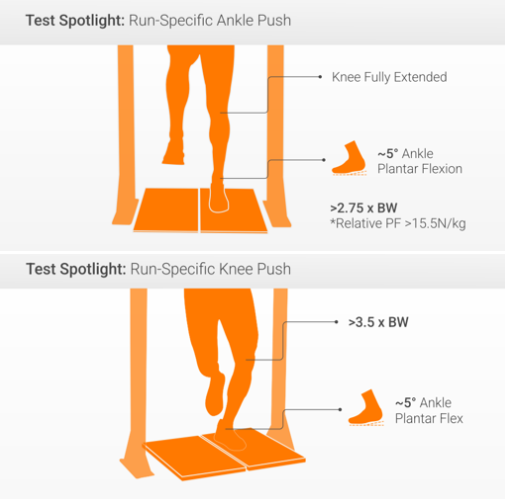
These values should not be treated as rigid rules. They must be interpreted alongside tissue healing, symptom response, training history, previous injury, and the demands of the individual’s sport or activity. However, they offer a useful framework for reducing guesswork and improving confidence in progression.
Clinical Implications
Objective measurement brings elite-level decision-making closer to everyday practice. It helps practitioners move beyond vague markers of progression and gives patients clearer insight into their rehabilitation journey.
Data should not replace clinical reasoning, communication, or experience. Instead, it should complement them. Used well, it can improve engagement, guide exercise prescription, support return-to-sport decisions, and create a more transparent rehabilitation process.
The future of injury management is not simply more technology. It is a better integration of technology into clinical reasoning. The goal remains the same: better decisions, better rehabilitation, and better outcomes for athletes.
"Objective measurement brings elite-level decision-making closer to everyday practice."
Key takeaways
-
Objective data helps practitioners make more informed progression decisions.
-
Measurement improves patient engagement by making progress visible.
-
Exit criteria and benchmarking create structure in rehabilitation.
-
Limb symmetry index should be interpreted carefully, especially after long-term injury.
References


Latest Issue
Subscribe Today
Newsletter Sign Up
Subscriber Testimonials
Dr. Alexandra Fandetti-Robin, Back & Body Chiropractic
Elspeth Cowell MSCh DpodM SRCh HCPC reg
William Hunter, Nuffield Health
Subscribe Today



Newsletter Sign Up
Coaches Testimonials
Dr. Alexandra Fandetti-Robin, Back & Body Chiropractic
Elspeth Cowell MSCh DpodM SRCh HCPC reg
William Hunter, Nuffield Health
Subscribe Today
Latest Issue

Be at the leading edge of sports injury management
Our international team of qualified experts (see above) spend hours poring over scores of technical journals and medical papers that even the most interested professionals don't have time to read.
For 17 years, we've helped hard-working physiotherapists and sports professionals like you, overwhelmed by the vast amount of new research, bring science to their treatment. Sports Injury Bulletin is the ideal resource for practitioners too busy to cull through all the monthly journals to find meaningful and applicable studies.
*includes 3 coaching manuals
Get Inspired
All the latest techniques and approaches


Sports Injury Bulletin brings together a worldwide panel of experts – including physiotherapists, doctors, researchers and sports scientists. Together we deliver everything you need to help your clients avoid – or recover as quickly as possible from – injuries.
We strip away the scientific jargon and deliver you easy-to-follow training exercises, nutrition tips, psychological strategies and recovery programmes and exercises in plain English.
