
 close
close


 LOGIN
LOGINYou are viewing 1 of your 1 free articles
Anti-inflammatory medication: does Mother Nature know best?


The problem with NSAIDs
Regardless of the cause of injury, when inflammation becomes chronic, anti-inflammatory medication in the form of non-steroidal anti-inflammatory drugs (NSAIDs) is often prescribed. However, while effective in the short term, the long-term use of NSAIDs carries considerable risk. In particular, prolonged NSAID use can result in stomach ulcers and gastric bleeding, which can be potentially very hazardous (see table 1). For this reason, the long-term use of NSAID painkillers such as Ibuprofen is not recommended. Indeed, even the short-term use of NSAIDs following acute injury may be undesirable because various studies have shown that NSAIDs can delay muscle regeneration and may reduce ligament, tendon, and cartilage healing, making re-injury or chronic injury more likely(1,2).| Age range (years) | Chance of GI bleed due to NSAID | Chance of dying from GI bleed due to NSAID |
|---|---|---|
| Risk in any one year is 1 in: | ||
| 16-45 | 2,100 | 12,353 |
| 45-64 | 646 | 3,800 |
| 65-74 | 570 | 3,353 |
| ‰¥ 75 | 110 | 647 |
Natural alternatives
The good news for injured or older athletes who are prone to training-related aches and pains is that a significant body of recent scientific research suggests that a number of naturally-occurring food compounds can help counter inflammation - without the undesirable side effects of medication. Indeed, some of these extracts may also enhance recovery and performance in their own right, and confer additional health benefits such as a reduced risk of degenerative diseases like coronary heart disease and cancerCurcumin (turmeric)
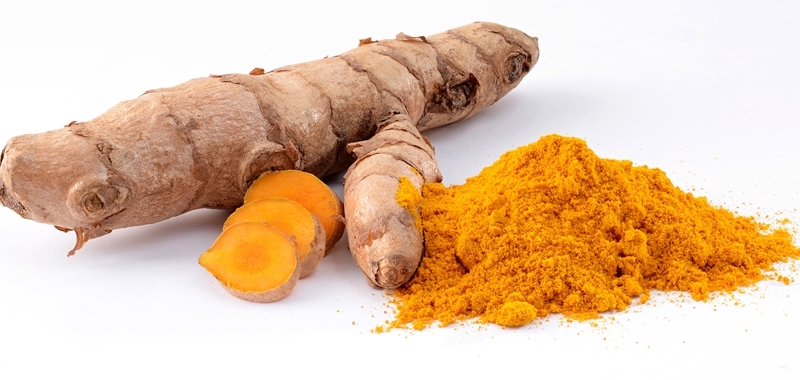
Curcumin is derived from turmeric, a popular spice used in India, South Asia, and Japan, which is the ground root and root system of the plant Curcuma longa (see figure 1). In traditional Indian medicine, turmeric is used to treat digestive disorders, wounds, and rheumatic diseases. Besides other macro- and micronutrients, the extract of turmeric contains 77% curcumin, 17% demethoxycurcumin, and 3% bisdemethoxycurcumin, collectively named curcuminoids, which render turmeric its distinct orangey-yellowish hue (figure 1). Curcumin is both a powerful anti-inflammatory and antioxidant and is currently under intense scientific scrutiny for these properties.
Figure 1: Cumcuma longa root
In fact, such is the potency of curcumin’s antioxidant and anti-inflammatory activity that scientists are currently investigating its potential to treat and prevent a wide array of degenerative and inflammation-related diseases including cardiovascular and ophthalmic diseases, diabetes, depression, HIV, Alzheimer’s disease, endometriosis, osteoporosis, inflammatory bowel disease, epilepsy, Parkinson’s disease, and even cancer(4-15).
One area where curcumin is proving to be particularly effective is in the treatment of joint pain and arthritis (both rheumatoid and osteoarthritis). One study showed that curcumin can diminish joint pain and improve mobility compared to an inert placebo, and that these improvements are brought about by a reduction in joint inflammation - with an action that may be as effective in reducing inflammation and pain as over-the-counter Ibruprofen. (16).
In another study, 185 osteoarthritic patients took 1,500mg of curcumin extract per day for four weeks while a further 160 patients received 1,200 mg ibuprofen per day(17). The results showed that both groups exhibited significant and similar improvements in pain and mobility. This study is particularly important because it benefited from having a large sample size, proper blinding and randomisation, despite a short duration of treatment – in other words, the evidence is of very high quality.
Summing up, extensive clinical trials on the effects of curcumin in patients with joint pain and stiffness show that curcumin can reduce pain and improve functionality in as little as four weeks and its effects are comparable to standard pharmacological agents, such as NSAIDs and glucosamine. The usual dosage of standardised turmeric powder is 400–600 mg taken three times per day.
Tart cherry extract
Cherries first hit the sports nutrition headlines back in the mid 2000s, when it was discovered that by consuming tart cherry (Montmorency) juice, athletes were able to reduce the extent of exercise-induced muscle damage following very strenuous exercise. Further research has also suggested that cherry juice taken immediately before or after an initial bout of hard exercise can help improve exercise efficiency during a second bout a few days later and reduce inflammation, and/or muscle soreness
For example, a 2016 study looked at the performance effects of a powdered tart cherry supplement prior to and following a half marathon in runners and triathletes (18). When the athletes took the tart cherry supplement, they averaged 13% faster times in the half-marathon race, reported lower levels of post-exercise muscle soreness, and experienced more rapid recovery from soreness after the race. This was borne out by the levels of inflammatory chemicals in the tart cherry athletes, which were lower than in the placebo group.
The anti-inflammatory and soreness-reducing effects of tart cherry juice appear to be due to the high levels of natural phytochemical antioxidant compounds called ‘anthocyanins’ (see figure 2), which are found in high concentrations in all tissues of most dark/brightly coloured fruits and plants. Research has shown that by suppressing biochemical pathways in the body leading to inflammation, these anthocyanins may actually provide a more potent anti-inflammatory effect than aspirin(19,20).
Figure 2: Antioxidant power of tart cherry juice
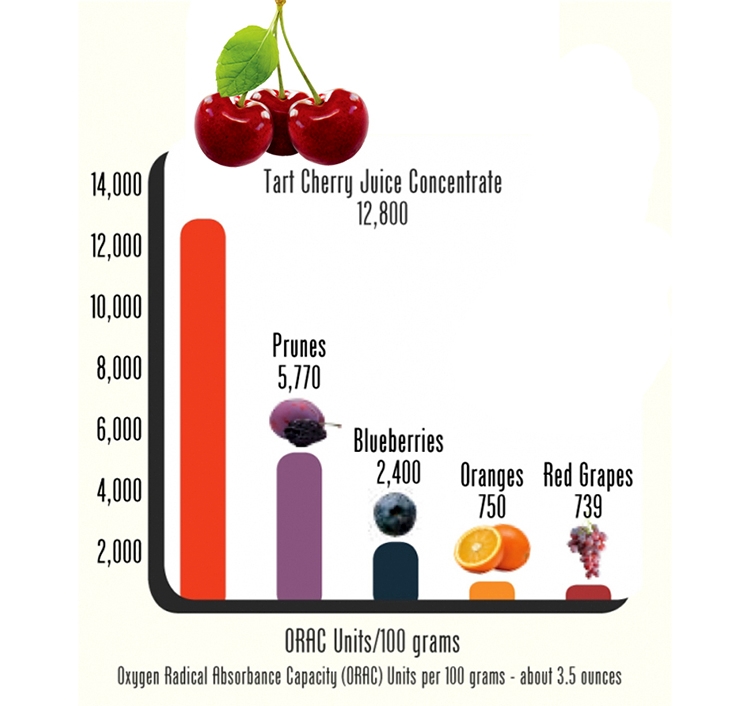
Vertical scale shows antioxidant capacity in ‘ORAC’ units. Tart cherry juice concentrate provides around 17 times more antioxidant content than fresh oranges or grapes.
In summary, the evidence seems to suggest that consuming tart cherry juice prior to and following bouts of more intense exercise (30-60mls of tart cherry juice concentrate twice a day during periods of high-intensity training) is likely to be a useful strategy to reduce generalised soreness and inflammation. It can also be taken as an everyday supplement, and there’s good evidence that this can produce additional health benefits such as improved cardiovascular health(21)and better sleep quality(22). However, given the cost of a quality tart cherry concentrate, the cost may be prohibitive.
Ginger
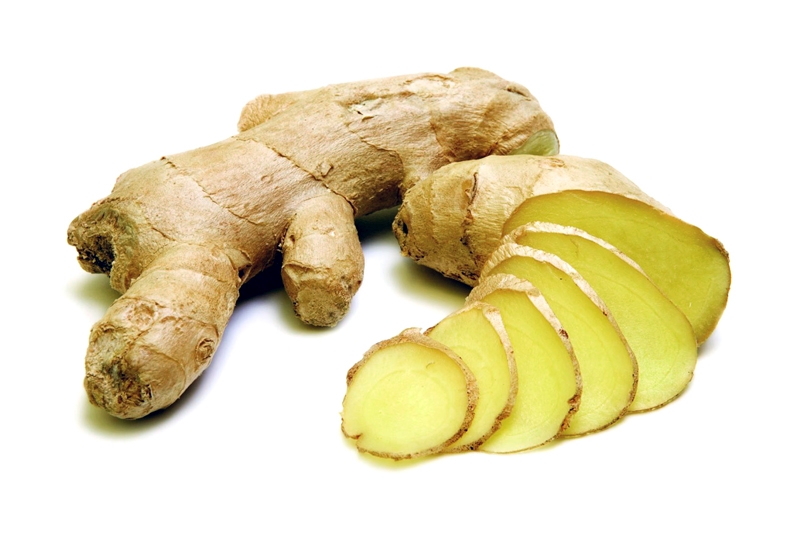
Ginger, which is the root system of a plant called Zingiber officinale (see figure 3) is used widely in traditional Chinese and Indian medicine to treat a wide range of diseases including stomach ache, diarrhoea, nausea, asthma, respiratory disorders, toothache, gingivitis, and arthritis.
Figure 3: Ginger root
In the early 1970s, it was discovered that NSAIDs exert their therapeutic effects by inhibiting the biosynthesis of prostaglandins (PGs). Soon thereafter, ginger was found to contain constituents that inhibit PG synthesis too, and subsequent studies revealed that some of the constituents of ginger have pharmacological properties similar to the new class of dual-acting NSAIDs, which have notably fewer side effects than conventional NSAIDs(23,24).
Since then, several animal studies have shown that dried ginger or ginger extract can reduce acute inflammation(25-28). In humans, several clinical studies support the value of ginger for the treatment of osteoarthritis, and in some cases, a significant reduction in knee pain has reported(29-31). Some of these trials also found that ginger relieved pain and swelling to varying degrees in patients with osteoarthritis, rheumatoid arthritis, and muscular pain - without causing serious adverse effects even after long periods of use(32).
A recent study has demonstrated the anti-inflammatory power of ginger(33). The 67 subjects were actually dental patients who had to undergo a tooth extraction. Immediately following the extraction, the patients were randomly allocated into one of the three groups:
- A 500mg capsule of ginger powder taken after surgery then at 6-hourly intervals
- A 400mg Ibuprofen capsule taken at 6-hourly intervals
- An inert placebo capsule taken 6-hourly
The subsequent degree of swelling, pain and need for paracetamol (when the pain became too uncomfortable) were recorded over the following days. The results showed that both the ginger and Ibuprofen resulted in less pain and swelling, with less need for paracetamol use. Also, the ginger was equally as effective as Ibuprofen at combating pain (see figure 4).
Figure 4: Ginger supplementation and pain(33)
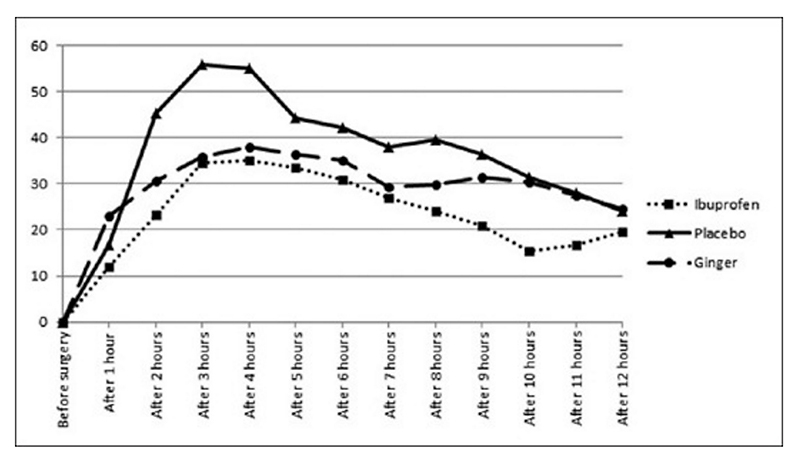
Both ginger supplemented patients (circles) and Ibuprofen supplemented patients (squares) had significantly lower pain scores than the placebo patients (triangles).
Why is a study into dental pain relevant to athletes suffering from injury/inflammation? Well, that’s because the dental pain model is a widely employed, validated, and highly standardised acute pain model, and has been shown to be the most appropriate model to investigate the onset of analgesic action. It is often used as the reference clinical pain model for the investigation of analgesic drugs, and in this model, compounds with anti-inflammatory properties provide better pain relief than conventional painkillers.
Omega-3 essential fatty acids (EFAs)
Over the past 20 years or so, research has shown that omega-3 EFAs are some of the most effective natural anti-inflammatory agents available, and the biological basis for the effectiveness of fish oil in treating arthritis has been well documented with many positive clinical studies, when compared to traditional pharmaceutical anti-inflammatory agents(34-37).
In a 2012 study, researchers reviewed the data accumulated from 23 previous studies on the use of omega-3 EFAs for combating inflammation-related pain; it found that that there was a modest but fairly consistent benefit of omega-3 EFAs on joint swelling and pain, duration of morning stiffness, and discomfort(39). Another (much more recent) meta study sought to determine the effect of omega-3 EFAs on arthritic pain. It concluded that while a minority of studies proved inconclusive, those studies using doses of 3-6 grams per day of omega-3 EFAs produced a therapeutic role in decreasing pain associated arthritis(40). You can read more about the role of omega-3 EFAs in injury and recovery in this article.
Summary and practical recommendations
A growing body of research indicates that certain naturally-occurring compounds appear to be promising alternatives or adjuncts to NSAID anti-inflammatory medication – but without the drawbacks of NSAIDs. Of particular interest are curcumin, ginger, tart cherry extract and omega-3 oils. Some guidelines for their use are shown below.- Curcumin- Choose a standardised turmeric extract, which will contain known levels of curcumin compounds. Take around 2,000mgs (2g) per day in divided doses, with food. Allow at least four weeks to experience the full effects.
- Cherry- Choose a reputable brand of tart cherry extract with proven high levels of antioxidants.
- Omega 3– When taken for inflammation, a fish oil containing more EPA than DHA may be desirable. Ensure that the athlete’s diet contains two portions per week of fatty fish in addition to any omega-3 supplement.
- Ginger– Use powdered ginger in capsules (as per the studies in the literature). Aim for a total daily intake to provide 10-20mg of gingerols – the active component in ginger. Also, take ginger capsules with food to avoid the possibility of nausea.
References
- Sports Med. 1999;28:383–8
- 2.BMC Complement Altern Med. 2006;6:13
- Aliment Pharmacol Ther, 11: 283-91, 1997
- Iran J Pharm Res. 2015;14:479–86
- Pharmacogn Rev. 2010;4:27–31
- Sci Rep. 2016;6:27539
- Planta Med. 2014;80:249–54
- Rev Bras Farmacognosia. 2015;25:53–60
- Curr Top Med Chem. 2017;17:148–61
- Eur J Pharmacol. 2016;784:192–8
- Iran J Reprod Med. 2013;11:415–22
- Neurochem Int. 2015;89:40–50
- Nutrients. 2016 8. pii: E334
- Int J Mol Med. 2016;37:329–38
- Neurochem Res. 2016;41:3113–28
- Drug Design, Development and Therapy 2016:10
- Clin Interv Aging. 2014;9:451–458
- J Int Soc Sports Nutr. 2016 May 26;13:22
- J. Nat. Prod. 1999; 62(2): 294-296
- Exerc. Immunol. Rev. 2005; 11: 64-85
- Am J Clin Nutr. 2016 Jun;103(6):1531-9
- Eur J Nutr. 2012 Dec;51(8):909-16
- J Med Food. 2005;8:125–32
- Food Chem Toxicol. 2008;46:409–20
- Phytomedicine 2005;12:684–701
- Phytother Res. 2006;20:764–72
- Prostaglandins Leukot Essent Fatty Acids. 2007;77:129–38
- Basic Clin Pharmacol Toxicol. 2009;104:262–71
- Osteoarthritis Cartilage. 2003;11:783–9
- Osteoarthritis Cartilage. 2000;8:9–12
- Arch Iran Med. 2005;8:267–71
- J Altern Complement Med. 2009;15:231–7
- Dent Res J (Isfahan). 2017 Jan-Feb; 14(1): 1–7.
- Cell Mol Life Sci. 2000;57:834–41
- Drug Discov Today. 2004;9:165–72
- J Bio Chem. 2000;275:721–4
- Arthritis Rheum. 2002;46:1544–53
- Surg Neurol. 2006;65:326–31
- Br J Nutr. 2012 Jun;107 Suppl 2:S171-84
- Nutrition. 2017 Jul - Aug;39-40:57-66

Andrew Hamilton

Latest Issue

Subscribe Today
Newsletter Sign Up
Subscriber Testimonials
Dr. Alexandra Fandetti-Robin, Back & Body Chiropractic
Elspeth Cowell MSCh DpodM SRCh HCPC reg
William Hunter, Nuffield Health
Subscribe Today




Newsletter Sign Up




Coaches Testimonials
Dr. Alexandra Fandetti-Robin, Back & Body Chiropractic
Elspeth Cowell MSCh DpodM SRCh HCPC reg
William Hunter, Nuffield Health
Subscribe Today
Latest Issue

Be at the leading edge of sports injury management
Our international team of qualified experts (see above) spend hours poring over scores of technical journals and medical papers that even the most interested professionals don't have time to read.
For 17 years, we've helped hard-working physiotherapists and sports professionals like you, overwhelmed by the vast amount of new research, bring science to their treatment. Sports Injury Bulletin is the ideal resource for practitioners too busy to cull through all the monthly journals to find meaningful and applicable studies.
*includes 3 coaching manuals
Get Inspired
All the latest techniques and approaches


Sports Injury Bulletin brings together a worldwide panel of experts – including physiotherapists, doctors, researchers and sports scientists. Together we deliver everything you need to help your clients avoid – or recover as quickly as possible from – injuries.
We strip away the scientific jargon and deliver you easy-to-follow training exercises, nutrition tips, psychological strategies and recovery programmes and exercises in plain English.
