
 close


 LOGIN
Shin Splints, Cramps, Thrombosis, Oh My!


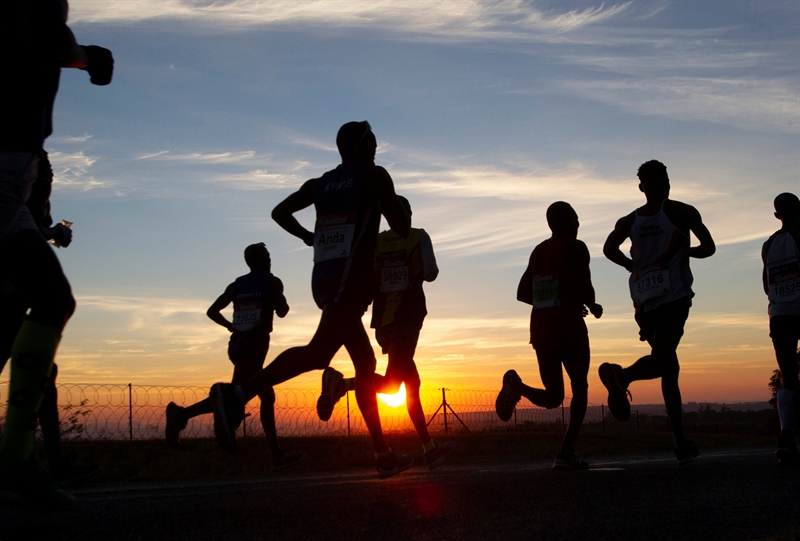
Lower leg pain often plagues runners. The trick is distinguishing pain from an acute injury, overuse, or an emergent problem. In today’s feature article, Pat Gilliam offers an overview of lower leg injuries and identifies the particular characteristics of each syndrome.
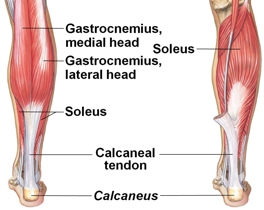
In most acute injuries, the athlete experiences a sudden onset of pain and disability, often accompanied with a tearing or popping sensation. Muscle and tendon tears are graded as to severity of injury either through clinical exam or magnetic resonance imaging (MRI) (see Table below). Up to 65% of all calf strains occur in the medial head of the gastrocnemius and over half of these extend into the soleus as well (see Figure 1)(1). Strains to the gastrocnemius occur primarily during sprinting, jumping, hill training or changes in direction due to the preponderance of fast twitch fibers within the muscle. Soleus strains tend to happen during endurance events or overextended training schedules because the muscle consists mostly of slow twitch fibers.
| Grade | Symptom | Site |
|---|---|---|
| 1 | Pain during or after activityROM normal at 24hrNormal power and initiationPain on contraction | Myofascial - injury in the peripheral aspect of the muscle |
| 2 | Pain during activity and restricts participationLimitation with ROMPain on contractionReduced power on testing | Musculotendinous - Injury within the muscle belly most commonly at musculotendonous junction (MTJ) |
| 3 | Extensive tearSudden onset of painSignificantly reduced ROMPain on walkingObvious weakness on testing | Intratendinous - An injury which extends into the tendon |
| 4 | Sudden onset of painSignificant limitation to activityPalpable gap in muscleMay be less painful than Grade 3 | Complete tear of muscle or tendon |
Chronic injuries
Gilliam’s article overview of pathologies that strike the lower leg helps differentiate between symptoms that appear the same. For instance, sural nerve neuropathy may send a burning or aching sensation down the back of the lower leg that mimics the sensation from chronic exertional compartment syndrome. While similar symptoms, treatment for each is quite different. Other issues, such as medial tibial stress syndrome (commonly known as shin splints), may be treated by addressing altered biomechanics. Calf pain may even be caused by more unusual pathologies, such as a Baker’s cyst. This overview provides a starting point for diagnosing the runner with leg pain. For more specific information, explore leg injuries under the anatomy tab to bring science to the treatment of leg pain.
Reference
- Curt Sports Med Rep. 2016 Sept-Oct;15(5):320-4

Alicia Filley

Latest Issue

Subscribe Today
Newsletter Sign Up
Subscriber Testimonials
Dr. Alexandra Fandetti-Robin, Back & Body Chiropractic
Elspeth Cowell MSCh DpodM SRCh HCPC reg
William Hunter, Nuffield Health
Subscribe Today

Newsletter Sign Up
Coaches Testimonials
Dr. Alexandra Fandetti-Robin, Back & Body Chiropractic
Elspeth Cowell MSCh DpodM SRCh HCPC reg
William Hunter, Nuffield Health
Subscribe Today
Latest Issue

Be at the leading edge of sports injury management
Our international team of qualified experts (see above) spend hours poring over scores of technical journals and medical papers that even the most interested professionals don't have time to read.
For 17 years, we've helped hard-working physiotherapists and sports professionals like you, overwhelmed by the vast amount of new research, bring science to their treatment. Sports Injury Bulletin is the ideal resource for practitioners too busy to cull through all the monthly journals to find meaningful and applicable studies.
*includes 3 coaching manuals
Get Inspired
All the latest techniques and approaches


Sports Injury Bulletin brings together a worldwide panel of experts – including physiotherapists, doctors, researchers and sports scientists. Together we deliver everything you need to help your clients avoid – or recover as quickly as possible from – injuries.
We strip away the scientific jargon and deliver you easy-to-follow training exercises, nutrition tips, psychological strategies and recovery programmes and exercises in plain English.
