
 close
close


 LOGIN
LOGINThe modern golfer Part I: the biomechanics of injury prevention
In the first of a 2-part article, Pat Gilham explores the biomechanics of the golf swing and the implications for prevention.
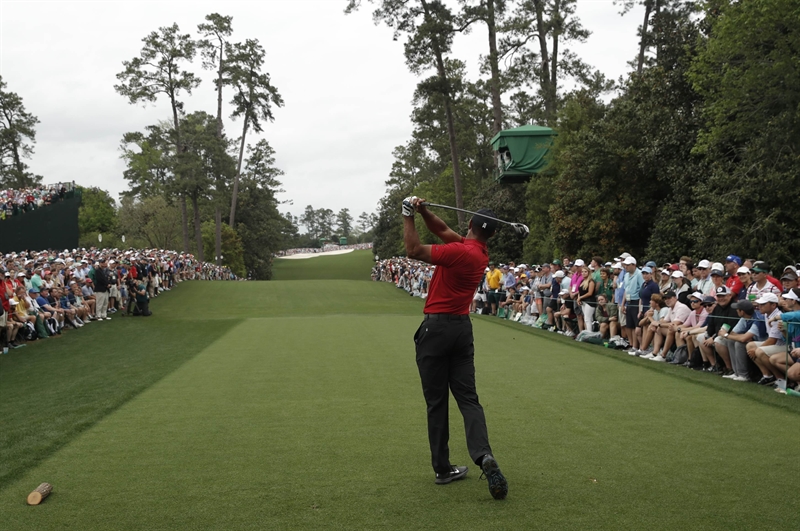
The golf swing is a multi-segmented and complex skill, which involves accurate body perception and well-coordinated muscular actions(1). It involves a kinetic chain initiated from movement of the legs and hips followed by the trunk and shoulders, and finally the hands and wrists(2). The idea is to create explosive power through a wide range of motion, and transfer this power to a ball - via a club - to propel the ball a great distance with accuracy(3). Typically, a player will maximally recruit 30lbs of muscle to generate four horsepower during the golf swing. This equates to around 900kg of force being applied to the ball in half a millisecond at impact(3), an action that is repeated multiple times in a round of golf.
Unsurprisingly, golf can generate injuries; the typical injury rate in amateur golfers ranges between 15.8-40.9% annually, and 31-90% annually in professionals(4). As a result, there is now a greater emphasis on developing adequate strength, power, and flexibility training amongst all levels of golfing ability - not only to optimise swing mechanics and golf performance, but also to prevent injury. The prevalence and possible mechanisms of these injuries are still a matter of controversy, however. With this in mind, we will examine the most recent literature and try to outline the most effective strategies to help minimise injury risk.
The biomechanics of the golf swing
The golf swing is a highly coordinated, multi-segmental, rotational, closed chain activity, requiring strength, explosive power, flexibility and balance(5). As figure 1 shows, it can be divided into the following stages:
You need to be logged in to continue reading.
Please register for limited access or take a 30-day risk-free trial of Sports Injury Bulletin to experience the full benefits of a subscription. TAKE A RISK-FREE TRIAL

Latest Issue

Subscribe Today
Further reading
Newsletter Sign Up
Subscriber Testimonials
Dr. Alexandra Fandetti-Robin, Back & Body Chiropractic
Elspeth Cowell MSCh DpodM SRCh HCPC reg
William Hunter, Nuffield Health
Subscribe Today


Newsletter Sign Up

Coaches Testimonials
Dr. Alexandra Fandetti-Robin, Back & Body Chiropractic
Elspeth Cowell MSCh DpodM SRCh HCPC reg
William Hunter, Nuffield Health
Subscribe Today
Latest Issue

Be at the leading edge of sports injury management
Our international team of qualified experts (see above) spend hours poring over scores of technical journals and medical papers that even the most interested professionals don't have time to read.
For 17 years, we've helped hard-working physiotherapists and sports professionals like you, overwhelmed by the vast amount of new research, bring science to their treatment. Sports Injury Bulletin is the ideal resource for practitioners too busy to cull through all the monthly journals to find meaningful and applicable studies.
*includes 3 coaching manuals
Get Inspired
All the latest techniques and approaches


Sports Injury Bulletin brings together a worldwide panel of experts – including physiotherapists, doctors, researchers and sports scientists. Together we deliver everything you need to help your clients avoid – or recover as quickly as possible from – injuries.
We strip away the scientific jargon and deliver you easy-to-follow training exercises, nutrition tips, psychological strategies and recovery programmes and exercises in plain English.
