
 close
close


 LOGIN
LOGINYou are viewing 1 of your 1 free articles
The Labral Labyrinth: SLAP injuries – Part 2
In part two of this series, Kelly Mackenzie examines current management strategies for SLAP tears and guides to help clinicians make informed treatment decisions and optimize outcomes, particularly for athletic populations.


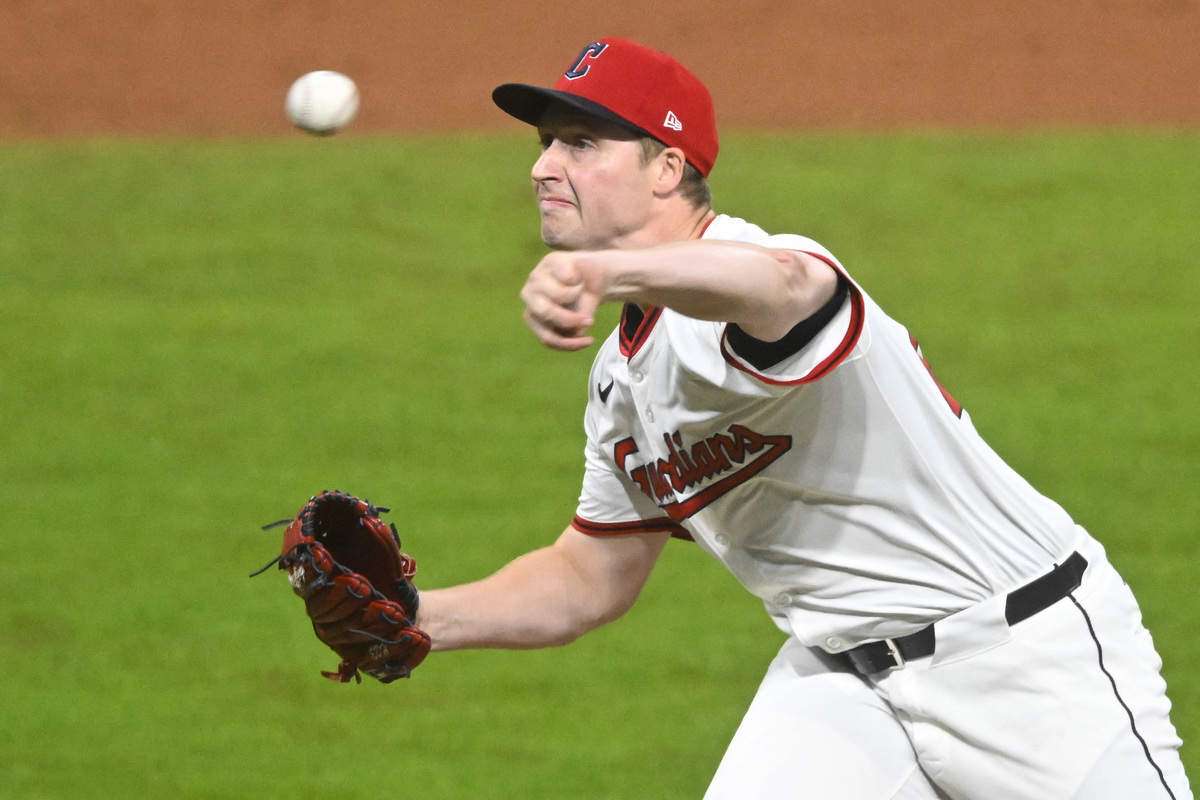
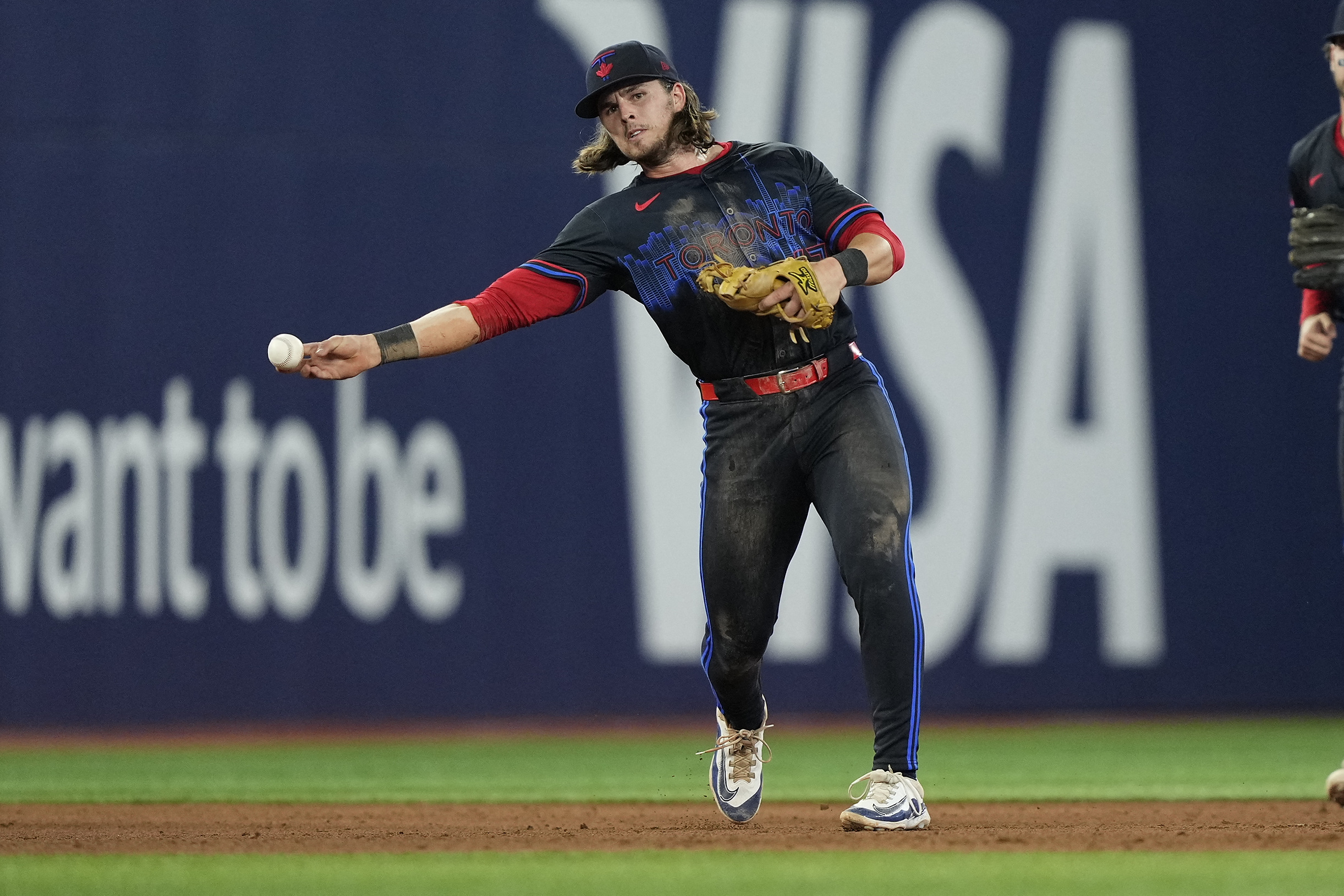
Cleveland Guardians relief pitcher Tim Herrin delivers a pitch in the ninth inning against the Colorado Rockies at Progressive Field. Mandatory Credit: David Richard-Imagn Images.
Effective management of SLAP (Superior Labrum Anterior to Posterior) injuries, frequently seen in athletes involved in repetitive overhead activities or following acute trauma, can be difficult to diagnose and treat definitively. Their subtle presentation, coupled with the limitations of standard imaging and assessment techniques, can result in ongoing shoulder dysfunction and frustration for patients and clinicians. A thorough clinical evaluation, anchored in a detailed patient history and a targeted physical examination, is essential for an accurate diagnosis.
Management of SLAP injuries is more nuanced than a simple step-by-step protocol, as treatment may involve either a structured rehabilitation-based approach or surgical intervention, depending on the individual case. Clinicians should take care when identifying causative factors related to the injury to address them as part of the rehabilitation, if possible.
“…clinicians prefer an initial trial of conservative management…”
SLAP tears can result from a combination of intrinsic and extrinsic risk factors that compromise the stability and integrity of the superior labrum and its biceps anchor (see table 1). Overhead athletes, especially baseball pitchers, are at elevated risk due to the cumulative microtrauma imposed by the throwing motion, particularly during the late cocking and acceleration phases. The interplay between these intrinsic and extrinsic elements significantly contributes to both the onset and recurrence risk of SLAP pathology, and clinicians should consider them when planning and conducting each phase of rehabilitation.
Table 1: Intrinsic and extrinsic risk factors that compromise the stability and integrity of the superior labrum
| Intrinsic Factors | Extrinsic Factors |
| Structural predispositions. | External mechanisms or environmental exposures. • Repetitive overhead motions. |
|
Biomechanical predispositions.
|
Acute trauma from falls or traction injuries. |
| Poor training technique. | |
| High volumes of overhead workload without adequate recovery. |
Conservative Management
Surgery carries inherent risks and does not guarantee long-term success. Therefore, clinicians prefer an initial trial of conservative management, lasting three to six months, as the first-line approach. However, this depends on patient factors such as age, activity level, and symptom severity.
Researchers from Washington University in the United States conducted a systematic review examining the return to play (RTP) in patients who underwent non-operative management of SLAP tears. Type II SLAP tears were the most frequently reported, with baseball, softball, and weightlifting identified as the primary sports associated with these injuries. The overall RTP rate following nonoperative management was 53.7%, with a similar rate of 52.5% observed in elite and high-level athletes. However, among those who completed their full rehabilitation program, the RTP rate rose significantly to 78% across all athletes and 76.6% in the elite groups(1).
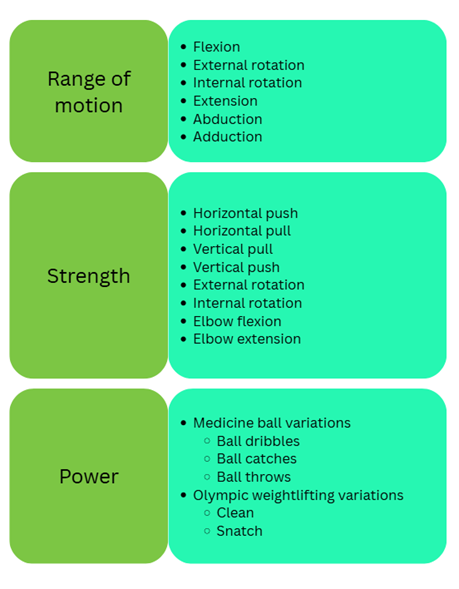
Effective rehabilitation should follow clear guiding principles while allowing flexibility to meet individual needs, especially for these overhead throwing athletes (see figure 1). Initially, the focus should be on reducing inflammation and addressing impairments such as glenohumeral internal rotation deficit (GIRD) and scapular dyskinesis through activity modification, temporary rest from overhead activities, anti-inflammatory medications, and cryotherapy as needed.
As rehabilitation progresses, the priority shifts to restoring neuromuscular control and gradually building strength and endurance in the rotator cuff and periscapular muscles. Clinicians must restore ROM, with particular attention to shoulder flexion, external rotation, and internal rotation, to ensure mobility without compromising healing. Strengthening should include targeted exercises for the rotator cuff, posterior shoulder, elbow flexors, and weight-bearing activities, alongside compound pulling and pushing movements to build integrated upper limb and scapular stability.
In later stages, clinicians must incorporate power and dynamic control exercises using medicine ball drills, such as dribbles, catches, and throws, to replicate the functional demands of overhead sports. Return to sport should be guided by clear criteria, including the absence of symptoms, full pain-free range of motion, and the successful completion of sport-specific functional goals. While these categories provide a structured foundation, exercise selection and progression should be tailored to the athlete’s sport, goals, and presentation to optimize outcomes throughout the rehabilitation process.
Surgical intervention
Clinicians can consider operative intervention for persistent symptoms or in high-demand athletes who do not respond to conservative measures or who do not wish to trial conservative management (see table 2). However, following surgery, athletes must be prepared to complete a comprehensive rehabilitation program over a nine to twelve-month period.
One of the main focuses of researchers around surgical repair is the comparison of outcomes between biceps tenodesis (BT) and SLAP repair. Various earlier systematic reviews note that the BT patients had better outcomes, lower complications, and higher RTP rates. However, on closer review, these were not statistically significant. More recent evidence demonstrates that SLAP repair and BT are comparable in terms of RTP rates, functional outcome scores, and the need for revision surgeries(2,3).
There is variability in which athletes excel and which ones don’t. For example, baseball pitchers don’t respond as well to surgical interventions as other positions, despite both having throwing demands, although perhaps not comparable physiological stressors (quantity and force of pitching vs. fielding)(2). There is still a need for further research into higher-performing/elite-level athletes.
Table 1: Operative interventions
| SLAP Type | Surgical Management | Key Surgical Notes |
| Type I | Arthroscopic debridement. | Frayed labrum is cleaned up; labral attachment remains intact. |
|
Type II |
SLAP repair or biceps tenotomy/tenodesis. | Confirmed by probing labral detachment from the glenoid rim. A positive “peel-back” sign (labrum rotates posteriorly in abduction/external rotation) supports the diagnosis. |
| Type III | Labral resection; occasional SLAP repair. | A bucket-handle tear is excised; full SLAP repair is rarely necessary. |
| Type IV | SLAP repair or resection if <50% biceps tendon involved; tenotomy/tenodesis if >50%. | The choice of procedure depends on the extent of the biceps tendon damage. |
| Type V | Combined Bankart repair and SLAP repair. | Both anterior and superior labral regions require stabilization. |
| Type VI | SLAP repair or selective resection. | The superior labral flap is addressed based on its size and symptoms. |
| Type VII | Suture/anchor fixation of anterosuperior labrum and SLAP repair. | Involves simultaneous repair of the biceps anchor and anterior labral structures. |
| Type VIII | SLAP repair or biceps tenotomy/tenodesis and cartilage debridement. | Damaged cartilage near the bicipital footplate is gently smoothed out. |
The choice of procedure depends on the extent of the injury. Tailoring the rehabilitation to meet the original injury mechanism of action provides clinicians with options for more individualized management approaches. These include:
- Compressive injuries: Avoid weight-bearing through the affected limb in the early stages to reduce compression and shear forces on the labrum.
- Traction-related injuries: Avoid heavy eccentric loading of the biceps to minimize traction forces on the biceps anchor.
- Peel-back mechanism injuries: Avoid excessive external rotation of the shoulder during the early post-surgical period to protect against peel-back forces on the repair.
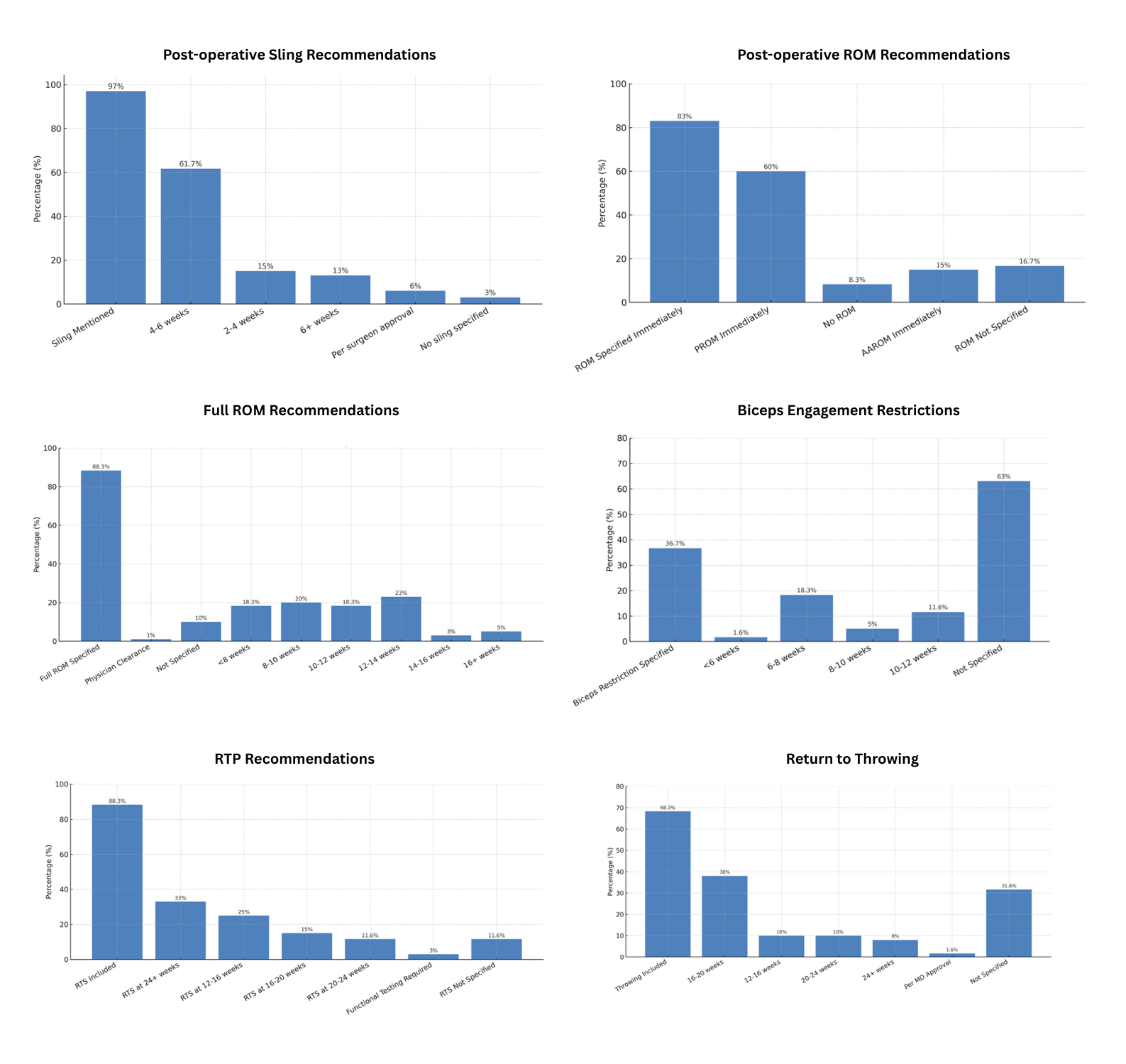
Considerable variability exists among SLAP repair rehabilitation protocols, particularly regarding timelines for achieving full range of motion, RTP, and the initiation of biceps strengthening (see figures 2). In contrast, parameters such as sling duration and scapular strengthening are more consistent across protocols. Notably, many protocols lack clear definitions of what return to throwing entails in terms of functional readiness, complicating direct comparisons. Despite the large number of orthopedic centers managing these injuries, relatively few have published their rehabilitation protocols(4,5).
Rehabilitation
A holistic, multidisciplinary approach is essential when managing athletes recovering from a SLAP repair. Clinicians must tailor rehabilitation to the individual, considering the mechanism of injury, specific injury characteristics, surgical intervention, level of sport, and the desired RTP level, while ensuring alignment with the treating physician’s guidance. Rehabilitation protocols should serve as flexible frameworks rather than rigid rules, with progression based on the patient’s presentation and response throughout the recovery process (see table 3).
Clinicians can gradually integrate programs like the Thrower’s Ten to prepare athletes for RTP
In addition, a program like the Thrower’s Ten fits seamlessly within a structured shoulder rehabilitation plan by providing a systematic, phased approach to progressive strengthening for overhead athletes. Designed to target the rotator cuff, scapular stabilizers, and key kinetic chain components, the Thrower’s Ten provides a foundation for restoring strength, endurance, and neuromuscular control essential for overhead sports performance. Clinicians can incorporate its components into an athlete’s program.
Table 3: A structured post-operative rehabilitation protocol
| Phase | Goals | Key Points |
| Phase 1 Protection and Early Activation (Weeks 1–3) |
Protect surgical repair and allow early tissue healing.
Initiate gentle isometric scapular and rotator cuff activation. |
|
| Exit Pain-free in sling, no axillary nerve dysfunction. |
||
| Phase 2 Progressive Mobilization (Weeks 4–6) |
Continue protection of the repair until 6 weeks.
Initiate shoulder and rotator cuff activation. |
|
| Exit Pain-free shoulder in sling-protected position, surgical review. |
||
| Phase 3 Controlled Strength and Mobility (Weeks 7–12) |
Restore active ROM to 90% of the opposite side.
Initiate and progress rotator cuff and scapular strengthening. |
|
| Exit Full unresisted ROM, symmetrical isometric strength, and surgical clearance. |
||
| Phase 4 Advanced Strength and Motor Control (Weeks 12–16) |
Achieve full active ROM and restore scapulohumeral rhythm.
Initiate gym-based and closed-chain strength. |
|
| Exit Full ROM, CKC test (18–20 touches/15s), 90% HBB ROM vs. opposite side. |
||
| Phase 5 Sport-Specific Preparation (Weeks 16–22) |
Develop full strength and control in all planes.
Introduce light skills and sport-specific movements, such as throwing. |
|
| Exit CKC test > 25 touches/15s, 90% strength benchmark, no apprehension in high-speed actions. |
||
| Phase 6 Return to Performance (Week 22 onward) |
Full return to competition without symptoms or hesitation.
Maintain performance and shoulder health long-term. |
|
| Exit No pain or apprehension, clearance from coaching/rehab team for full return. |
||
Exercise Selection
Selecting the appropriate exercises during shoulder rehabilitation is essential for optimizing recovery, restoring function, and preventing re-injury. Each phase of rehabilitation requires targeted loading to address specific needs, including restoring motor control, building strength in the rotator cuff and scapular stabilizers, and integrating kinetic chain function as athletes progress towards RTP (see table 3).
Table 3: Targeted exercises(6-12).
| Exercise | Target Muscles | Evidence | Clinical Tips |
| External Rotation at 0° & 90° Abduction | Infraspinatus, Teres Minor. | High EMG (50–85% MVIC), especially at 90°. | Use bands/cables, controlled eccentrics. |
| Prone Full Can/ Prone Y | Supraspinatus, Lower Trapezius, Infraspinatus. | High EMG, low deltoid activity. | Thumb up, avoid shrugging, scapular control. |
| Side-lying ER | Infraspinatus, Teres Minor. | Up to 74% MVIC, low deltoid. | Light weight, elbow 90°, neutral wrist. |
| Push-Up Plus | Serratus Anterior. | Highest serratus activation. | Progress wall to floor, focus on protraction. |
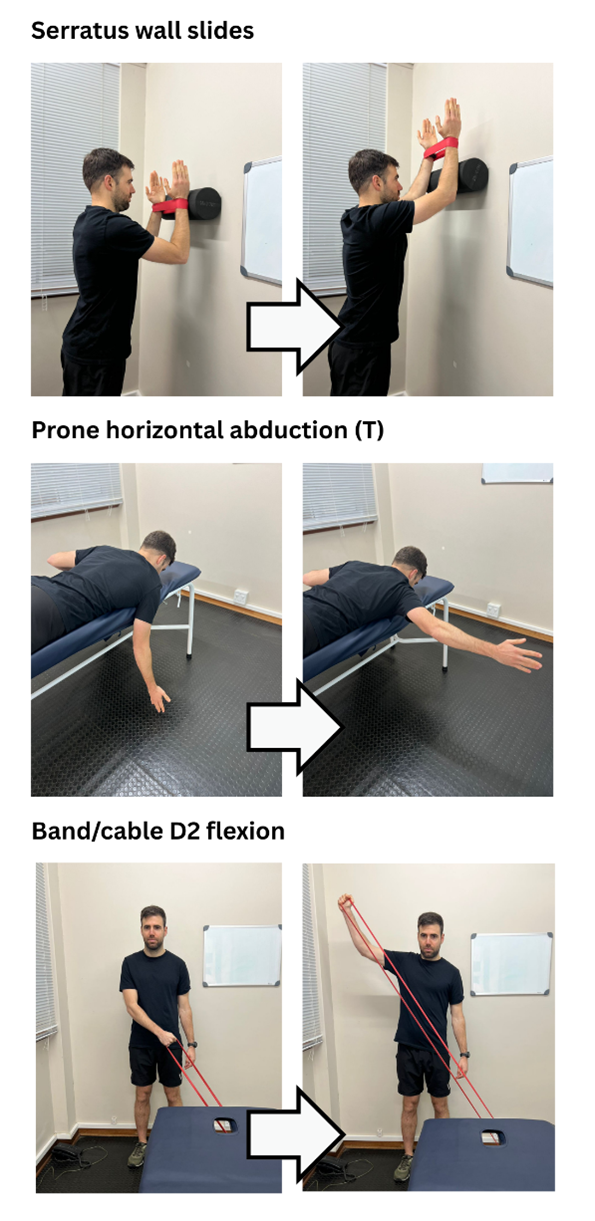
| Prone Horizontal Abduction (T) | Middle Trapezius, Rhomboids. | High mid-trap activation, low upper trap. | Avoid shrugging, scapula set down & back. |
| Serratus Wall Slides | Serratus Anterior, Lower Trapezius. | Enhances upward rotation. | Maintain core, slow control. |
| Standing Dynamic Hug | Serratus Anterior. | 60–75% MVIC, low upper trap. | Use bands/cables, avoid forward translation. |
| Band/Cable D2 Flexion | Supraspinatus, Infraspinatus, Lower Trapezius. | Strong cuff-scapular synergy. | Progress with eccentric control. |
SLAP injury management should prioritize individualized, conservative rehabilitation focusing on pain reduction, mobility, and progressive strength before considering surgery. Clinicians can gradually integrate programs like the Thrower’s Ten to prepare athletes for RTP. While biceps tenodesis and SLAP repair can yield similar outcomes, tailored, evidence-based protocols are crucial for optimizing recovery and supporting long-term shoulder health in overhead athletes.
References
1. J Shoulder Elbow Surg (2022) 31, 1323–1333.
2. Arthroscopy. 2025 Feb 10:S0749-8063(25)00084-2
3. J ISAKOS. 2023; 8(3): 129-136.
4. Arthroscopy. 2019 Oct; 35(5): 1522-1529.
5. Orthop J Harvard Med Sch. 2021; 22: 27-32.
6. Sports Med. 2021;51(7):1421-1441.
7. Arthroscopy. 2020;36(5):971-981.
8. J Orthop Sports Phys Ther. 2021;51(5):231-239.
9. Br J Sports Med. 2020;54(8):476-483.
10. Sports Health. 2020;12(5):501-510.
11. Phys Ther Sport. 2022;54:128-137.
12. J Shoulder Elbow Surg. 2021;30(4):854-862.
Latest Issue
Subscribe Today
Newsletter Sign Up
Subscriber Testimonials
Dr. Alexandra Fandetti-Robin, Back & Body Chiropractic
Elspeth Cowell MSCh DpodM SRCh HCPC reg
William Hunter, Nuffield Health
Subscribe Today
Newsletter Sign Up
Coaches Testimonials
Dr. Alexandra Fandetti-Robin, Back & Body Chiropractic
Elspeth Cowell MSCh DpodM SRCh HCPC reg
William Hunter, Nuffield Health
Subscribe Today
Latest Issue
Be at the leading edge of sports injury management
Our international team of qualified experts (see above) spend hours poring over scores of technical journals and medical papers that even the most interested professionals don't have time to read.
For 17 years, we've helped hard-working physiotherapists and sports professionals like you, overwhelmed by the vast amount of new research, bring science to their treatment. Sports Injury Bulletin is the ideal resource for practitioners too busy to cull through all the monthly journals to find meaningful and applicable studies.
*includes 3 coaching manuals
Get Inspired
All the latest techniques and approaches


Sports Injury Bulletin brings together a worldwide panel of experts – including physiotherapists, doctors, researchers and sports scientists. Together we deliver everything you need to help your clients avoid – or recover as quickly as possible from – injuries.
We strip away the scientific jargon and deliver you easy-to-follow training exercises, nutrition tips, psychological strategies and recovery programmes and exercises in plain English.
